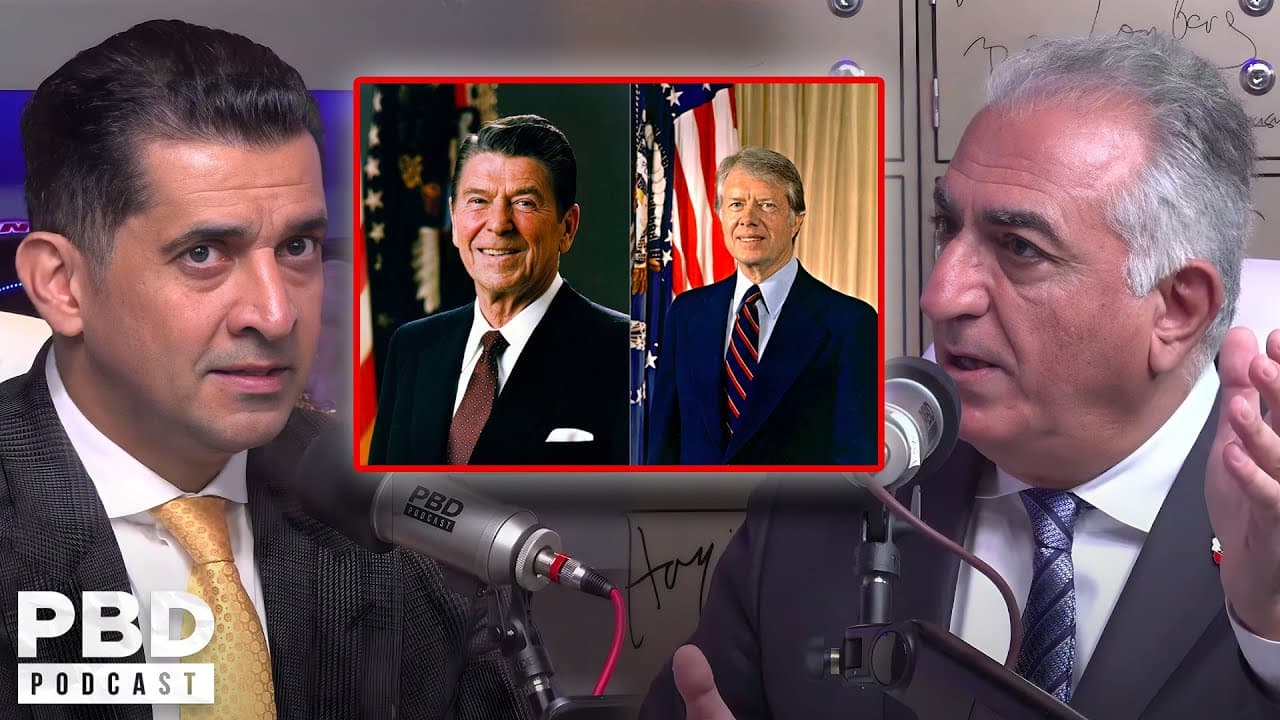
"American Weakness Emboldens the Enemy" - How Jimmy Carter Destroyed Iran
TL;DR
The discussion highlights historical U.S. foreign policy failures regarding Iran and the implications of perceived weakness.
Transcript
I want to go back to the Carter Administration the only individual in that Administration who understood what could be the consequences of such a regime taking over was the big new binski in fact I remember the discussion I had with him because I happened to be at the White House on my birthday October 31 1978 wow you're you're at the White House O... Read More
Key Insights
- 🖤 The Carter Administration's strategy to contain communism through religious factions ultimately failed due to a lack of foresight regarding internal Iranian dynamics.
- 🥺 Perceived weakness in foreign policy can embolden radical regimes, leading to negative consequences for U.S. interests abroad.
- 🥺 Historical precedent shows that strong U.S. leadership often leads to compliance from adversarial governments, while weakness provokes aggression.
- 😣 The aftermath of the Iranian Revolution resulted in severe human rights violations and the establishment of a regime opposed to U.S. interests.
- 😀 Reagan's administration faced the repercussions of the previous U.S. strategy towards Iran, reflecting on the implications for future foreign policy.
- 💠 The relationship between the U.S. and Iran continues to be shaped by historical events, with lingering distrust affecting current diplomatic efforts.
- ✊ Domestic and international perceptions of U.S. power can dramatically influence the behavior of foreign states, particularly in volatile regions.
Install to Summarize YouTube Videos and Get Transcripts
Explore YouTube Video Summarizer or Get YouTube Transcript Extractor
Questions & Answers
Q: What was the rationale behind the Carter Administration's foreign policy in Iran?
The Carter Administration aimed to create a "religious belt" to contain the spread of communism in the Middle East. This strategy was based on the belief that supporting certain religious factions could prevent Soviet influence from expanding. However, this approach ignored the existing networks of the KGB and ultimately failed, leading to regional instability.
Q: How did the U.S. undercut the Shah and what were the consequences?
The U.S. distanced itself from the Shah, who had been a staunch ally, primarily due to human rights concerns. This decision contributed to his downfall and the establishment of a more radical clerical regime, which resulted in widespread executions and increased anti-American sentiment, complicating U.S.-Iran relations for decades.
Q: What parallels does the speaker draw between past and present U.S. foreign policy?
The speaker suggests that the same weaknesses displayed by the Carter Administration are evident in today’s U.S. policy. The perceived lack of support and resolve emboldens adversarial forces, as seen in Iran's actions. A history of American weakness allowed hostile regimes to gain strength and provoke further conflicts.
Q: How did Ronald Reagan view the relationship with the Shah during his presidency?
Reagan criticized the Carter Administration for abandoning the Shah, emphasizing that he had been an ally who contributed positively to U.S. interests in the Middle East. Reagan noted that the Shah's policies, despite potential authoritarianism, led to development and stability that were lost after the revolution.
Summary & Key Takeaways
-
The content discusses the mistakes made by the Carter Administration regarding Iran, emphasizing their attempt to contain communism through the creation of a "religious belt," which ultimately backfired.
-
It reflects on the transition of power in Iran, resulting in the rise of a clerical regime after the U.S. undercut the Shah, leading to significant consequences for regional stability.
-
The speaker draws parallels between past U.S. administrations' responses to Iran and current foreign policy, suggesting that perceived weakness emboldens hostile actors.
Read in Other Languages (beta)
Share This Summary 📚
Summarize YouTube Videos and Get Video Transcripts with 1-Click
Try YouTube Summary with ChatGPT & Claude or YouTube Transcript Generator