NASA Science Live: Rising Seas
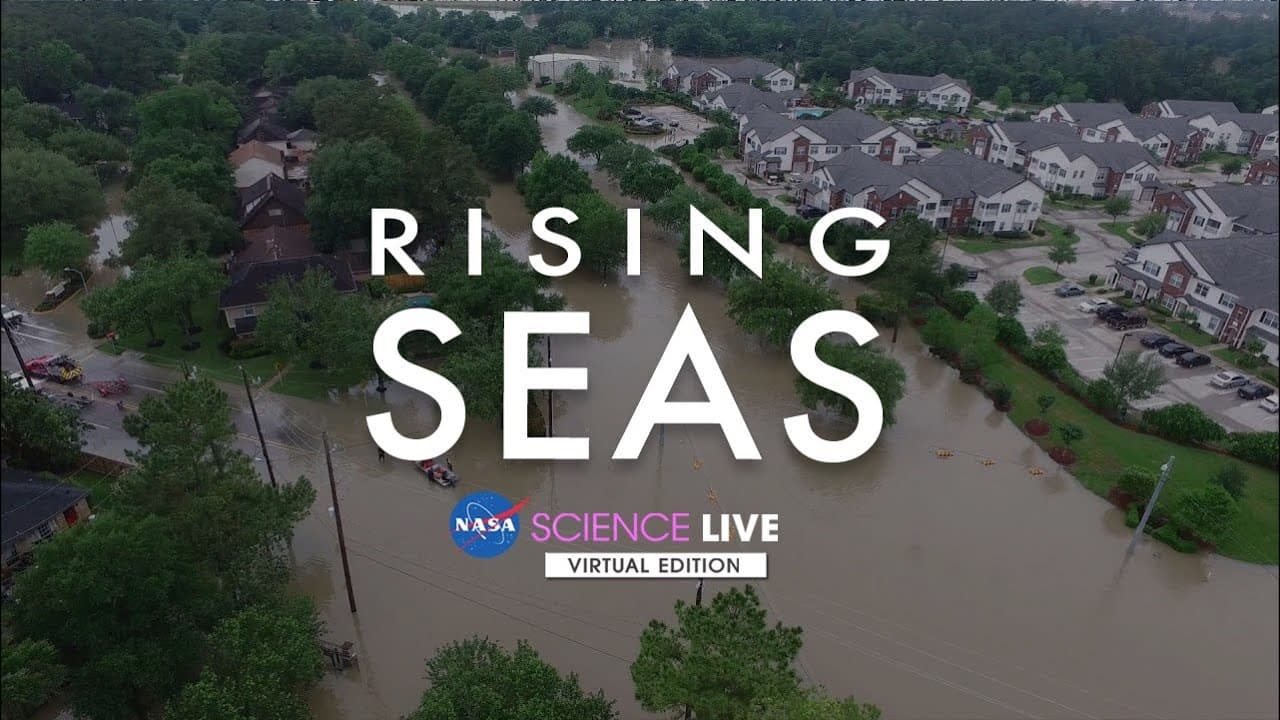
TL;DR
Rising sea levels across the globe are accelerating, and NASA is using satellites, ships, and airplanes to track and study them.
Transcript
HELLO AND WELCOME TO ANOTHER EPISODE OF "NASA SCIENCE LIVE", I'M YOUR HOST LAUREN WARD. SEA LEVELS ACROSS THE GLOBE ARE RISING AS A RESULT OF A CHANGING CLIMATE, AND THE RATES AT WHICH THEY ARE RISING ARE ACCELERATING. FOR NEARLY THIRTY YEARS, NASA HAS CONTINUALLY BEEN TRACKING THE GLOBAL SURFACE HEIGHT OF THE OCEAN FROM SPACE IN ORDER TO UNDERS... Read More
Key Insights
- 😮 Sea level rise is a global problem that affects coastal communities and inland regions, with rising rates of acceleration.
- 🧡 NASA employs a range of tools, including satellites and field research, to study and understand the complex interactions between the ocean and climate.
- 🤢 The Sentinel-6 Michael Freilich satellite will continue the measurement of sea level rise, contributing to long-term monitoring and prediction of future impacts.
- 🤢 Collaborative efforts with international partners are essential to address the complex challenges posed by sea level rise.
Install to Summarize YouTube Videos and Get Transcripts
Explore YouTube Video Summarizer or Get YouTube Transcript Extractor
Questions & Answers
Q: Why is it important to study sea level rise?
Sea level rise affects daily life, commerce, shipping, and coastal communities worldwide. Understanding and predicting sea level rise is crucial for future planning and mitigation strategies.
Q: How will the Sentinel-6 Michael Freilich satellite contribute to studying sea level rise?
The satellite will provide continuous and precise measurements of sea levels, helping scientists understand the rate of change and predict future impacts. Having two satellites in operation will ensure a long-duration observation.
Q: How do NASA satellites measure sea level rise accurately?
Satellites use altimeters to measure the distance between the satellite and the ocean surface, taking into account atmospheric effects. The data collected over large footprint areas and over time allow for accurate measurements.
Q: What other impacts does climate change have on the ocean?
Climate change affects ocean temperature, sea ice disappearance, and ocean acidification. These changes have consequences for marine ecosystems, fish populations, and coastal communities.
Summary & Key Takeaways
-
Sea levels are rising due to climate change, and NASA has been tracking global surface height of the ocean for nearly three decades.
-
NASA is using satellites, ships, and airplanes to study the processes driving sea level rise.
-
The Sentinel-6 Michael Freilich satellite, launching in collaboration with NASA, NOAA, and international partners, will continue to measure sea level rise and provide valuable data for future predictions.
Read in Other Languages (beta)
Share This Summary 📚
Summarize YouTube Videos and Get Video Transcripts with 1-Click
Try YouTube Summary with ChatGPT & Claude or YouTube Transcript Generator
Explore More Summaries from NASA 📚


Summarize YouTube Videos and Get Video Transcripts with 1-Click
Try YouTube Summary with ChatGPT & Claude or YouTube Transcript Generator