How to Reprogram Your Mind for Positive Change
TL;DR
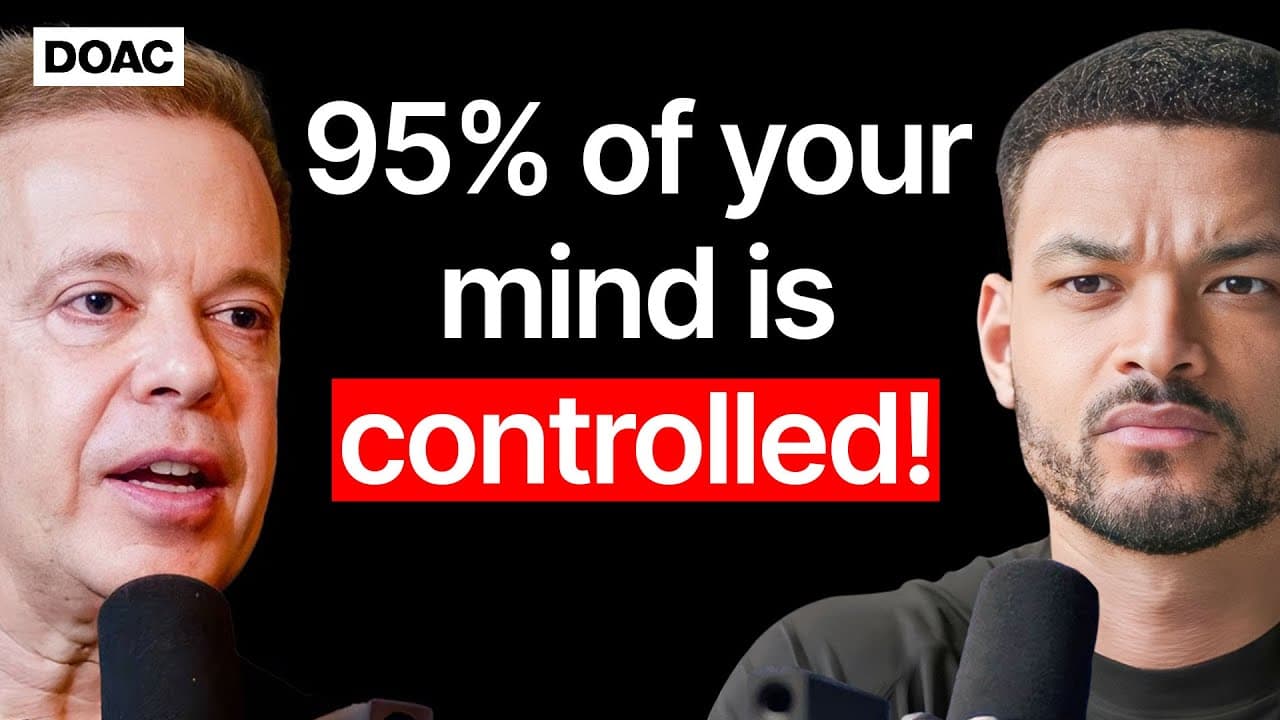
Thoughts have the power to make you both sick and well. By becoming conscious of your thoughts and emotions, you can reprogram your mind and body to align with your desired future. This involves breaking old habits and forming new ones by maintaining awareness and practicing mental rehearsal, ultimately leading to personal transformation and healing.
Transcript
our research shows that your thoughts can make you sick and the question is if your thoughts could make you sick can your thoughts make you well that's absolutely possible and it's easy to learn so when you wake up in the morning Dr Joe dispen researcher and best-selling author one of the most sought-after speakers in the world all ... Read More
Key Insights
- Thoughts can impact physical health, making you sick or well.
- 95% of who we are by age 35 is programmed behavior.
- Breaking old habits requires becoming conscious of unconscious thoughts.
- Mental rehearsal can prime the brain for new behaviors and habits.
- Change involves aligning thoughts, actions, and feelings with future goals.
- Persistent practice of new habits leads to transformation and healing.
- Stress and survival mode lead to separation and negative emotions.
- The key to change is becoming greater than your environment and past.
Install to Summarize YouTube Videos and Get Transcripts
Explore YouTube Video Summarizer or Get YouTube Transcript Extractor
Questions & Answers
Q: How can thoughts affect physical health?
Thoughts have a significant impact on physical health because they can trigger emotional responses that either promote wellness or contribute to illness. Negative thoughts can lead to stress and anxiety, which negatively affect the body, while positive thoughts can encourage healing and improve overall well-being by fostering a positive emotional state.
Q: What percentage of behavior is programmed by age 35?
By the age of 35, 95% of our behavior is programmed. This means that the majority of our actions, thoughts, and emotions are habitual and operate on a subconscious level, resulting from repeated experiences and learned behaviors over time.
Q: How can one break old habits?
Breaking old habits involves becoming conscious of unconscious thoughts and emotions that drive habitual behavior. This requires self-awareness, mental rehearsal, and consistent practice of new behaviors, aligning thoughts, actions, and feelings with future goals to replace old patterns with new, desired habits.
Q: What is the role of mental rehearsal in behavior change?
Mental rehearsal plays a crucial role in behavior change by priming the brain for new actions and habits. By vividly imagining new behaviors and outcomes, the brain creates neural pathways as if the actions were physically performed, making it easier to adopt these behaviors in reality.
Q: Why is stress detrimental to personal growth?
Stress is detrimental to personal growth because it triggers survival mode, leading to negative emotions like fear, anger, and anxiety. These emotions create a sense of separation and limit one's ability to think clearly and creatively, hindering the capacity for change and personal development.
Q: How can one align thoughts, actions, and feelings with future goals?
Aligning thoughts, actions, and feelings with future goals involves maintaining a clear vision of the desired future, practicing mental rehearsal, and consistently acting in ways that support that vision. It requires becoming conscious of and changing any limiting beliefs or emotions that conflict with the desired outcome.
Q: What is the significance of becoming greater than your environment?
Becoming greater than your environment means not allowing external circumstances to dictate your thoughts, feelings, and behaviors. It involves maintaining a strong internal state and vision for the future, regardless of external influences, to create a reality aligned with personal goals and desires.
Q: How does consistent practice lead to personal transformation?
Consistent practice leads to personal transformation by reinforcing new neural pathways and habits, making them more automatic over time. This repetition helps shift behavior from conscious effort to subconscious routine, allowing for sustained change and alignment with personal goals and values.
Summary & Key Takeaways
-
Thoughts have a profound impact on our health, capable of both making us sick and healing us. By becoming aware of our unconscious thoughts and emotions, we can reprogram our mind to align with our desired future. This involves breaking old habits and forming new ones through mental rehearsal and conscious practice.
-
Dr. Joe Dispenza emphasizes that 95% of our behavior is programmed by age 35. To change, we must become conscious of our unconscious thoughts and emotions, which often dictate our actions. By maintaining awareness and practicing new habits, we can transform our lives and achieve personal growth.
-
Stress and survival mode trigger negative emotions and separation. By learning to manage our emotional state and focusing on positive thoughts and feelings, we can break free from past conditioning and create a new reality. Consistent practice and belief in possibility are key to this transformation.
Read in Other Languages (beta)
Share This Summary 📚
Summarize YouTube Videos and Get Video Transcripts with 1-Click
Try YouTube Summary with ChatGPT & Claude or YouTube Transcript Generator
Explore More Summaries from The Diary Of A CEO 📚


Summarize YouTube Videos and Get Video Transcripts with 1-Click
Try YouTube Summary with ChatGPT & Claude or YouTube Transcript Generator