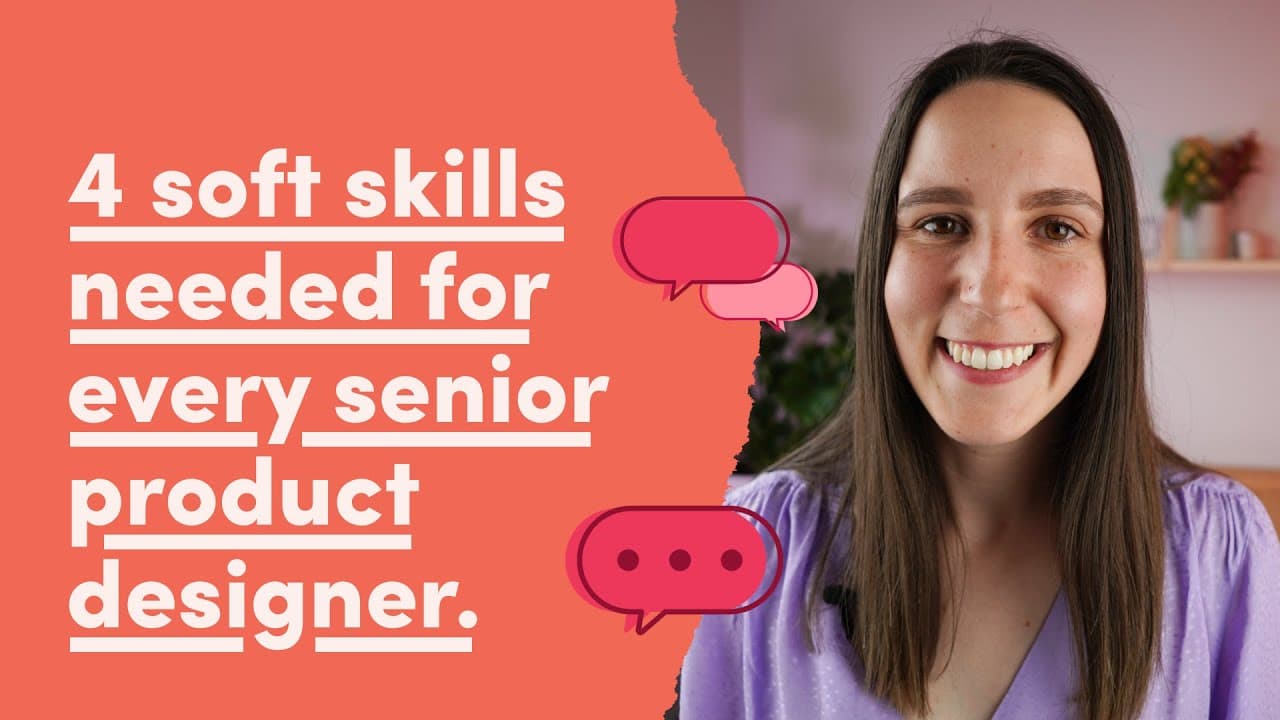
4 soft skills needed for every senior product designer
TL;DR
Soft skills like communication and empathy are crucial for product designers' success.
Transcript
hey friend you and i both know that craft and visual design ui design are essential to being a good product designer and those are essentially what we call hard skills which are the sort of practical skills that you need to do your job effectively and be a good product designer but what about the soft skills what about the things that aren't so cra... Read More
Key Insights
- 🍦 Hard skills in design must be complemented by essential soft skills for a well-rounded product designer.
- 🗯️ Stakeholder management requires a strategic approach to engage the right people at appropriate project stages.
- 🎨 Communication is the most emphasized skill that influences collaboration and project clarity in design.
- 👥 Empathy extends beyond users to include team members, promoting a supportive and innovative work environment.
- 👨💼 Self-awareness allows designers to influence outcomes effectively and align their work with business objectives.
- 🔨 Tools like Loom facilitate asynchronous communication, enhancing engagement through visual storytelling.
- 🫡 Active listening enriches understanding and respect for diverse viewpoints in a collaborative design environment.
Install to Summarize YouTube Videos and Get Transcripts
Explore YouTube Video Summarizer or Get YouTube Transcript Extractor
Questions & Answers
Q: Why are soft skills important for product designers?
Soft skills are critical for product designers as they enhance collaboration, facilitate communication, and foster relationships with stakeholders. Unlike hard skills that focus on the craft of design, soft skills enable designers to navigate corporate structures, manage expectations, and influence project outcomes effectively.
Q: What is stakeholder management, and why is it necessary?
Stakeholder management involves effectively juggling the needs and feedback of various project stakeholders, such as product managers and directors. It is necessary because it ensures that all parties are informed, involved at the right times, and their feedback is integrated into the design process, ultimately leading to the project's success.
Q: How can effective communication be practiced by designers?
Designers can practice effective communication by participating in public speaking courses, actively engaging in discussions, and utilizing tools like Loom for asynchronous updates. It is essential to articulate design rationales clearly and adapt messaging based on the audience to ensure that key points are understood and discussed effectively.
Q: What role does empathy play in design?
Empathy is vital for understanding both user needs and team dynamics. It allows designers to create products that effectively address user pain points while fostering collaboration within their team. Active listening and considering multiple perspectives are crucial components of empathy that enhance the design process.
Q: How does self-awareness contribute to a designer's influence?
Self-awareness enables designers to recognize their impact within a project and the organization. It helps them assess the business implications of their design decisions and articulate their vision convincingly to garner support. This influence is essential for bringing innovative ideas to fruition and achieving successful outcomes.
Q: What techniques can help designers handle feedback effectively?
Designers can develop resilience and discernment in receiving feedback by understanding which comments to implement and which to set aside. Engaging in regular performance reviews and design critiques allows designers to practice negotiating constructive criticism and integrating valuable insights while maintaining their creative vision.
Q: What is the significance of storytelling in design?
Storytelling enhances a designer's ability to convey the narrative behind their projects. It is essential for sharing case studies, articulating user journeys, and gaining stakeholder buy-in. Effective storytelling fosters better discussions and helps stakeholders and team members understand the designer's perspective and design choices.
Summary & Key Takeaways
-
The content discusses the significance of soft skills, alongside hard skills, for product designers, emphasizing their role in career growth.
-
Key soft skills highlighted include stakeholder management, communication, empathy, and self-awareness, which enable effective collaboration and project success.
-
The speaker shares insights on how tools like Loom can enhance communication through asynchronous updates, facilitating better team engagement.
Read in Other Languages (beta)
Share This Summary 📚
Summarize YouTube Videos and Get Video Transcripts with 1-Click
Try YouTube Summary with ChatGPT & Claude or YouTube Transcript Generator
Explore More Summaries from femke.design 📚


Summarize YouTube Videos and Get Video Transcripts with 1-Click
Try YouTube Summary with ChatGPT & Claude or YouTube Transcript Generator