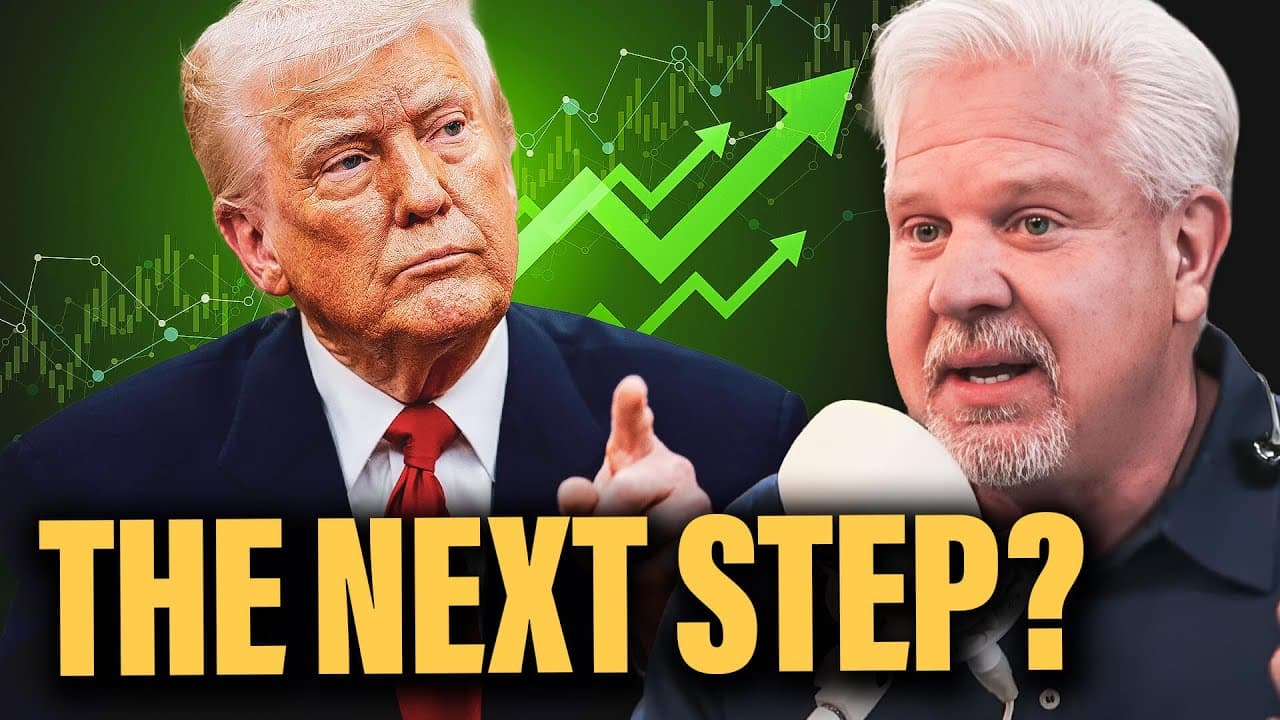
How Trump Can Make the U.S. “Hugely Successful," According to Famed Economist
TL;DR
Trump should focus on supporting local banks to boost the economy.
Transcript
richard Verer He is an economist Uh you can find him at professor Verer.org professor verer.org Richard Werner Professor how are you sir very well thank you Good Good to be on your program Yeah good to have you on again Um uh you're looking at the situation and it is changing by the hour Uh what are you feeling especially you're you're from Are you... Read More
Key Insights
- The trade tensions between the U.S. and China are escalating, with high tariffs affecting global supply chains. A strategic approach is needed to avoid further escalation.
- President Trump acknowledges the importance of not humiliating China publicly, suggesting private negotiations to reach a face-saving compromise for both nations.
- Richard Werner emphasizes the need for the U.S. to support small local banks, which are crucial for job creation and economic growth, contrasting with the current trend of bank mergers.
- Historically, tariffs have been successful for the U.S. when combined with appropriate domestic policies, highlighting the need for strategic economic planning.
- The reduction in the number of small banks in the U.S. has negatively impacted small businesses, which are key employers, suggesting a need for policy changes to support these banks.
- China's economic success is partly attributed to the establishment of numerous small banks, a model that could benefit the U.S. economy if adopted.
- Werner argues that the U.S. is at risk of becoming like the UK, where a few large banks dominate, hindering support for small businesses and innovation.
- Trump is seen as challenging the influence of the World Economic Forum and the CIA in Europe, aiming to shift away from their control and promote Western growth.
Install to Summarize YouTube Videos and Get Transcripts
Explore YouTube Video Summarizer or Get YouTube Transcript Extractor
Questions & Answers
Q: What is the main concern regarding U.S.-China trade tensions?
The main concern is the escalating tariffs between the U.S. and China, which impact global supply chains and risk further economic conflict. The situation requires careful diplomatic handling to avoid public humiliation of China and to find a face-saving solution for both countries.
Q: Why are small local banks important for the U.S. economy?
Small local banks are crucial for the U.S. economy because they primarily lend to small and medium-sized enterprises (SMEs), which are major employers. These banks support job creation and economic growth, unlike large banks that focus on big businesses and capital markets, often neglecting small firms.
Q: How can tariffs be beneficial for the U.S. economy?
Tariffs can be beneficial if they are part of a broader economic strategy that includes supportive domestic policies. Historically, tariffs have helped the U.S. when combined with policies that promote local industries and protect domestic markets, ensuring that the economy remains competitive and robust.
Q: What lesson can the U.S. learn from China's banking system?
The U.S. can learn from China's strategy of establishing numerous small banks to support local businesses and economic growth. This approach has been successful in China, fostering innovation and job creation, and could similarly benefit the U.S. if implemented to strengthen its local banking sector.
Q: What risks does the U.S. face with its current banking trends?
The U.S. risks becoming like the UK, where a few large banks dominate the financial sector, limiting support for small businesses. This concentration reduces the ability of small firms to access necessary funding, hindering innovation and job creation, which are vital for economic growth.
Q: How is Trump challenging the World Economic Forum's influence?
Trump is challenging the World Economic Forum's influence by promoting policies that aim to shift away from their control over Western economies. He seeks to break the perceived grip of elite organizations and promote a new direction for the U.S. and its allies, focusing on economic independence and growth.
Q: What role does the CIA play in European politics according to Werner?
According to Werner, the CIA has a significant influence in European politics, with historical ties to the World Economic Forum. He suggests that the CIA's presence in Europe is part of the ongoing friction between the U.S. and European leaders, as Trump seeks to counter this influence and promote U.S. interests.
Q: What strategic shift does Werner suggest for the U.S. economy?
Werner suggests a strategic shift for the U.S. economy that includes supporting small local banks, implementing beneficial tariffs, and reducing government red tape. This approach aims to foster economic growth, job creation, and innovation, ensuring that the U.S. remains competitive on the global stage.
Summary & Key Takeaways
-
Richard Werner discusses the impact of U.S.-China trade tensions and the importance of finding a diplomatic solution to avoid escalation. He highlights the role of local banks in job creation and economic growth, suggesting that U.S. policies should support these institutions.
-
Werner argues that tariffs can be beneficial if combined with the right domestic policies, emphasizing the need for small banks to support small businesses. He warns against the trend of bank mergers, which reduces support for small firms and innovation.
-
The discussion touches on Trump's efforts to counter the influence of the World Economic Forum and the CIA in Europe, suggesting a strategic shift in U.S. policy to promote Western economic growth and challenge existing power structures.
Read in Other Languages (beta)
Share This Summary 📚
Summarize YouTube Videos and Get Video Transcripts with 1-Click
Try YouTube Summary with ChatGPT & Claude or YouTube Transcript Generator
Explore More Summaries from Glenn Beck 📚


Summarize YouTube Videos and Get Video Transcripts with 1-Click
Try YouTube Summary with ChatGPT & Claude or YouTube Transcript Generator