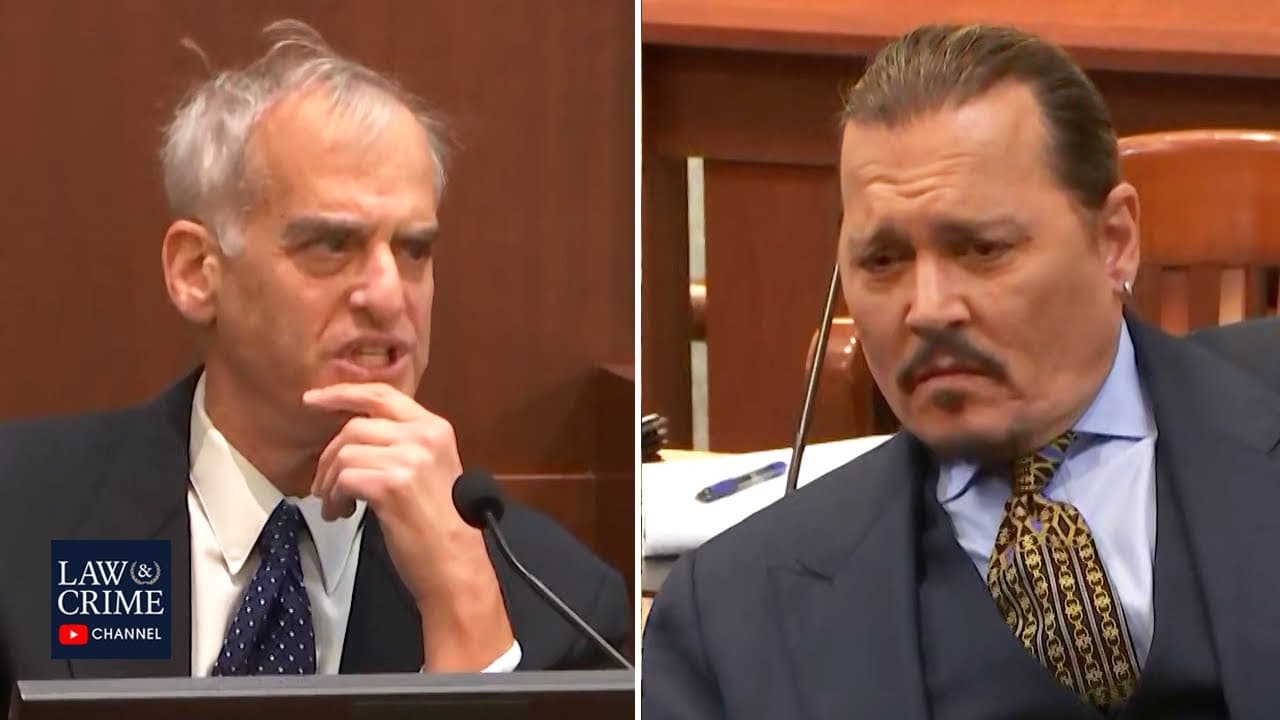
Psychiatrist Infers That Johnny Depp Gaslighted Amber Heard Throughout Their Relationship
TL;DR
Understanding how narcissistic traits contribute to intimate partner violence.
Transcript
walls mirrors writing in Blood and furniture all that would be go with that okay all right um and what if any risk factor is narcissism for intimate partner violence so a patient before we get into a narcissistic personality traits or disorder the overall it's categorized under what's called cluster B personality objection your honor Beyond a scope... Read More
Key Insights
- 🖤 Narcissistic traits like lack of empathy and entitlement contribute to intimate partner violence.
- ❓ Perpetrators often shift blame onto victims during calm phases to minimize abuse.
- ❓ Gaslighting, victim blaming, and manipulative tactics are prevalent in intimate partner violence.
- 🏍️ Apologies and promises in the honeymoon phase perpetuate the cycle of abuse.
- 🤘 Recognizing warning signs like escalating tension can help identify intimate partner violence risk.
- ❓ Intergenerational theory of violence explains how prior victimhood can contribute to intimate partner violence.
- 💠 Victims and perpetrators may both exhibit behaviors shaped by observed abuse in childhood.
Install to Summarize YouTube Videos and Get Transcripts
Explore YouTube Video Summarizer or Get YouTube Transcript Extractor
Questions & Answers
Q: How do narcissistic traits like lack of empathy contribute to intimate partner violence risk?
Narcissistic traits like lack of empathy lead to manipulative behaviors that can escalate into intimate partner violence by exploiting vulnerabilities and using control tactics.
Q: Why do perpetrators often blame victims during calm phases of abuse?
Blaming the victim allows perpetrators to minimize their actions, shifting the focus away from their abusive behavior and manipulating the victim's perception of reality.
Q: What role does gaslighting play in intimate partner violence risk?
Gaslighting is a manipulative tactic that undermines the victim's perception of reality, making them doubt their experiences and paving the way for further abusive behaviors.
Q: How do apologies and promises factor into the abuse cycle of intimate partner violence?
Apologies and promises made by perpetrators during the honeymoon phase serve to manipulate and control the victim, creating false hope and prolonging the cycle of abuse.
Summary & Key Takeaways
-
Narcissistic traits, such as poor self-control and lack of empathy, contribute to intimate partner violence risk.
-
Perpetrators often blame victims during calm phases, minimizing abuse.
-
Gaslighting, victim blaming, and apologizing are common manipulative tactics in intimate partner violence.
Read in Other Languages (beta)
Share This Summary 📚
Summarize YouTube Videos and Get Video Transcripts with 1-Click
Try YouTube Summary with ChatGPT & Claude or YouTube Transcript Generator
Explore More Summaries from Law&Crime Network 📚




Summarize YouTube Videos and Get Video Transcripts with 1-Click
Try YouTube Summary with ChatGPT & Claude or YouTube Transcript Generator