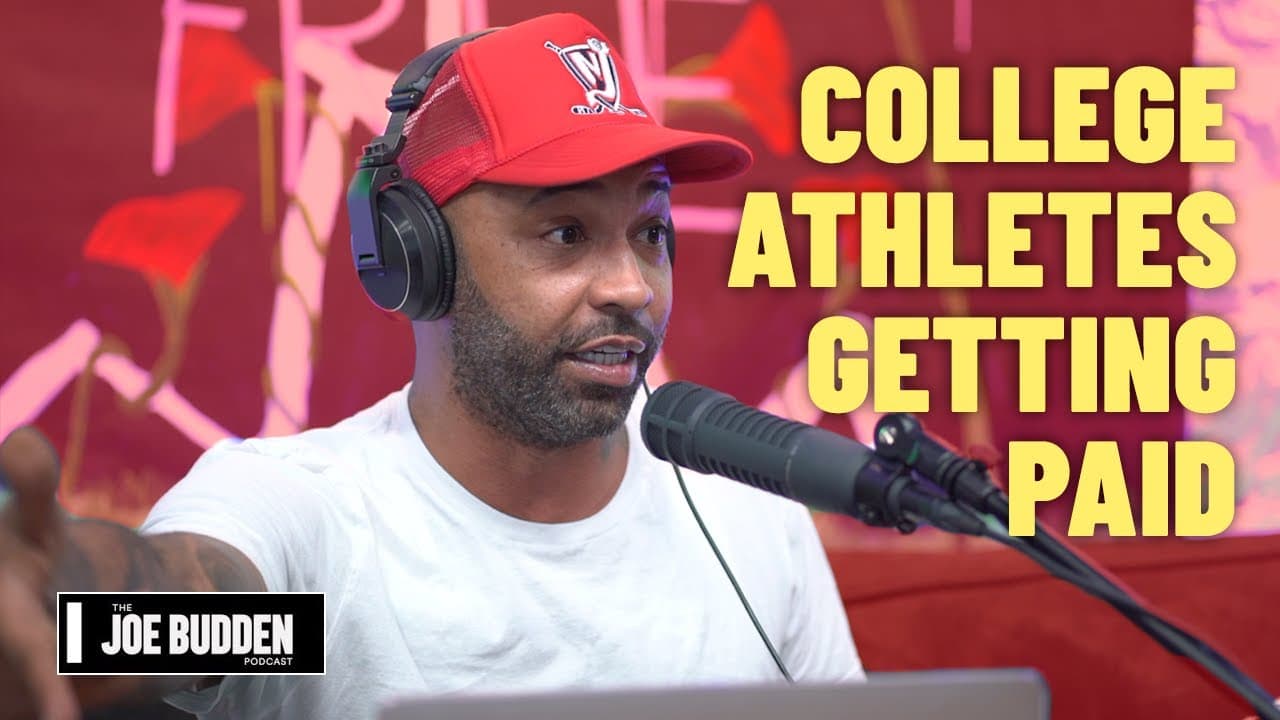
College Athletes Getting Paid | The Joe Budden Podcast
TL;DR
A discussion on whether college athletes should be compensated beyond tuition for their contributions to sports programs.
Transcript
uh we can get into uh uh performance enhancement drugs later this is weed right so again it's unfortunate that this has to happen especially based on what she's saying pushed her over to that side but if you're the olympic commissioners every major country in the world what choice do they got well they can keep doing it this prehistoric way you hav... Read More
Key Insights
- 🎓 Compensation for college athletes remains a controversial topic, with many arguing that tuition is inadequate given the revenues generated by their performances.
- 🎓 The one-year rule in college sports complicates the situation, making decisions about education and professional aspirations increasingly challenging for young athletes.
- 😀 The debate highlights broader societal issues of equity, particularly concerning minority athletes who historically face greater barriers.
- 🫷 Significant economic pressures affect how colleges treat athletes, pushing them to reform outdated practices to remain competitive and uphold fairness.
- 🤨 Advocacy for justice within college athletics is raising awareness of the exploitation faced by players, encouraging dialogue around systemic changes.
- 🤗 Recognizing the potential benefits and pitfalls of enabling college athletes to profit opens discussions on creating sustainable, fair opportunities in sports.
- 👶 The new landscape of athlete compensation may require ongoing dialogue among stakeholders, including schools, players, and professional leagues, to find balanced solutions.
Install to Summarize YouTube Videos and Get Transcripts
Explore YouTube Video Summarizer or Get YouTube Transcript Extractor
Questions & Answers
Q: What are the primary arguments for compensating college athletes?
Advocates argue that college athletes contribute significantly to their schools' revenues through sports programs, yet receive only tuition as compensation. This creates an inequity as the schools profit immensely while the athletes, many of whom come from underprivileged backgrounds, struggle financially. A change allowing athletes to profit from their likeness could help address this imbalance.
Q: How does the one-year rule impact college athletes and their prospects?
The one-year rule mandates that high school athletes must spend a year in college before entering the NBA, effectively limiting their options. This can be detrimental, especially for talented athletes who may not want or need college. They often face pressure to succeed in sports while foregoing other educational opportunities, leading to difficult choices and potential exploitation.
Q: What are some potential risks of allowing college athletes to hire agents?
Allowing college athletes to hire agents introduces risks such as exploitation and false promises. Unscrupulous agents may mislead young athletes about their draft prospects, leading them to forgo free education and ultimately face financial difficulties if they do not make it professionally. Many might end up without a degree and no career prospects.
Q: In what ways could the NCAA adapt to the changing landscape of athlete compensation?
The NCAA could implement clearer guidelines allowing athletes to profit from their name, image, and likeness while providing fair educational and financial opportunities. Creating a more transparent system would not only enhance fairness but also allow athletes to make informed decisions about their careers without being hindered by restrictive rules.
Summary & Key Takeaways
-
The content involves a heated debate about whether college athletes should be compensated for their roles in generating revenue for athletic programs, as currently, they receive tuition but not monetary compensation.
-
The discussion highlights differing perspectives on the implications of allowing athletes to profit from their likeness and the tension surrounding the one-year rule, which forces many to attend college before entering the professional leagues.
-
Participants express concern over systemic issues in college sports, including exploitation and inequities experienced by minority athletes, drawing parallels to broader societal issues regarding justice and opportunity.
Read in Other Languages (beta)
Share This Summary 📚
Summarize YouTube Videos and Get Video Transcripts with 1-Click
Try YouTube Summary with ChatGPT & Claude or YouTube Transcript Generator
Explore More Summaries from Joe Budden TV 📚

Summarize YouTube Videos and Get Video Transcripts with 1-Click
Try YouTube Summary with ChatGPT & Claude or YouTube Transcript Generator