PHILOSOPHY - Epistemology: Argument and Evidence [HD]
TL;DR
Philosophy relies on evidence rather than absolute proof.
Transcript
(intro music) Hi, my name is Greg Ganssle, and I'm a senior fellow[br]at the Rivendell Institute at Yale University. I want to start with a claim that may seem obvious to you. It is the claim that you cannot prove the existence of God. When people tell me this, I want to ask the[br]question, "How do you know? You just met me, maybe I can." The resp... Read More
Key Insights
- The claim that one cannot prove God's existence highlights more about the nature of proof rather than the existence of God itself.
- Proof in philosophy differs from mathematical proof, focusing on evidence and argument strength rather than certainty.
- Deductive arguments in philosophy require strong premises supported by evidence to reach valid conclusions.
- Philosophical reasoning often involves cumulative evidence, similar to building a legal case with multiple supporting facts.
- The 'fitting-ness approach' involves integrating various evidence pieces into a coherent story to support a claim.
- Philosophers use deductive arguments but focus heavily on gathering and evaluating evidence to support premises.
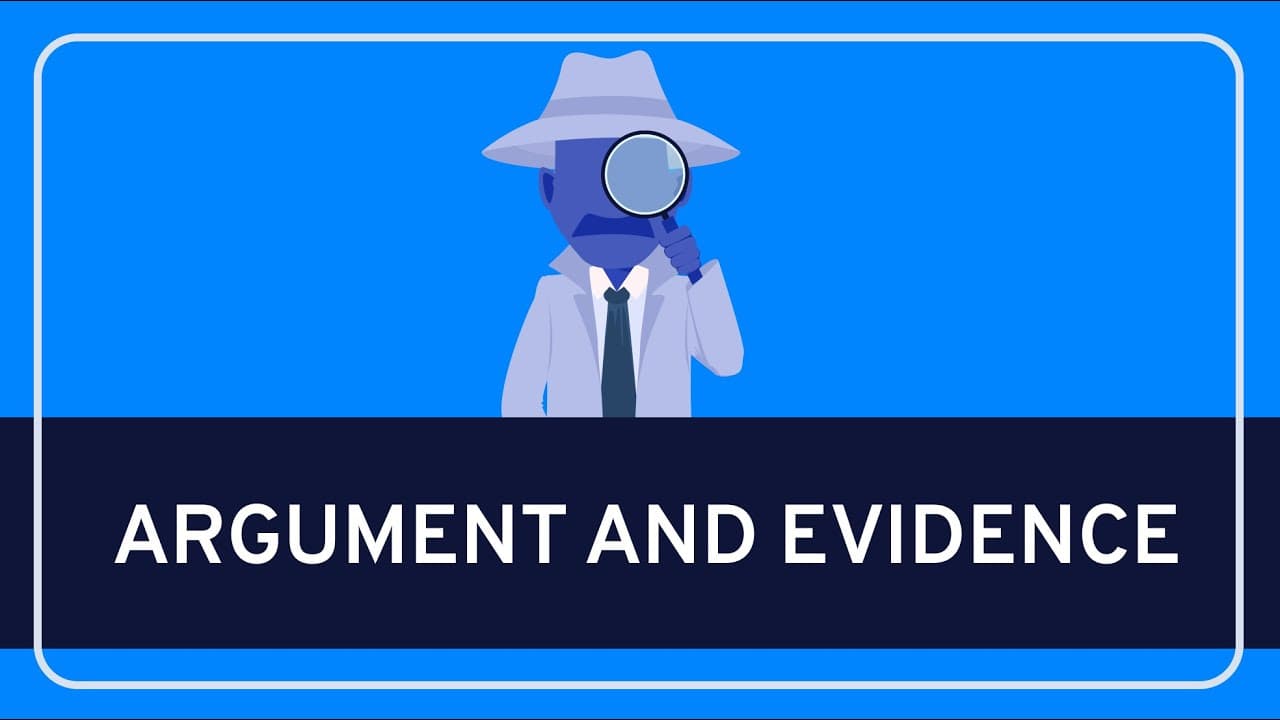
- The process of philosophical inquiry is analogous to detective work, aiming for a convincing narrative rather than absolute certainty.
- Philosophy, like many disciplines, operates under evidence that falls short of proof, necessitating robust argumentation.
Install to Summarize YouTube Videos and Get Transcripts
Explore YouTube Video Summarizer or Get YouTube Transcript Extractor
Questions & Answers
Q: What is the central claim discussed in the video?
The central claim discussed is that one cannot prove the existence of God. Greg Ganssle argues that this claim is often misunderstood as a statement about God, when it actually highlights important philosophical insights about the nature of proof itself.
Q: How does philosophical proof differ from mathematical proof?
Philosophical proof differs from mathematical proof in that it does not deliver certainty. Instead, it focuses on building strong arguments supported by evidence. While mathematics relies on deductive reasoning for absolute certainty, philosophy uses evidence to support premises and create convincing arguments.
Q: What is a deductive argument in philosophy?
A deductive argument in philosophy is structured so that if the premises are true, the conclusion must also be true. However, the real work in philosophy involves supporting these premises with evidence, making it an evidential discipline rather than one seeking absolute certainty.
Q: What role does evidence play in philosophical arguments?
Evidence plays a crucial role in philosophical arguments by supporting the premises of deductive arguments. Philosophers gather and evaluate evidence to build strong cases, much like detectives building a case with multiple supporting facts to reach a reasonable conclusion.
Q: What is meant by a 'cumulative case' in philosophy?
A 'cumulative case' in philosophy refers to building an argument with multiple pieces of evidence that collectively support a claim. Similar to a legal case, it involves gathering various supporting facts to create a convincing narrative rather than relying on a single piece of evidence.
Q: What is the 'fitting-ness approach' in philosophical reasoning?
The 'fitting-ness approach' involves integrating various pieces of evidence into a coherent story that supports a claim. If all the evidence fits well into one narrative, it strengthens the truth of that story. This approach is crucial in philosophy when dealing with large claims like the existence of God.
Q: How does philosophical inquiry resemble detective work?
Philosophical inquiry resembles detective work in that both involve gathering and evaluating evidence to build a strong case. Like detectives, philosophers aim to fit evidence into a coherent story, creating a convincing narrative rather than seeking absolute certainty.
Q: Why is philosophy considered an evidential discipline?
Philosophy is considered an evidential discipline because it relies on gathering and evaluating evidence to support the premises of its arguments. Unlike disciplines that seek certainty, philosophy focuses on building strong, evidence-based arguments to substantiate claims.
Summary & Key Takeaways
-
Greg Ganssle discusses the limitations of proving God's existence, emphasizing the philosophical importance of understanding proof. He argues that most people misinterpret the statement as a comment on God's existence rather than on the nature of proof itself.
-
In philosophy, proof is not about achieving certainty but about building strong arguments with well-supported premises. Deductive arguments require substantial evidence to substantiate their premises, making philosophy an evidential discipline.
-
Ganssle likens philosophical inquiry to detective work, where building a cumulative case with multiple pieces of evidence is crucial. Philosophers aim to fit evidence into a coherent story, supporting overarching claims such as the existence or non-existence of God.
Read in Other Languages (beta)
Share This Summary 📚
Summarize YouTube Videos and Get Video Transcripts with 1-Click
Try YouTube Summary with ChatGPT & Claude or YouTube Transcript Generator
Explore More Summaries from Wireless Philosophy 📚

Summarize YouTube Videos and Get Video Transcripts with 1-Click
Try YouTube Summary with ChatGPT & Claude or YouTube Transcript Generator