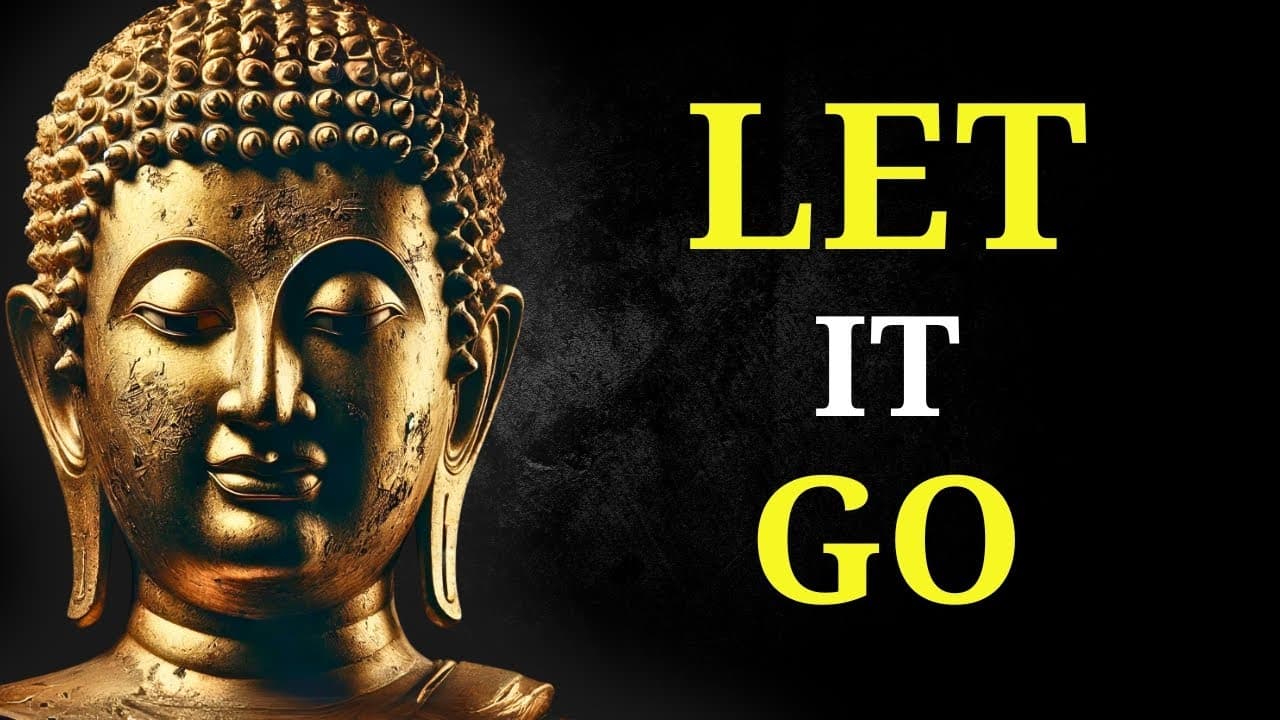
(NO ADS) Fall Asleep to the Best Buddhist Teachings to Let Go of Negative Energy
TL;DR
Buddhist teachings guide you to release emotional burdens.
Transcript
you've been carrying things that were never yours to hold silent grudges words that cut deep and never left regrets replaying in your head like broken songs and no matter how much sleep you get you wake up tired not in your body but in your soul this video isn't just background noise to help you doze off it's a mirror and maybe for the first time i... Read More
Key Insights
- Holding onto past experiences and emotions can create a false sense of identity, leading to suffering and a lack of peace.
- Buddhism encourages the practice of mindfulness and stillness to observe and release emotions without clinging to them.
- The ego often amplifies pain by wrapping experiences in narratives, which can prevent healing and perpetuate suffering.
- Forgiveness and letting go of emotional debt are crucial for personal peace, as they release the expectation of reparation from others.
- Reactivity and the need for justice or revenge can trap individuals in cycles of suffering, while non-reaction and forgiveness offer freedom.
- High energy and excitement can be misleading if not grounded in mindfulness, potentially leading to overstimulation and imbalance.
- Emotional hoarding, or holding onto past emotions, can lead to stagnation and prevent the flow of new experiences and growth.
- Ghost conversations and absorbing others' emotions can drain personal energy, highlighting the importance of energetic boundaries and self-awareness.
Install to Summarize YouTube Videos and Get Transcripts
Explore YouTube Video Summarizer or Get YouTube Transcript Extractor
Questions & Answers
Q: What is the Buddhist perspective on holding onto past experiences?
Buddhism teaches that holding onto past experiences creates a false sense of identity and leads to suffering. By clinging to these experiences, individuals prevent themselves from experiencing peace and growth. The practice encourages observing and releasing emotions without judgment, allowing them to pass without becoming part of one's identity.
Q: How does the ego contribute to suffering according to the transcript?
The ego contributes to suffering by amplifying pain through narratives that wrap experiences in stories. This can prevent healing and perpetuate suffering, as individuals identify with these stories and hold onto them. The ego often personalizes experiences, turning temporary emotions into long-term identities, which can become burdensome.
Q: What role does forgiveness play in achieving personal peace?
Forgiveness plays a crucial role in achieving personal peace by releasing the expectation of reparation from others. By forgiving emotional debt, individuals free themselves from the need for others to make amends, allowing them to move on and find peace. Forgiveness is not about excusing behavior but about choosing personal peace over resentment.
Q: How can high energy and excitement be misleading?
High energy and excitement can be misleading if not grounded in mindfulness, as they can lead to overstimulation and imbalance. Excitement without awareness can create a storm of emotions that mimic growth but ultimately leave individuals feeling ungrounded and fatigued. True joy is rooted in calmness and doesn't pull individuals away from their center.
Q: What is emotional hoarding and how does it affect individuals?
Emotional hoarding is the act of holding onto past emotions and experiences, which can lead to stagnation and prevent the flow of new experiences and growth. This hoarding often stems from a fear of losing meaning or identity. Emotional hoarding can create heavy moods and long-term identities that are not reflective of one's true self.
Q: What are ghost conversations and how do they impact peace?
Ghost conversations are rehearsed confrontations and imaginary arguments that play out in one's mind. They impact peace by keeping individuals trapped in past or imagined scenarios that can't be changed. These conversations feel productive but are illusions, as no healing comes from arguing with a memory or winning a debate that never leaves one's head.
Q: How can individuals maintain energetic boundaries?
Individuals can maintain energetic boundaries by staying rooted in themselves while being present with others. This involves listening without absorbing, holding space without becoming the space, and feeling others' pain without holding it as one's own. Practices like mindful breathing and grounding techniques can help clear emotional residue and maintain personal energy.
Q: How does non-reaction contribute to personal peace?
Non-reaction contributes to personal peace by preventing individuals from getting caught in cycles of reactivity and suffering. By choosing non-reaction, individuals can observe emotions and situations without becoming entangled in them, allowing for a clearer and more peaceful response. This practice helps break old patterns and create new, more positive momentum.
Summary & Key Takeaways
-
The transcript explores the Buddhist approach to releasing negative energy by letting go of past experiences and emotions that create false identities. It emphasizes mindfulness and stillness as tools for observing and releasing emotions without clinging to them.
-
It highlights the role of the ego in amplifying pain through narratives, which can prevent healing. Forgiveness and letting go of emotional debt are presented as pathways to personal peace, freeing individuals from the expectation of reparation from others.
-
The transcript also addresses the dangers of reactivity, high energy, and emotional hoarding, advocating for non-reaction, grounded energy, and energetic boundaries to maintain personal peace and prevent stagnation.
Read in Other Languages (beta)
Share This Summary 📚
Summarize YouTube Videos and Get Video Transcripts with 1-Click
Try YouTube Summary with ChatGPT & Claude or YouTube Transcript Generator
Explore More Summaries from Buddha's Footsteps 📚
Summarize YouTube Videos and Get Video Transcripts with 1-Click
Try YouTube Summary with ChatGPT & Claude or YouTube Transcript Generator