This Is How Social Media Is Made To Be Addicting
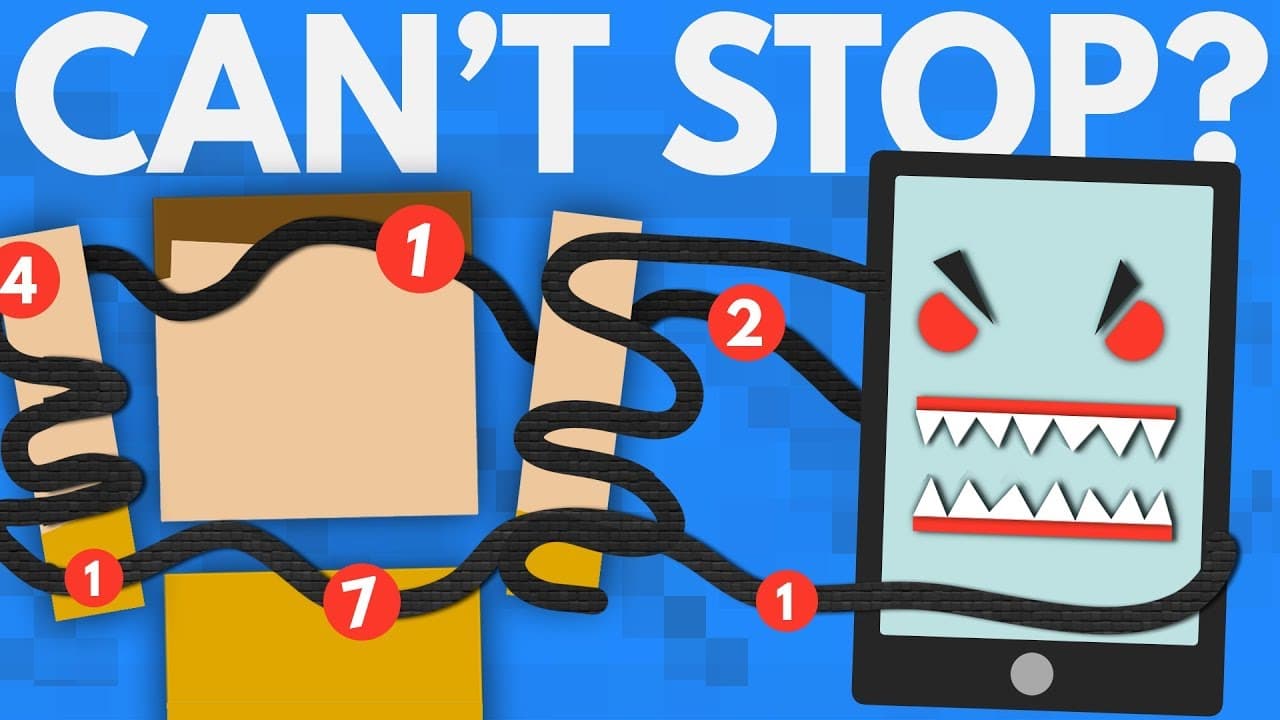
TL;DR
Social media usage can amount to 5 years in a lifetime; addiction parallels substance abuse.
Transcript
Hey there and welcome to Life Noggin. It’s pretty hard to tell me and Triangle Bob apart when you zoom in on our heads. Ya know cause our animator didn’t give us faces! You humans are quite a bit different though! You have so many awesome facial features that really set you apart. So much so, that you even made an online book of all your faces! It ... Read More
Key Insights
- ⌛ Social media engagement can amount to significant chunks of time daily.
- 🧠 Addiction to social media may have similar effects on the brain as substance abuse.
- 🎮 Health organizations are recognizing video game disorders and potentially social media addiction.
- 👤 Social media platforms use tactics to keep users engaged and coming back.
- 🔉 Emotions can be influenced by social media content.
- 😒 Recognizing excessive social media use and taking breaks can be beneficial.
- 💗 The impact of social media on mental health is an area of growing concern.
Install to Summarize YouTube Videos and Get Transcripts
Explore YouTube Video Summarizer or Get YouTube Transcript Extractor
Questions & Answers
Q: How much time do people spend on social media daily?
On average, people spend about 2 hours a day on social media, with the majority of that time dedicated to platforms like Facebook and YouTube.
Q: What parallels exist between social media addiction and substance addiction?
Social media addiction can have similar effects on the brain as substance addiction, changing brain wiring and causing intense cravings that are difficult to resist.
Q: How do social media platforms keep users engaged?
Social media platforms use tactics like constant feeds, push notifications, and integration with other sites to ensure users keep coming back for more engagement.
Q: What effects do social media platforms have on users' emotions?
Studies have shown that social media platforms can influence users' emotions, with negative posts leading to more negative content and positive posts fostering positivity.
Summary & Key Takeaways
-
People spend an average of 2 hours daily on social media, primarily on Facebook and YouTube.
-
Addiction to social media may be comparable to substance addiction due to changes in brain wiring.
-
Social media platforms use tactics like constant feeds and push notifications to keep users engaged.
Read in Other Languages (beta)
Share This Summary 📚
Summarize YouTube Videos and Get Video Transcripts with 1-Click
Try YouTube Summary with ChatGPT & Claude or YouTube Transcript Generator
Explore More Summaries from Life Noggin 📚






Summarize YouTube Videos and Get Video Transcripts with 1-Click
Try YouTube Summary with ChatGPT & Claude or YouTube Transcript Generator