How to Learn More in 1 Hour Than Others Do All Day (should be illegal)
TL;DR
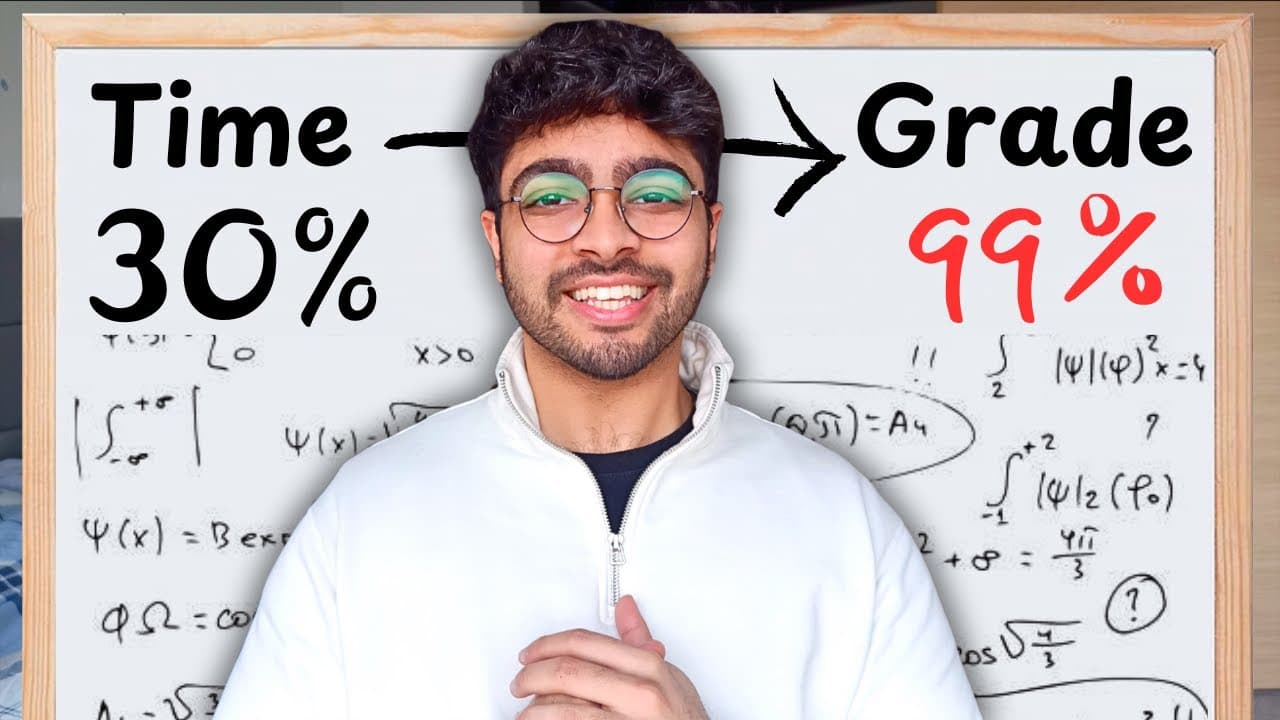
Three changes to study effectively and improve grades.
Transcript
the one fact that astounds me is that the majority of you are still studying in completely the wrong ways and it's not your fault because I was in the exact same place too but then with just three changes I went from someone that got average grades in high school to someone that scored in the top 1% in my University and then went on to beco... Read More
Key Insights
- Incorporating constant testing into your study routine helps lock information into your brain, improving retention and understanding.
- Using note-taking apps like Remnote can streamline the study process by allowing simultaneous note and flashcard creation.
- Priming your brain with a quick overview of the study material helps in understanding the structure and main concepts before diving deeper.
- Avoid spending time on confusing topics initially; focus on what you understand and revisit challenging areas later.
- Creating questions and flashcards from study materials aids in active recall and reinforces learning during revision sessions.
- The first 10 minutes of study should be spent on understanding the chapter's structure and watching a basic video for a conceptual overview.
- Using technology to automate and bulk-create flashcards can save time and enhance study efficiency.
- Regularly testing yourself and revisiting study materials in multiple passes helps in building a deeper understanding of the subject matter.
Install to Summarize YouTube Videos and Get Transcripts
Explore YouTube Video Summarizer or Get YouTube Transcript Extractor
Questions & Answers
Q: What is the first major change the speaker made to improve study efficiency?
The first major change was incorporating constant testing into the study routine. By doing multiple-choice questions before, during, and after studying, the speaker found that this method significantly improved retention and understanding of the material. This approach is based on the science of active recall, which helps lock information into the brain more effectively than passive studying methods.
Q: How does the speaker recommend using note-taking apps?
The speaker recommends using note-taking apps like Remnote to streamline the study process. These apps allow students to create flashcards while taking notes, which enhances active recall and saves time. The app's features, such as space repetition algorithms and the ability to create flashcards from lecture slides or videos, make it a valuable tool for efficient studying.
Q: What is the concept of priming in the context of studying?
Priming, in the context of studying, involves preparing the brain by giving it a quick overview of the material before diving into detailed study. This includes understanding the structure of the chapter and watching a short, basic video related to the topic. Priming helps the brain grasp the big picture and the basics, making the subsequent detailed study more effective and faster.
Q: Why does the speaker advise against focusing on confusing topics initially?
The speaker advises against focusing on confusing topics initially because it can waste time and energy, leading to frustration and reduced efficiency. Instead, the speaker recommends focusing on concepts that are easily understood and revisiting more challenging topics later. This approach ensures that study sessions are productive and helps build a foundation of knowledge before tackling complex material.
Q: What role do flashcards play in the speaker's study method?
Flashcards play a crucial role in the speaker's study method by facilitating active recall and reinforcing learning. By creating flashcards from study materials, students can test themselves regularly, which helps in retaining information long-term. The speaker emphasizes using apps that allow easy creation and organization of flashcards, making the study process more efficient and effective.
Q: How does the speaker suggest dealing with large volumes of study material?
The speaker suggests dealing with large volumes of study material by breaking the study process into multiple passes. Initially, focus on understanding the structure and key concepts, then move on to more detailed study. Avoid getting stuck on confusing topics during the first pass; instead, revisit them in subsequent passes. This method helps manage study material efficiently and ensures comprehensive understanding.
Q: What are the benefits of using technology in studying, according to the speaker?
According to the speaker, using technology in studying offers several benefits, including time-saving automation, enhanced organization, and improved efficiency. Apps like Remnote allow students to create and organize flashcards easily, automate repetitive tasks, and use algorithms for spaced repetition. These technological tools help streamline the study process, making it more effective and less time-consuming.
Q: What is the speaker's perspective on traditional note-taking methods?
The speaker views traditional note-taking methods as less effective compared to active recall techniques. Instead of spending time on detailed notes, the speaker advocates for creating questions and flashcards from study materials. This approach focuses on testing and recalling information, which is more beneficial for long-term retention and understanding. The speaker emphasizes the limited utility of traditional notes, especially when exams are near.
Summary & Key Takeaways
-
The video discusses three major changes to improve study efficiency, focusing on constant testing, using note-taking apps, and priming the brain before studying.
-
By incorporating testing into every stage of studying and utilizing apps like Remnote, students can enhance retention and understanding of material.
-
The speaker emphasizes the importance of priming, avoiding confusion, and revisiting complex topics later for more effective learning.
Read in Other Languages (beta)
Share This Summary 📚
Summarize YouTube Videos and Get Video Transcripts with 1-Click
Try YouTube Summary with ChatGPT & Claude or YouTube Transcript Generator
Explore More Summaries from Zain Asif 📚

Summarize YouTube Videos and Get Video Transcripts with 1-Click
Try YouTube Summary with ChatGPT & Claude or YouTube Transcript Generator