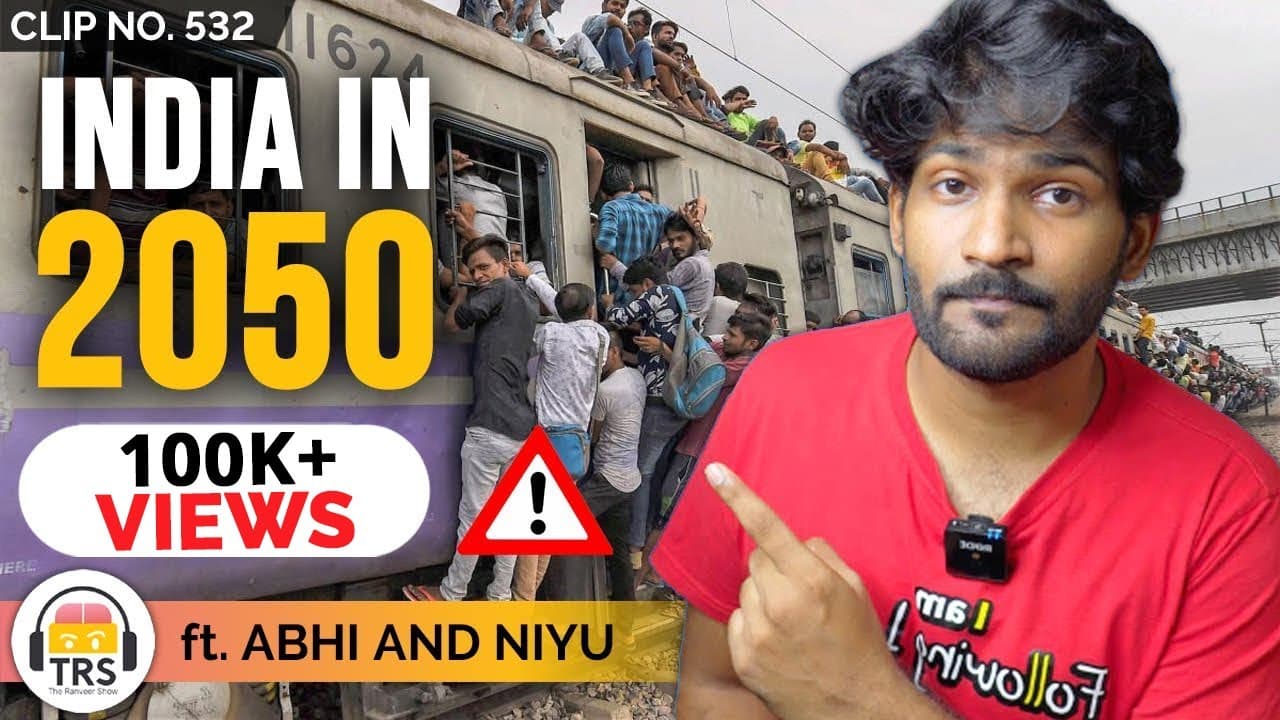
@AbhiandNiyu Explains How India Will Look Like In 2050 | TheRanveerShow Clips
TL;DR
A reflection on India's potential challenges and reforms needed for a sustainable future by 2050.
Transcript
every single video on this channel is going to make you smarter that's why you should subscribe and hit the bell icon what does india look like in 2050 and i'm asking you this because you all study india in detail day in day out so where do you all see it going in 30 years we need some actual reforms we definitely need some actual reforms and the r... Read More
Key Insights
- ❓ Consolidating elections could foster political focus on governance, improving efficiency over the current system.
- 💦 India's water crisis presents a formidable challenge given its large population and limited freshwater supply, necessitating urgent agricultural reforms.
- 🥺 Long-term objectives must take precedence in youth-led movements to catalyze substantial political and social change.
- 😣 The current pattern of agricultural practices is unsustainable and poses risks of severe ecological consequences.
- 🥹 Content creators hold a powerful position in influencing public discourse and can play a significant role in fostering change.
- 💗 Fragmented efforts at water conservation must evolve into systemic solutions to address the growing crisis effectively.
- 💁 Young people need to be informed about environmental issues to advocate for sustainable practices that ensure a better future.
Install to Summarize YouTube Videos and Get Transcripts
Explore YouTube Video Summarizer or Get YouTube Transcript Extractor
Questions & Answers
Q: What political reforms are suggested to improve governance in India?
The content suggests consolidating elections into a single year to allow politicians to focus on governance rather than campaigning every year. This shift would help prioritize long-term development initiatives and promote effective governance, enabling resources to be better utilized for the welfare of the public rather than for electioneering efforts.
Q: How does the current agricultural practice threaten India's future?
It is highlighted that India's agricultural practices, particularly in Punjab, require significant freshwater resources for water-intensive crops like wheat and rice. Without changing these practices, Punjab may face severe water stress, leading to desertification. The reliance on these water-guzzling crops, despite buffer stocks, exacerbates the depletion of groundwater and topsoil essential for sustainable agriculture.
Q: What role do youth protests play in shaping India’s future?
Youth protests are viewed as a vital force for driving necessary change. However, it is noted that many current protests focus on short-term objectives rather than long-term reforms. Effective youth movements should advocate for substantial changes in political and ecological policies to secure a better quality of life by 2050.
Q: What are the implications of India's water scarcity for its population?
India's water scarcity impacts its vast population significantly, as it has only 3% of the world's freshwater resources while hosting about 18% of the global population. Without serious reforms in water conservation and agricultural practices, the country risks facing food shortages, agricultural collapse, and increased conflict over dwindling resources.
Q: How does content creation influence societal change according to the discussion?
The content underscores the importance of content creators in raising awareness and provoking thought on critical issues. Historical examples, such as AIB's work on internet censorship, illustrate how influential content can lead to societal discussions, inciting action and reform while fostering a more informed citizenry capable of demanding change.
Q: What specific environmental threats does India face by 2050?
By 2050, India could face severe environmental threats such as a significant reduction in groundwater levels, decreased flow of major rivers like the Ganges, and the potential transformation of fertile regions like Punjab into desert areas, all of which threaten agricultural output and ecosystem stability.
Summary & Key Takeaways
-
The need for comprehensive political reforms in India is emphasized as elections distract from governance, suggesting a unified election year to focus on development in other years.
-
Concerns are raised about India's water crisis, highlighting the disproportion between its population and the availability of freshwater resources, necessitating urgent action to address agricultural practices.
-
There is a call for youth-driven, meaningful protests focused on long-term change rather than short-term issues, as well as the importance of content creators in raising awareness and driving social movements.
Read in Other Languages (beta)
Share This Summary 📚
Summarize YouTube Videos and Get Video Transcripts with 1-Click
Try YouTube Summary with ChatGPT & Claude or YouTube Transcript Generator
Explore More Summaries from TRS Clips 📚




Summarize YouTube Videos and Get Video Transcripts with 1-Click
Try YouTube Summary with ChatGPT & Claude or YouTube Transcript Generator