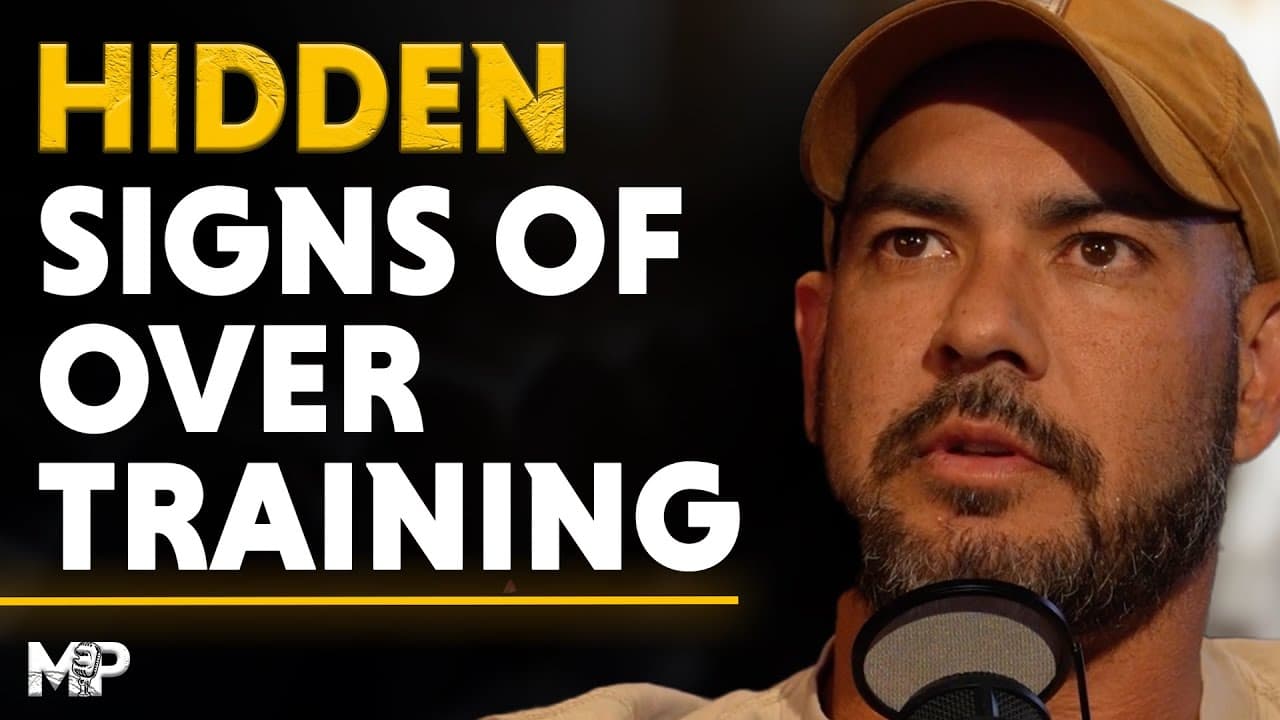
7 Ways Working Out Is Making You Fat | Mind Pump 2633
TL;DR
Overtraining can lead to weight gain due to increased stress and cravings.
Transcript
Working out too much can make you fat. It's true. We're going to talk about the seven ways doing too much is making it impossible to lose body fat or worse, you're getting fatter. Let's go. Wow. Let's hear it. Thought I'd hook everybody with a really crazy statement. No. Um I actually thought this would be a good topic because I was on the phone la... Read More
Key Insights
- Overtraining can lead to increased cravings for high-calorie, hyper-palatable foods, making it difficult to maintain a caloric deficit.
- Chronic stress from overtraining elevates cortisol levels, which can lead to increased hunger and fat storage, particularly around the midsection.
- Poor sleep is both a symptom and a consequence of overtraining, further exacerbating stress and hindering recovery.
- Elevated cortisol levels from overtraining can disrupt normal hormone balances, leading to decreased testosterone and increased fat storage.
- Overtraining can result in muscle loss, as the body prioritizes energy storage over muscle building, slowing metabolism.
- Gut health can be negatively impacted by overtraining due to increased inflammation, leading to conditions like leaky gut syndrome.
- Disordered eating patterns, such as binge-eating or extreme restriction, can be exacerbated by overtraining.
- Finding the right balance in training is crucial; too much or too little can both lead to suboptimal results.
Install to Summarize YouTube Videos and Get Transcripts
Explore YouTube Video Summarizer or Get YouTube Transcript Extractor
Questions & Answers
Q: How does overtraining affect cravings?
Overtraining sends a consistent stress signal to the body, which can lead to increased cravings for high-calorie, hyper-palatable foods. This is the body's way of seeking comfort and trying to compensate for the energy deficit caused by excessive training.
Q: What is the relationship between cortisol and fat storage?
Cortisol is a stress hormone that, when elevated due to overtraining, can lead to increased fat storage, particularly around the midsection. This happens because cortisol promotes the release of glycogen from the liver and increases energy expenditure, but chronic elevation can lead to fat storage as the body tries to protect itself.
Q: How does overtraining impact sleep?
Overtraining can disrupt sleep by causing elevated cortisol levels at inappropriate times, such as at night. This can lead to difficulty falling asleep or staying asleep, further exacerbating stress and hindering recovery. Poor sleep also negatively impacts hormone balance and appetite regulation.
Q: What are the hormonal effects of overtraining?
Overtraining can lead to decreased testosterone levels in both men and women, resulting in symptoms like reduced muscle mass, increased fat gain, and lower energy levels. Elevated cortisol levels from overtraining further disrupt hormone balance, promoting a profile favorable to fat gain.
Q: Can overtraining lead to muscle loss?
Yes, overtraining can lead to muscle loss as the body prioritizes energy storage over muscle building. This is due to the unfavorable hormone profile created by overtraining, which includes elevated cortisol and reduced testosterone, leading to a slower metabolism and increased fat storage.
Q: How does overtraining affect gut health?
Overtraining can negatively impact gut health by increasing inflammation, which can lead to conditions like leaky gut syndrome. This occurs when the tight junctions in the gut lining open, leading to food intolerances and digestive issues, further complicating recovery and overall health.
Q: What is the impact of overtraining on eating patterns?
Overtraining can exacerbate disordered eating patterns, such as binge-eating or extreme restriction. This can occur as individuals try to compensate for the increased energy demands and stress of overtraining, leading to a cycle of overeating and guilt-driven restriction.
Q: How can one find the right balance in training?
Finding the right balance in training involves listening to your body and adjusting your workout intensity and volume based on your fitness level, lifestyle, and stress levels. It's important to allow adequate recovery time, maintain a balanced diet, and avoid excessive exercise to prevent overtraining and its negative effects.
Summary & Key Takeaways
-
Overtraining can paradoxically lead to weight gain due to increased cravings for high-calorie foods and elevated cortisol levels, which promote fat storage. This is exacerbated by poor sleep and disrupted hormone balances.
-
Chronic stress from overtraining elevates cortisol, leading to increased hunger and fat storage, particularly around the midsection. This stress can also disrupt sleep, further hindering recovery and weight management.
-
Gut health can suffer from overtraining due to increased inflammation, leading to conditions like leaky gut syndrome. Additionally, disordered eating patterns can develop, making it crucial to find a balanced training approach.
Read in Other Languages (beta)
Share This Summary 📚
Summarize YouTube Videos and Get Video Transcripts with 1-Click
Try YouTube Summary with ChatGPT & Claude or YouTube Transcript Generator
Explore More Summaries from Mind Pump Show 📚


Summarize YouTube Videos and Get Video Transcripts with 1-Click
Try YouTube Summary with ChatGPT & Claude or YouTube Transcript Generator