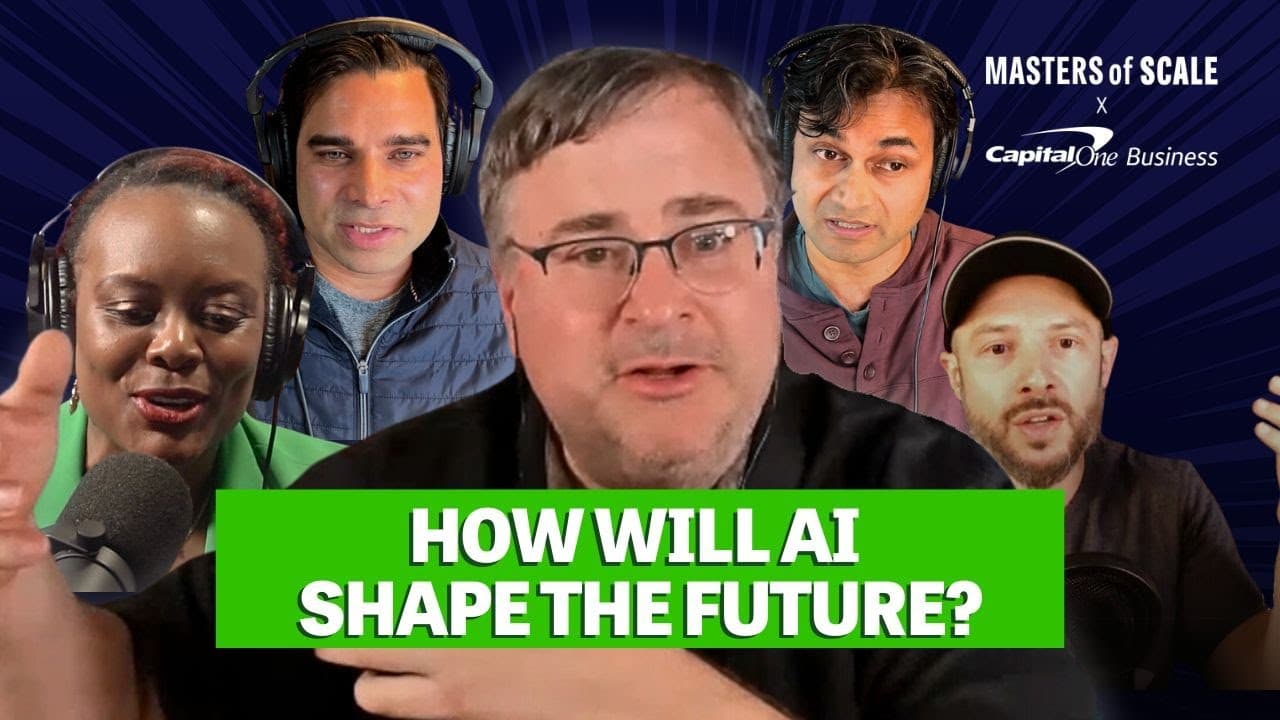
Strategy Session: How AI will reshape our future (with Reid Hoffman) | Masters of Scale
TL;DR
AI is reshaping business and society, offering new opportunities and challenges.
Transcript
as an entrepreneur what do you want to know about AI it's time to wield this new technology to create the workplace and the work life that you want please welcome Reed Hoffman part of the way that I've been describing artificial intelligence is a steam engine of the Mind the fear was around copying or plagiarism when I think about all of the possib... Read More
Key Insights
- AI is being compared to a 'steam engine of the mind,' highlighting its potential to revolutionize various industries by enhancing efficiency and opening new opportunities.
- AI's integration into businesses is not just about automation but also about transforming how we think about health, communication, and future possibilities.
- Trust is a major concern with AI, especially in fields like healthcare, where accuracy and reliability are crucial. Building trust involves using human oversight and ensuring transparency.
- AI is expected to play a significant role in smart cities by improving systems' interactions and efficiency, leading to better urban management and resource utilization.
- E-commerce can benefit from AI by personalizing the shopping experience, maintaining authenticity, and enhancing customer engagement through virtual spaces and AI-driven interactions.
- Animal communication is being explored using AI, which could lead to a deeper understanding of non-human cultures and improve our relationship with nature.
- AI has the potential to help humans become better communicators by reducing perception gaps and fostering better understanding and collaboration.
- Governance systems need to evolve to keep pace with AI advancements, ensuring ethical use and preventing misuse while fostering innovation.
Install to Summarize YouTube Videos and Get Transcripts
Explore YouTube Video Summarizer or Get YouTube Transcript Extractor
Questions & Answers
Q: How will AI integration impact the scalability of interconnected wireless systems in cities?
AI integration will enhance the scalability of interconnected wireless systems by enabling real-time data processing and communication. This will lead to smarter management of urban infrastructure, allowing for efficient traffic flow, energy distribution, and public safety measures. AI can also facilitate better decision-making by predicting trends and automating routine tasks, ultimately improving the quality of life in urban environments.
Q: How will AI change the e-commerce experience for consumers?
AI will transform the e-commerce experience by personalizing interactions and providing tailored recommendations based on consumer preferences and behaviors. Virtual AI assistants can mimic the in-store shopping experience by offering real-time advice, answering questions, and suggesting products. This personalization will help maintain the authenticity and personality of the brand while enhancing customer satisfaction and loyalty.
Q: What are the potential benefits of using AI to understand animal communication?
AI can decode animal communication, revealing insights into non-human cultures and consciousness. This understanding can foster a deeper connection between humans and animals, highlighting the complexity and intelligence of animal societies. By translating animal languages, AI can help in conservation efforts, improve animal welfare, and reshape our ethical perspectives on nature and sentience.
Q: How can AI help humans become better communicators?
AI can enhance human communication by identifying and reducing perception gaps, enabling more accurate understanding of differing viewpoints. AI tools can analyze communication patterns, suggest improvements, and facilitate better dialogue by providing insights into how messages are received. This can lead to more effective collaboration and conflict resolution, both in personal and professional settings.
Q: What is the role of governance in the advancement of AI technology?
Governance plays a crucial role in ensuring that AI technology is developed and used ethically. As AI capabilities grow, governance systems must evolve to address challenges such as data privacy, bias, and accountability. Investing in governance innovation can help establish frameworks that promote responsible AI use, balancing innovation with ethical considerations to prevent misuse and ensure public trust.
Q: How does AI contribute to the concept of smart cities?
AI contributes to smart cities by optimizing the management of resources and infrastructure. It enables real-time monitoring and analysis of urban systems, such as traffic, energy, and public services, leading to more efficient and sustainable city operations. AI-driven insights can inform policy decisions and improve the quality of life for residents by enhancing safety, reducing waste, and facilitating seamless urban mobility.
Q: What challenges does AI face in gaining public trust?
AI faces challenges in gaining public trust due to concerns about data privacy, decision-making transparency, and potential biases. To build trust, AI systems must be designed with accountability and fairness in mind, incorporating human oversight and clear explanations of AI processes. Open communication and education about AI's benefits and limitations can also help alleviate public fears and misconceptions.
Q: How can AI support the future of work and entrepreneurship?
AI can support the future of work by automating routine tasks, allowing entrepreneurs to focus on strategic and creative activities. It can also provide insights into market trends and consumer behavior, helping businesses make informed decisions. By democratizing access to advanced tools and resources, AI empowers entrepreneurs to innovate and scale their ventures more effectively, fostering economic growth and job creation.
Summary & Key Takeaways
-
AI is revolutionizing the workplace by acting as an assistant and improving communication and efficiency across industries. The potential for AI to change how we approach health and cultural understanding is immense.
-
Reid Hoffman emphasizes the importance of trust in AI applications, particularly in sensitive areas like healthcare. Trust can be built through human oversight and transparent AI processes.
-
AI's role in smart cities and e-commerce is expanding, with potential applications in improving urban systems and personalizing online shopping experiences, ensuring they remain authentic and engaging.
Read in Other Languages (beta)
Share This Summary 📚
Summarize YouTube Videos and Get Video Transcripts with 1-Click
Try YouTube Summary with ChatGPT & Claude or YouTube Transcript Generator
Explore More Summaries from Masters of Scale 📚

Summarize YouTube Videos and Get Video Transcripts with 1-Click
Try YouTube Summary with ChatGPT & Claude or YouTube Transcript Generator