How to Build a Scalable Product for Your Startup

TL;DR
To build a scalable product, focus on go-to-market strategies and pricing early in the development process. Identify a minimum viable segment (MVS) with consistent needs where your product can prove value, allowing you to dominate that niche before expanding. Ensure your product is simple to install, has low initial costs, and provides instant value to increase adoption.
Transcript
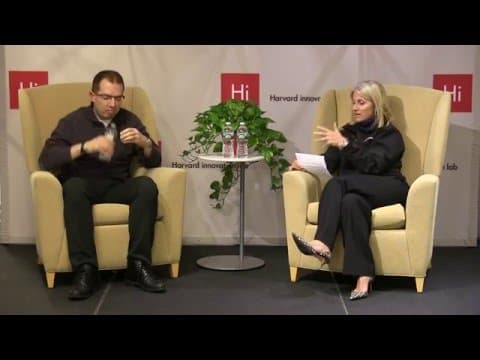
what we're going to talk today about is how to build a product that scales into a company it's a you know it's it's super it's super common that when you start a company you start with the product so for those of you starting companies did you have a bolt of lightning where I've got a product idea and that was the Genesis for starting the conversat... Read More
Key Insights
- 🌉 Bridging the product-company gap requires consideration of go-to-market strategies and pricing from the beginning.
- 👻 Identifying a minimum viable segment helps prove the value of your product and allows for gradual expansion.
- 😘 Creating a simple and easy-to-use product, with low initial costs and instant value, increases adoption and customer satisfaction.
- 💁 Aligning with the ecosystem and forming partnerships can enhance your product's success.
Install to Summarize YouTube Videos and Get Transcripts
Explore YouTube Video Summarizer or Get YouTube Transcript Extractor
Questions & Answers
Q: How do you determine the size of the minimum viable segment?
The size of the minimum viable segment depends on the problem you're solving and your ability to dominate that market. Look for a segment where you can offer a valuable solution and prove your product's potential for success.
Q: How do you balance simplifying the problem with solving multiple problems in the long term?
While it's important to have a long-term vision, start by focusing on solving one or two critical problems within the minimum viable segment. By honing in on specific pain points, you can build a strong foundation and expand gradually.
Q: How do you determine the price for the MVP?
Pricing can be determined based on factors such as market demand, competition, and value provided. Consider conducting surveys or market research to gather insights from potential customers and use that information to set a competitive and profitable price for your MVP.
Q: How can hardware projects approach the MVP concept?
Hardware projects can simplify the MVP process by focusing on the core problem they aim to solve. Prototyping with simple designs and functionalities can help test the value proposition without investing heavily in manufacturing. Start with a small-scale production or integrate your solution with existing hardware systems if possible.
Key Insights:
- Bridging the product-company gap requires consideration of go-to-market strategies and pricing from the beginning.
- Identifying a minimum viable segment helps prove the value of your product and allows for gradual expansion.
- Creating a simple and easy-to-use product, with low initial costs and instant value, increases adoption and customer satisfaction.
- Aligning with the ecosystem and forming partnerships can enhance your product's success.
- Pricing should reflect the value provided, considering market demand, competition, and customer insights.
Summary & Key Takeaways
-
Building a product is common when starting a company, but it doesn't always scale into a large company. To bridge the product-company gap, it's important to consider go-to-market strategies and pricing from the beginning.
-
Finding a minimum viable segment (MVS) is crucial for success. Identify a target market with consistent needs where you can dominate and prove the value of your product before expanding.
-
To create a successful product, it should be simple to install and use, have low initial cost, provide instant and ongoing value, and fit well within the ecosystem.
Read in Other Languages (beta)
Share This Summary 📚
Summarize YouTube Videos and Get Video Transcripts with 1-Click
Try YouTube Summary with ChatGPT & Claude or YouTube Transcript Generator
Explore More Summaries from Harvard Innovation Labs 📚



Summarize YouTube Videos and Get Video Transcripts with 1-Click
Try YouTube Summary with ChatGPT & Claude or YouTube Transcript Generator