Are We Alone? The Search for Life Beyond the Earth - Professor Ian Morison
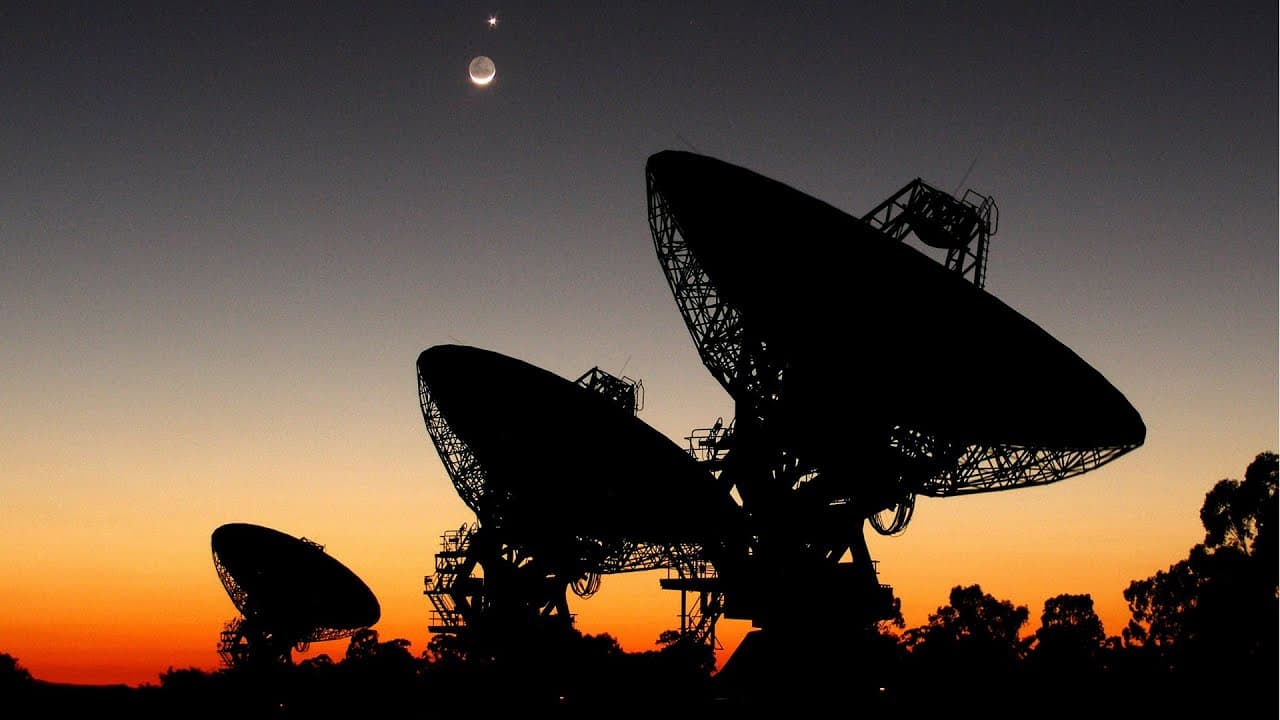
TL;DR
Exploring the possibility of extraterrestrial life in our vast universe and the challenges in detecting intelligent civilizations.
Transcript
so this is the talk that when I was rung up at half past nine yesterday morning I thought we might give today and in fact the transcript some of your pick up is essentially based upon a chapter of the book that I've just mentioned so you don't only need to buy was it something like 20 to 23rd zuv it to have a whole lot so the question is are we alo... Read More
Key Insights
- 🤩 Stars produce essential elements like carbon and oxygen, which are building blocks for life in the universe.
- 🥺 Supernova explosions create heavier elements like gold and lead, enriching the interstellar medium for planet formation.
- 🤩 Mars and other planets in our solar system offer potential for simple life forms due to past evidence of water flow and the presence of key compounds.
- 👨🔬 The search for extraterrestrial life necessitates advanced technologies like radio telescopes and the SETI program.
- 🧑🏭 Factors like plate tectonics, a stable climate, and protection from cosmic impacts contribute to Earth's habitability.
- 🛟 Discoveries of exoplanets and habitable zones expand possibilities for finding intelligent life beyond our solar system.
- 👨🔬 Various challenges, including interference and signal detection complexities, impact the search for extraterrestrial intelligence.
Install to Summarize YouTube Videos and Get Transcripts
Explore YouTube Video Summarizer or Get YouTube Transcript Extractor
Questions & Answers
Q: What is the significance of the hydrogen line in the search for extraterrestrial life?
The hydrogen line is a fundamental frequency emitted by hydrogen, which can help detect signals from potential civilizations beyond our solar system due to its universal nature and easy identification.
Q: How do pulsars play a role in the search for intelligent life?
Pulsars are rapidly rotating neutron stars that emit regular radio pulses, which can be mistaken for potential signals from extraterrestrial sources, showcasing the challenges in distinguishing natural phenomena from artificial signals.
Q: What factors contribute to Earth being a habitable planet for life to evolve?
Earth's unique characteristics, such as a stable rotation axis, plate tectonics, and a large moon, have played crucial roles in creating a habitable environment for life to evolve and thrive.
Q: How does the Drake Equation help in estimating the number of communicating civilizations?
The Drake Equation factors in various variables, such as the number of suitable stars, planets, and habitable zones, to provide an estimation of the likelihood of intelligent civilizations existing and the challenges in detecting them.
Summary & Key Takeaways
-
Discusses the possibility of extraterrestrial life and the challenges in finding intelligent civilizations in our galaxy.
-
Explores the Drake Equation, which estimates the number of communicating civilizations.
-
Highlights the role of technological advancements and radio telescopes in the search for alien life.
Read in Other Languages (beta)
Share This Summary 📚
Summarize YouTube Videos and Get Video Transcripts with 1-Click
Try YouTube Summary with ChatGPT & Claude or YouTube Transcript Generator
Explore More Summaries from Gresham College 📚


Summarize YouTube Videos and Get Video Transcripts with 1-Click
Try YouTube Summary with ChatGPT & Claude or YouTube Transcript Generator