Should Gas Stoves Be BANNED?
TL;DR
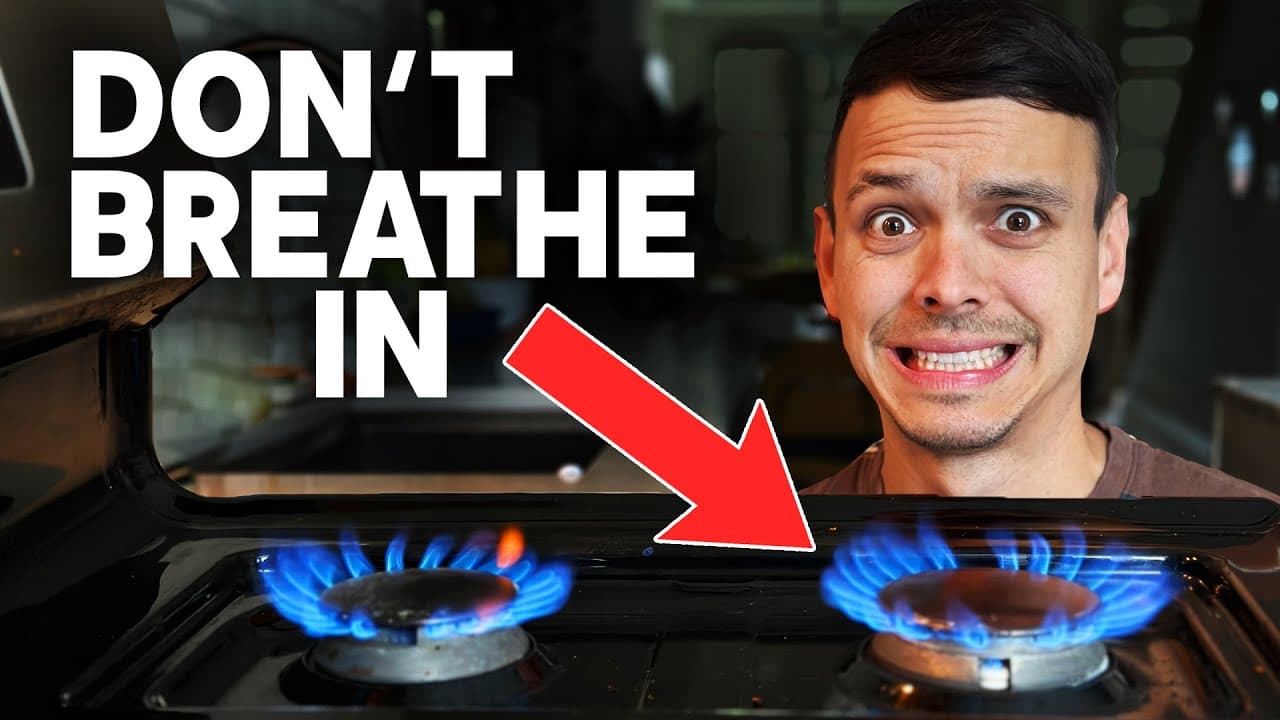
Gas stoves can release toxic gases and pollutants that negatively affect human health and the environment, with levels comparable to secondhand smoke. Switching to electric stoves can help minimize these impacts.
Transcript
is your gas stove killing you may have heard people arguing over electric vehicles versus gas vehicles but now the debate has come into the kitchen with gas stoves versus electric stoves some recent research has called into question the safety of gas stoves and their detrimental impact on human health as well as the environment and as a result it h... Read More
Key Insights
- 🫢 Gas stoves can emit toxic gases, such as nitrogen dioxide and carbon monoxide, which can worsen respiratory and cardiovascular conditions.
- 🫢 The emissions from a gas stove can exceed outdoor safety standards within minutes of being turned on.
- 🫢 Gas stoves can release toxic compounds, including benzene, even when not in use, contributing to indoor air pollution levels comparable to secondhand smoke.
- 🫢 Nearly 13% of childhood asthma cases in the US are attributed to gas stove use.
- 😘 Electric stoves, while not completely pollutant-free, are a safer and lower-impact alternative to gas stoves.
- 🇲🇬 Methane emissions from gas stoves in the US alone are equivalent to adding 500,000 cars to the road annually.
- 🫢 Gas combustion in buildings, including cooking with gas stoves, contributes about 12% of total greenhouse gas emissions in the US.
Install to Summarize YouTube Videos and Get Transcripts
Explore YouTube Video Summarizer or Get YouTube Transcript Extractor
Questions & Answers
Q: How does a gas stove pollute indoor air?
Gas stoves burn gas and produce toxic gases such as nitrogen dioxide, carbon monoxide, methane, formaldehyde, and particulate matter, which can be harmful to human health.
Q: Can gas stoves emit toxic compounds even when not in use?
Yes, research has shown that gas stoves can still release toxic compounds like benzene, a carcinogen, even when turned off, making them comparable to secondhand smoke in terms of indoor air pollution.
Q: Do electric stoves release pollutants?
Electric stoves do release some pollutants, but they do not burn methane like gas stoves, reducing the emissions of nitrogen dioxide. However, the source of electricity used to power the stove can still impact the environment.
Q: What can be done to minimize the health and environmental impacts of gas stoves?
Using a ventilation system while the gas stove is on and for some time after can help reduce indoor air pollution. Opening windows or doors and using fans to circulate air can also help. Switching to electric stoves, either standard or induction, is the best long-term solution.
Summary & Key Takeaways
-
Gas stoves can pollute indoor air with toxic gases, including nitrogen dioxide, carbon monoxide, methane, formaldehyde, and particulate matter, which can worsen respiratory and cardiovascular conditions.
-
Gas stoves can emit toxic compounds even when not in use, such as carcinogenic benzene and other hazardous chemicals, potentially leading to asthma and other health problems.
-
Electric stoves, while still releasing some pollutants, do not combust methane like gas stoves, making them a safer and lower-impact alternative.
Read in Other Languages (beta)
Share This Summary 📚
Summarize YouTube Videos and Get Video Transcripts with 1-Click
Try YouTube Summary with ChatGPT & Claude or YouTube Transcript Generator
Explore More Summaries from AsapSCIENCE 📚






Summarize YouTube Videos and Get Video Transcripts with 1-Click
Try YouTube Summary with ChatGPT & Claude or YouTube Transcript Generator