Catalyzing Climate Change Solutions
TL;DR
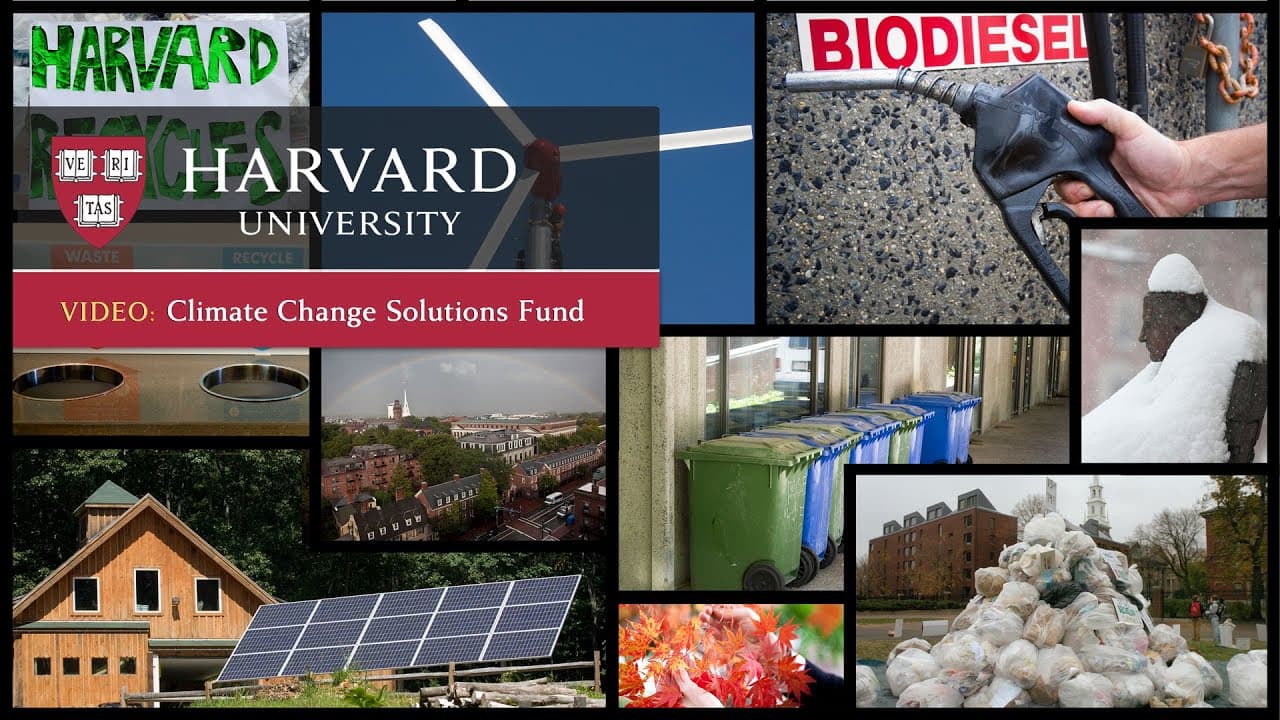
Harvard plays a crucial role in addressing climate change through its comprehensive approach and expertise in science, engineering, policy, law, and business.
Transcript
(intense music) - We're living at a pivotal point in human history. Almost two centuries we have relied on coal and then oil, then more recently on natural gas, so now we have to make the transition to a new energy system. It's going to be as fundamental as the changes that took place during the first industrial revolution. I think it's critically ... Read More
Key Insights
- 🫨 Transitioning to a new energy system is crucial, akin to the changes seen in the first industrial revolution.
- 🧑⚕️ India's population and economic growth make it an important player in addressing climate change and protecting human health.
- ☄️ Climate change's impacts primarily come from extreme events, emphasizing the need for resilience and adaptation measures.
- 🫢 Biofuels can play a significant role in reducing greenhouse gas emissions in the transportation sector.
- 💱 The economic aspects of climate change are crucial to consider when assessing the costs and benefits of mitigation efforts.
- 🍀 Innovations like the artificial leaf offer sustainable alternatives to traditional energy sources.
- 🥵 Adapting buildings and human behavior to extreme heat events can help mitigate their impacts and protect vulnerable populations.
Install to Summarize YouTube Videos and Get Transcripts
Explore YouTube Video Summarizer or Get YouTube Transcript Extractor
Questions & Answers
Q: How can biofuels contribute to the transition to a low-GHG future in the transportation sector?
Biofuels offer a potential solution to reducing greenhouse gas emissions in the transportation sector. Their use can provide a low-carbon alternative to traditional fossil fuels, reducing the sector's overall carbon footprint. However, several challenges remain, including scalability, feedstock availability, and ensuring that the production and use of biofuels are environmentally sustainable.
Q: Why is it essential to address extreme events and their impact on climate change?
Extreme events have a disproportionate impact on the environment and society. They cause significant economic damages and can result in the loss of lives and livelihoods. By understanding and addressing the risks associated with extreme events, we can mitigate their impacts, protect human health, and enhance resilience to climate change.
Q: How does food waste contribute to greenhouse gas emissions?
When food waste ends up in landfills, it decomposes and releases methane, a potent greenhouse gas. Methane is approximately 25 times more effective at trapping heat in the atmosphere compared to carbon dioxide. By reducing food waste, we can mitigate greenhouse gas emissions and lessen the environmental impact of food production, processing, and disposal.
Q: What is Harvard's unique role in addressing climate change?
Harvard's comprehensive approach, encompassing various disciplines such as science, engineering, policy, law, and business, enables it to tackle the complex challenges of climate change. By combining expertise from different fields, Harvard can offer innovative solutions, contribute to policy development, and drive sustainable change on a global scale.
Summary & Key Takeaways
-
Harvard recognizes the urgent need to transition to a new energy system and takes these issues seriously.
-
India's growing population and economic growth make it a crucial player in protecting human health and dealing with climate change.
-
Biofuels have the potential to play an important role in the transportation sector's transition to a low-GHG future.
-
Climate change's impacts are primarily driven by extreme events, making it an economic competitiveness issue.
-
The artificial leaf innovation stores renewable energy as a fuel, offering a sustainable alternative to traditional energy sources.
-
Researchers are using sensors and biometrics to develop strategies for adapting buildings and human behavior to extreme heat events.
-
Food waste contributes to greenhouse gas emissions, and Harvard is working on addressing this issue by challenging date labeling practices.
-
Harvard's comprehensive approach, encompassing science, engineering, policy, law, and business, positions it to play a key role in finding solutions to climate change.
Read in Other Languages (beta)
Share This Summary 📚
Summarize YouTube Videos and Get Video Transcripts with 1-Click
Try YouTube Summary with ChatGPT & Claude or YouTube Transcript Generator
Explore More Summaries from Harvard University 📚



Summarize YouTube Videos and Get Video Transcripts with 1-Click
Try YouTube Summary with ChatGPT & Claude or YouTube Transcript Generator