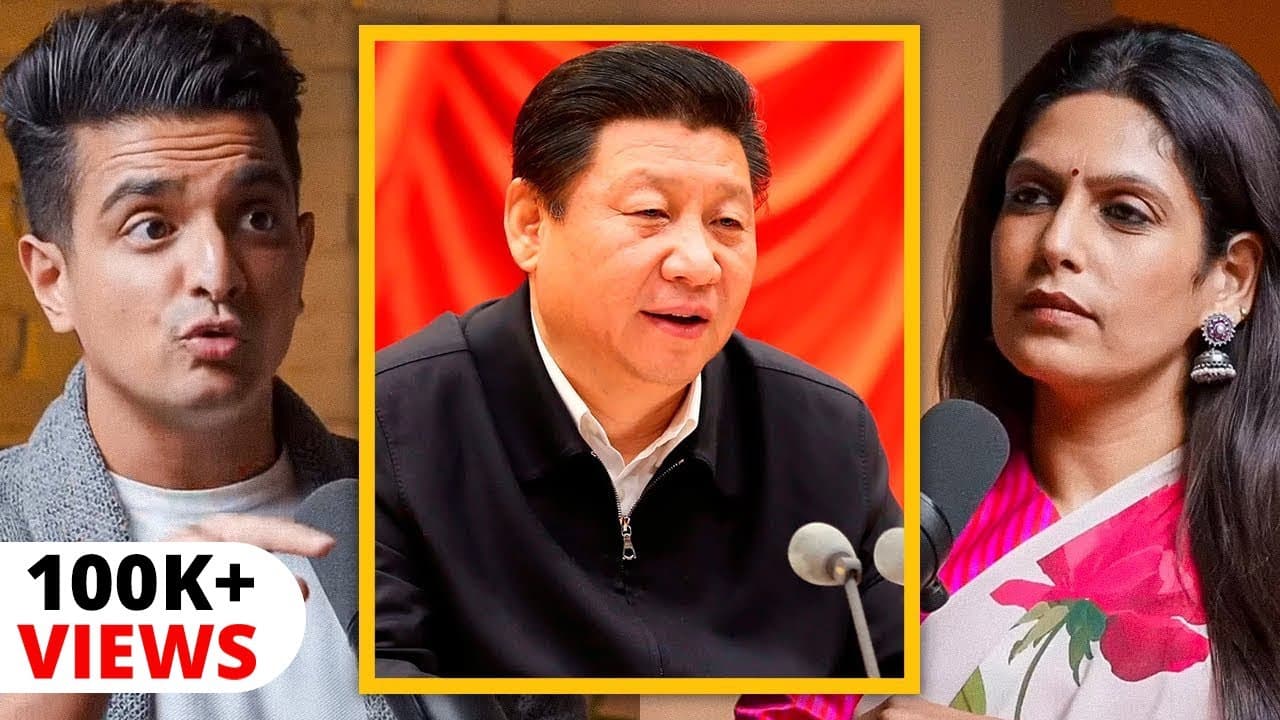
Will China Collapse? Palki Sharma Explains
TL;DR
Analyzes public sentiment towards Xi Jinping and China's internal and external challenges.
Transcript
satisfy your need for happiness through your own curiosity with the r show you briefly brought up the India China situation uh there's two ways of approaching this topic I can get into specifics and ask you specific questions or I can ask you the more macro style of things because I anticipate that there's a lot of people watching this podcast who ... Read More
Key Insights
- 🫨 Xi Jinping is perceived as the most powerful leader in China today, with a centralized decision-making role akin to that of Putin in Russia.
- 😨 His leadership is characterized by an aggressive anti-corruption campaign, creating both fear among officials and insecurity within the society.
- 🎖️ The Communist Party prioritizes internal security over military expenditure, reflecting deep concerns about civil unrest.
- 🥺 China's debt crisis poses a severe threat to its economic stability, with local government debts leading to potential defaults on public projects.
- 🥺 The combination of assertive foreign policy and economic challenges has led to growing discontent among the Chinese population.
- 😑 Xi's attempts at soft power through debt diplomacy have backfired, as recipient countries express regret over financial entrapment.
- 💁 Historical lessons from the Soviet Union's collapse inform the Communist Party's cautious approach to governance.
Install to Summarize YouTube Videos and Get Transcripts
Explore YouTube Video Summarizer or Get YouTube Transcript Extractor
Questions & Answers
Q: What is the current public sentiment in China towards Xi Jinping?
The public sentiment towards Xi Jinping is nuanced, with many acknowledging his authority and leadership. However, there is an underlying sense of concern regarding his governance methods, particularly regarding the crackdown on corruption and the consequences for local leaders. The fear of political dissent and internal strife creates a complex atmosphere where admiration and apprehension coexist.
Q: How does Xi Jinping's approach to leadership differ from that of previous leaders?
Xi Jinping's leadership contrasts with previous leaders by centralizing power and taking a more aggressive stance against corruption, famously targeting both high-ranking officials and local bureaucrats. Unlike the more gradual approach of leaders like Deng Xiaoping, Xi has taken a more confrontational route in both domestic and international politics, aligning closer to assertions of military strength and economic influence.
Q: What are the significant internal challenges facing China under Xi Jinping?
China is grappling with various internal challenges, including a precarious debt situation where local governments have amassed unsustainable debt levels. The collapse of major property developers, such as Evergrande, has led to widespread public dissatisfaction as citizens see their investments lost, further straining the relationship between the government and the people.
Q: How does Xi Jinping's leadership affect China's foreign relations?
Xi Jinping's leadership style has negatively impacted China's foreign relations, evidenced by confrontations with nations like India, Vietnam, and Japan. His assertiveness has led to perceptions of China as a bully, which complicates diplomatic relations. Despite efforts to project soft power through investments and loans, many countries regret these dealings due to the debt traps they create.
Q: What is the implication of the high expenditure on internal security in China?
The significant expenditure on internal security indicates the Communist Party's deep-rooted fear of civil unrest and potential rebellion. This focus on controlling public opinion and suppressing dissent signals anxiety regarding the legitimacy of their rule, suggesting they are more concerned with maintaining internal stability than outward expansion or confrontation.
Q: How does Xi Jinping's military strategy impact China's geopolitical stance?
Xi Jinping’s military strategy, which emphasizes modernization and expansion, has resulted in a formidable military presence. However, this strategy remains largely untested in conflict. Despite possessing significant firepower, the actual effectiveness of China’s military capabilities remains uncertain, raising questions about their ability to achieve strategic objectives without international backlash.
Summary & Key Takeaways
-
The Chinese public's perception of Xi Jinping is complex, characterized by both fear and admiration, reflecting his significant authority as the core leader of China.
-
Xi Jinping's leadership is marked by a crackdown on corruption and a focus on internal security, which is prioritized over military spending, revealing the Communist Party's anxiety about potential unrest.
-
Various economic challenges, including a substantial debt bubble and housing market crisis, compound the situation, leading to growing discontent among the public while Xi pursues an assertive foreign policy.
Read in Other Languages (beta)
Share This Summary 📚
Summarize YouTube Videos and Get Video Transcripts with 1-Click
Try YouTube Summary with ChatGPT & Claude or YouTube Transcript Generator
Explore More Summaries from TRS Clips 📚





Summarize YouTube Videos and Get Video Transcripts with 1-Click
Try YouTube Summary with ChatGPT & Claude or YouTube Transcript Generator