How to Use the PDCA Cycle for Effective Problem Solving
TL;DR
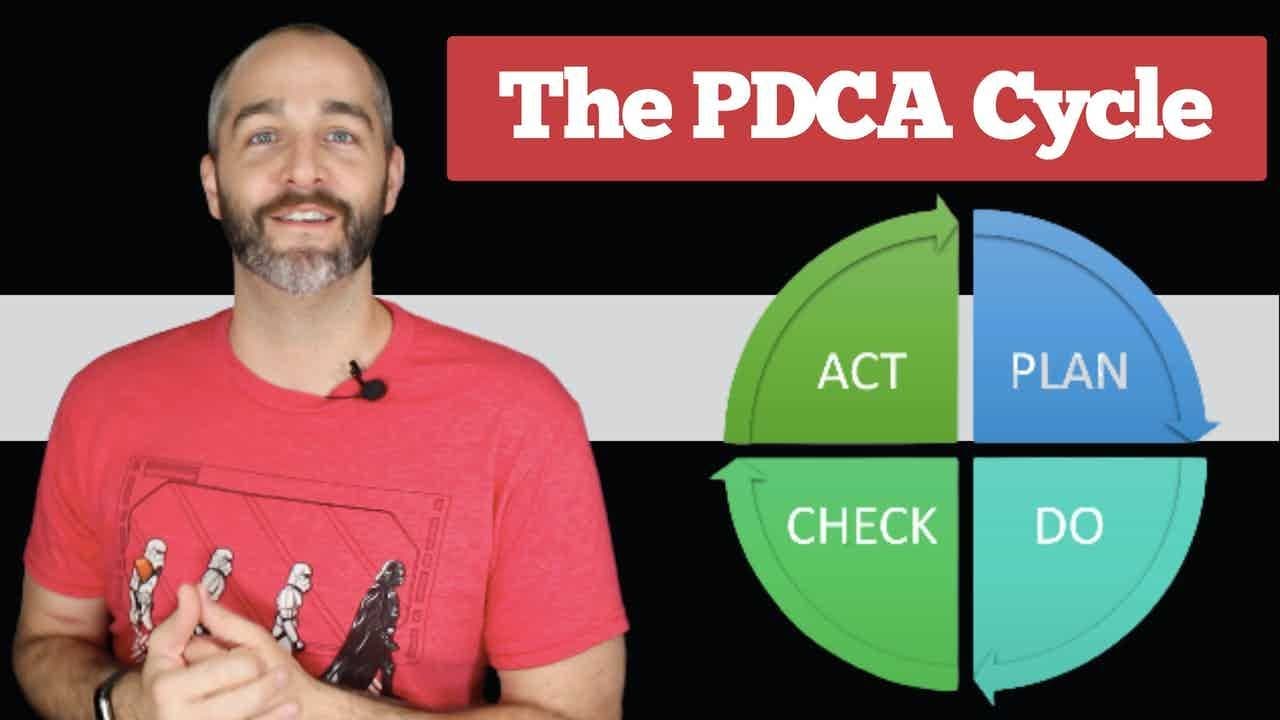
The PDCA cycle is an iterative problem-solving method rooted in the scientific method, consisting of four key stages: Plan, Do, Check, and Act. This process helps define problems, test hypotheses, analyze results, and implement solutions, promoting ongoing improvement and efficiency in processes.
Transcript
hey there my name is andy robertson with cqe academy and in today's video we're going to talk about the plan do check act cycle all right let's head over to the computer all right let's talk about the plan do check act cycle so here it is here's kind of a pictorial reference of the plan do check act cycle and before we get into the actual process i... Read More
Key Insights
- The PDCA cycle, also known as the Deming or Shewhart cycle, is a simple method for solving problems by following a scientific approach.
- The cycle consists of four stages: Plan, Do, Check, and Act, each focusing on different aspects of problem-solving.
- In the planning phase, it's crucial to define the problem clearly and identify potential root causes through tools like fishbone diagrams.
- The 'Do' phase involves executing the plan and collecting data, which is essential for the subsequent analysis phase.
- During the 'Check' phase, data analysis is performed using statistical tools to compare observed results against expected outcomes.
- The 'Act' phase focuses on implementing changes based on the findings and planning the next steps for continuous improvement.
- PDCA is iterative and encourages continuous experimentation and learning, emphasizing the importance of adapting and refining processes.
- The methodology is deeply rooted in the scientific method, promoting a systematic approach to problem-solving and quality improvement.
Install to Summarize YouTube Videos and Get Transcripts
Explore YouTube Video Summarizer or Get YouTube Transcript Extractor
Questions & Answers
Q: What is the primary purpose of the PDCA cycle?
The primary purpose of the PDCA cycle is to provide a structured, systematic approach to problem-solving and continuous improvement. By following its four stages—Plan, Do, Check, Act—individuals and organizations can effectively identify issues, test solutions, and implement changes to enhance processes and achieve better outcomes.
Q: How does the PDCA cycle relate to the scientific method?
The PDCA cycle is essentially an application of the scientific method to problem-solving and process improvement. It involves formulating hypotheses, conducting experiments, analyzing results, and drawing conclusions to inform further actions. This iterative approach ensures continuous learning and refinement of processes, much like the scientific method.
Q: What are some tools used during the 'Check' phase of the PDCA cycle?
During the 'Check' phase of the PDCA cycle, various statistical tools are employed to analyze data and evaluate results. These may include ANOVA analysis, Pareto charts, histograms, scatter plots, and hypothesis tests. These tools help in comparing observed outcomes with expected results, aiding in confirming or denying root causes of issues.
Q: Why is the PDCA cycle considered iterative?
The PDCA cycle is considered iterative because it promotes continuous experimentation and refinement of processes. After completing one cycle, the insights gained are used to inform the next cycle, allowing for ongoing improvements. This iterative nature ensures that processes are constantly evolving and becoming more efficient and effective over time.
Q: What is the significance of defining a clear problem statement in the PDCA cycle?
Defining a clear problem statement in the PDCA cycle is crucial as it sets the foundation for the entire problem-solving process. A well-defined problem statement ensures that all team members are aligned on the issue at hand, guiding the planning of experiments and analysis. It helps in focusing efforts on addressing the core issue effectively.
Q: How can the PDCA cycle contribute to continuous improvement?
The PDCA cycle contributes to continuous improvement by providing a framework for ongoing learning and adaptation. Each cycle builds upon the previous one, using insights gained to refine processes and implement more effective solutions. This fosters a culture of perpetual enhancement, where processes are regularly evaluated and improved.
Q: What role does data collection play in the PDCA cycle?
Data collection is a critical component of the PDCA cycle, particularly during the 'Do' phase. It provides the empirical evidence needed to analyze and evaluate the effectiveness of implemented solutions. Accurate data collection enables informed decision-making during the 'Check' phase, ensuring that conclusions drawn are based on factual information.
Q: How does the PDCA cycle ensure that improvements are sustained?
The PDCA cycle ensures that improvements are sustained by incorporating a feedback loop through its iterative nature. By continuously revisiting and refining processes, any changes made are monitored and adjusted as needed. This ongoing evaluation helps maintain the effectiveness of improvements and prevents regression to previous inefficiencies.
Summary & Key Takeaways
-
The PDCA cycle is a systematic problem-solving method that follows the scientific method principles, emphasizing continuous improvement and learning. It involves planning experiments, executing them, analyzing results, and implementing changes based on findings, with a focus on iterative development.
-
Originating from the work of W. Edwards Deming and Walter Shewhart, the PDCA cycle is a fundamental tool for quality engineers and continuous improvement specialists. It provides a structured framework for identifying, testing, and resolving issues within processes.
-
The cycle's four stages—Plan, Do, Check, Act—guide users through defining problems, testing hypotheses, analyzing data, and implementing solutions. This iterative process ensures ongoing advancements in process capability and efficiency, fostering a culture of continuous improvement.
Read in Other Languages (beta)
Share This Summary 📚
Summarize YouTube Videos and Get Video Transcripts with 1-Click
Try YouTube Summary with ChatGPT & Claude or YouTube Transcript Generator
Explore More Summaries from CQE Academy 📚

Summarize YouTube Videos and Get Video Transcripts with 1-Click
Try YouTube Summary with ChatGPT & Claude or YouTube Transcript Generator