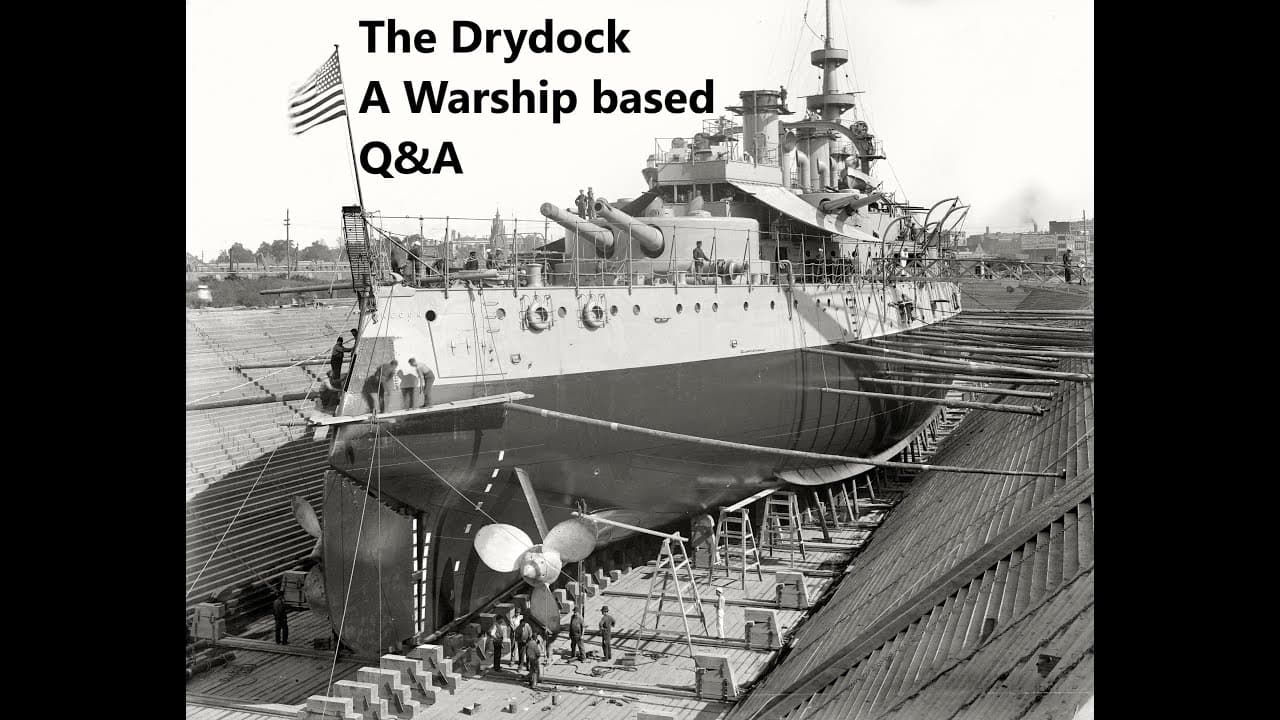
The Drydock - Episode 227
TL;DR
Naval experts answer questions about various aspects of naval history, including ship designs, gun choices, and color schemes.
Transcript
thank you hello everybody and welcome to the dry dock episode 227. this week in accordance with our catch-up policy the questions are taken from Guides 268 and 269 on HMS Erin and ijn Chicago and the accompanying Wednesday videos on the battle of the Philippine Sea what if Admiral Lee had headed west and Operation Torch so let's begin asks what was... Read More
Key Insights
- ⚓ German ship design focused on armor over firepower, while other navies prioritized larger guns.
- 🏛️ The Leander-class cruisers were budget-friendly ships with limitations compared to larger cruisers.
- ❤️🔥 Ships could explode during battles due to a variety of reasons, including fires, impacts, and boiler explosions.
- 👹 German carriers outperformed other Japanese carriers due to better crew training and larger size.
- 🫱 Refitted French ships would have had various roles depending on their type and could have aided in different theaters of war.
- 💁 The US Navy and Coast Guard coordinated through integrated personnel and shared information for coastal and convoy defense.
- ❓ USS Arizona's color scheme on December 7th remains uncertain due to limited photographic evidence.
Install to Summarize YouTube Videos and Get Transcripts
Explore YouTube Video Summarizer or Get YouTube Transcript Extractor
Questions & Answers
Q: What was the reason for the German's decision to use smaller guns on their capital ships?
The Germans prioritized armor over firepower, and they also had different expectations about battle ranges compared to other navies.
Q: How do you rate the Leander-class cruisers?
The Leanders were decent ships for their purpose as budget-friendly cruisers, but they had limitations compared to larger cruisers.
Q: What are some possible causes for ships exploding during battles?
Possible causes include fires spreading into the magazines, impacts causing shells and charges to explode, and boiler explosions.
Q: Why did German ships consistently outperform other Japanese carriers?
German carriers had better crew training, leadership, and larger size, which contributed to their better performance.
Q: What would have been the effect of French ships refitted in the US or UK during World War II if they joined the Free French navy?
The modern light and heavy cruisers could have been used effectively, while the older ships would have been suitable for convoy escort or securing French colonies.
Q: How did the US Navy and Coast Guard coordinate on Coastal and Convoy defense during World War II?
The US Coast Guard personnel served in active roles within the US Navy, and Coast Guard vessels received briefing and information from the US Navy for convoy defense operations.
Q: Which ships were part of the US Navy's neutrality patrols in the North Atlantic during Bismarck's breakout?
The specific ships assigned to the neutrality patrols during Bismarck's breakout are not definitively known due to limited archival material.
Q: Why is there uncertainty about USS Arizona's color scheme on December 7th?
There are conflicting reports and a lack of color photos from the time, making it difficult to determine the exact color scheme. Survivors indicated that the ship was in the process of being repainted to a sea blue color.
Q: How did press gangs work during the Age of Sail?
Press gangs had the right to impress individuals into the navy, but there were exceptions and opportunities to avoid being impressed. Pressing was not as brutal or random as commonly portrayed.
Key Insights:
- German ship design focused on armor over firepower, while other navies prioritized larger guns.
- The Leander-class cruisers were budget-friendly ships with limitations compared to larger cruisers.
- Ships could explode during battles due to a variety of reasons, including fires, impacts, and boiler explosions.
- German carriers outperformed other Japanese carriers due to better crew training and larger size.
- Refitted French ships would have had various roles depending on their type and could have aided in different theaters of war.
- The US Navy and Coast Guard coordinated through integrated personnel and shared information for coastal and convoy defense.
- USS Arizona's color scheme on December 7th remains uncertain due to limited photographic evidence.
- Press gangs had specific guidelines and exemptions, and individuals often sought to avoid impressment through various means.
Summary & Key Takeaways
-
The Germans used 11 and 12-inch guns on their capital ships in World War I due to their focus on armor rather than firepower and their expectation of shorter battle ranges.
-
The Leander-class cruisers of the Royal Navy were considered decent ships but had limitations compared to larger cruisers like the Town-class.
-
Battleships exploding as they capsize could be due to fires spreading into the magazines, impacts causing shells to explode, or boiler explosions.
-
The German ships in World War II consistently outperformed other Japanese carriers due to better crew training, leadership, and larger carrier size.
-
The French ships Rochelle, Jean Bart, Dunkirk, Strasbourg, Algerie, and other light cruisers could have been used effectively if converted and incorporated into the Free French navy during World War II.
Read in Other Languages (beta)
Share This Summary 📚
Summarize YouTube Videos and Get Video Transcripts with 1-Click
Try YouTube Summary with ChatGPT & Claude or YouTube Transcript Generator
Explore More Summaries from Drachinifel 📚
Summarize YouTube Videos and Get Video Transcripts with 1-Click
Try YouTube Summary with ChatGPT & Claude or YouTube Transcript Generator