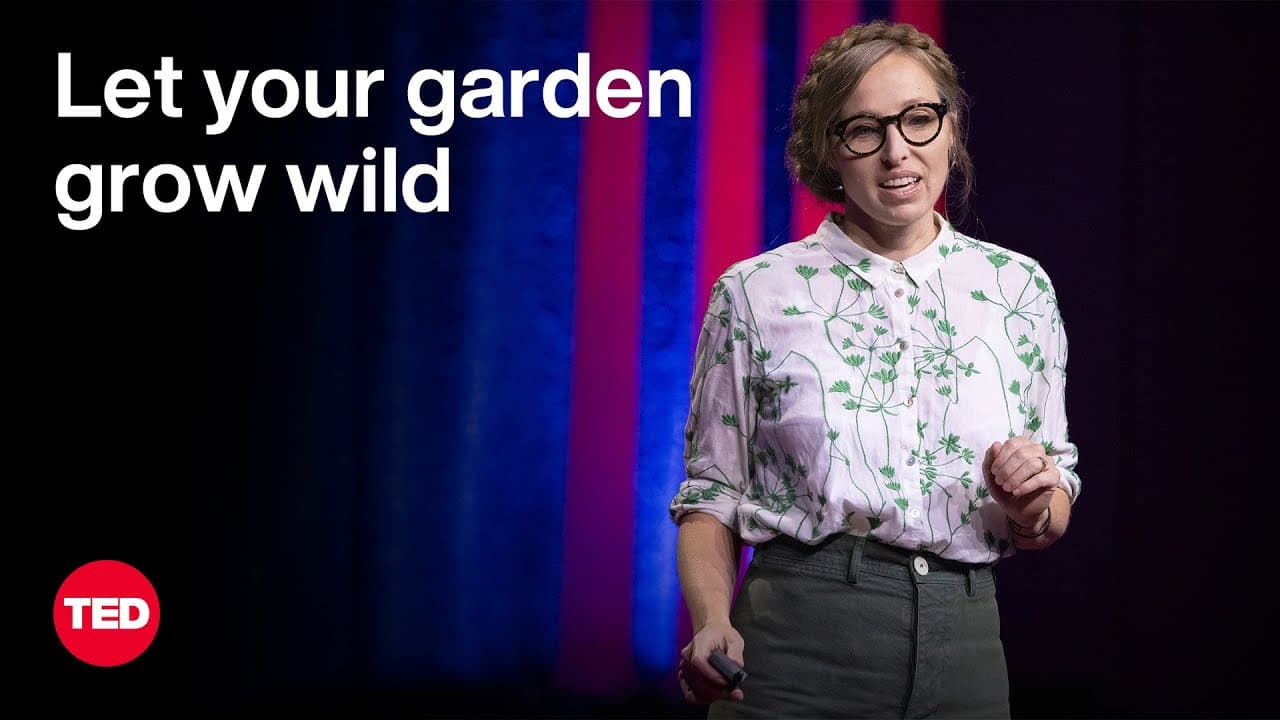
Let Your Garden Grow Wild | Rebecca McMackin | TED
TL;DR
Gardens that prioritize native plants and support biodiversity can help solve the current biodiversity crisis and provide food and habitats for wildlife.
Transcript
So full disclosure, I am the nerdiest gardener you are ever going to meet. (Laughter) Technically, I'm an ecological horticulturalist, which is a fancy way of saying that I design and manage gardens that are extravagantly beautiful while also providing habitat for plant populations, wildlife communities and even soil organisms. And you might wonder... Read More
Key Insights
- 🌱 Gardens can be designed to be both visually appealing and ecologically beneficial, supporting plant populations, wildlife, and soil organisms.
- 💁 Native plants are essential for supporting biodiversity as they have evolved alongside local wildlife, forming important relationships and dependencies.
- 🌱 Planting host plants for butterflies and leaving fallen leaves and plant debris supports the full life cycles of insects and provides habitats for birds and other wildlife.
- 🏡 Traditional garden practices that prioritize control and tidiness often work against biodiversity. Embracing wildness and allowing more natural elements in gardens can provide better habitats.
Install to Summarize YouTube Videos and Get Transcripts
Explore YouTube Video Summarizer or Get YouTube Transcript Extractor
Questions & Answers
Q: Why are gardens often ecological deserts?
Many gardens rely on harmful chemicals, such as insecticides and synthetic fertilizers, which harm the environment and contribute to the decline of biodiversity.
Q: How can planting native plants support biodiversity?
Native plants form relationships with local wildlife and provide food and habitats that enable the survival and reproduction of insects, birds, and other animals.
Q: What is the role of butterflies in gardening for biodiversity?
Butterflies visit flowers for nectar but also need specific plants, known as host plants, on which to lay their eggs. By planting these host plants, gardeners can support the full life cycle of butterflies.
Q: How can leaving fallen leaves and other garden debris benefit wildlife?
Leaves and plant remnants provide nesting sites for insects, foraging opportunities for birds, and winter shelters for butterflies. These practices help maintain biodiversity in gardens.
Summary & Key Takeaways
-
Many gardens are ecological deserts, causing environmental damage through the use of harmful chemicals. However, gardens can also be designed to support plant populations, wildlife, and soil organisms while still being visually appealing.
-
Gardening for biodiversity involves planting native plants that have evolved alongside local wildlife. These plants provide food and shelter and support the life cycles of insects and butterflies.
-
Creating a more wild and natural garden, by leaving fallen leaves, stem remnants, and seed heads, can also attract beneficial insects, birds, and butterflies.
Read in Other Languages (beta)
Share This Summary 📚
Summarize YouTube Videos and Get Video Transcripts with 1-Click
Try YouTube Summary with ChatGPT & Claude or YouTube Transcript Generator
Explore More Summaries from TED 📚






Summarize YouTube Videos and Get Video Transcripts with 1-Click
Try YouTube Summary with ChatGPT & Claude or YouTube Transcript Generator