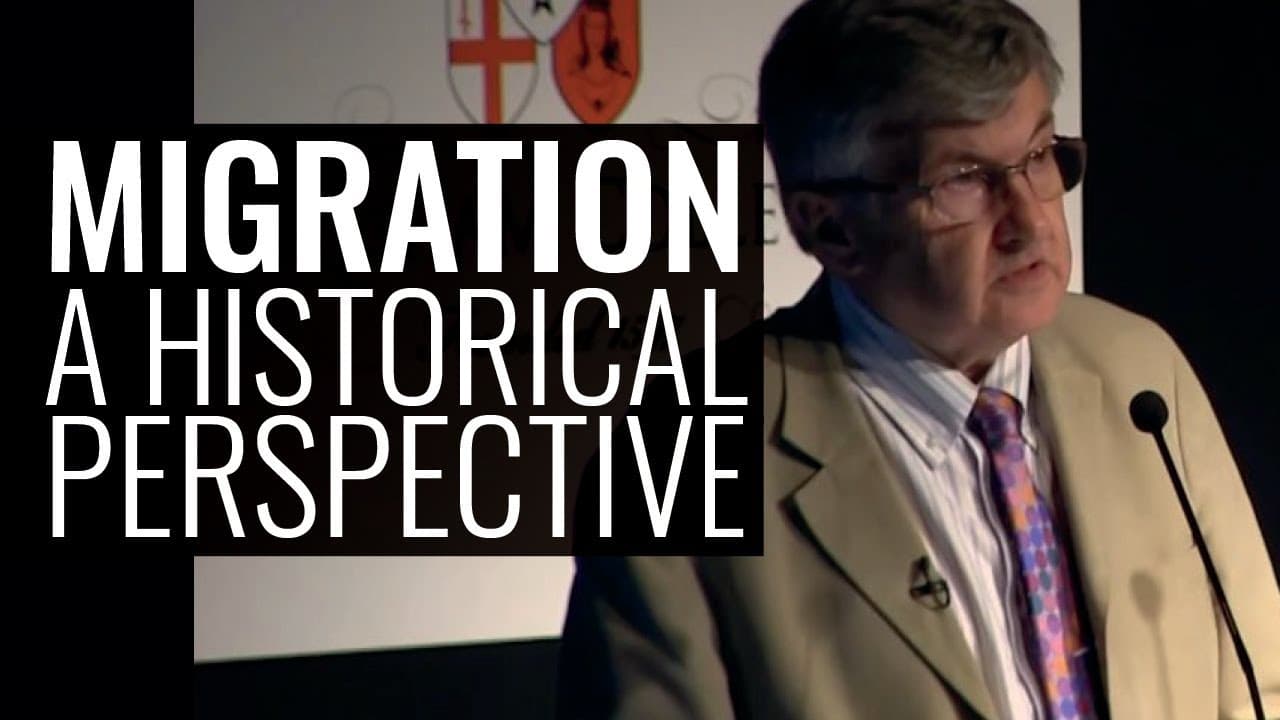
Migration: A Historical Perspective - Professor Sir Richard Evans
TL;DR
Delving into the historical context of European immigration, shedding light on various migration waves and their impacts.
Transcript
Richard Evans I'm the Provost agression College and I'm delighted to see you all here tonight I thought I would talk about a matter of current concern in a very broad historical context focusing particularly on Europe but also looking at some other areas as well not that broad not over the whole of the of history as it were but particularly in the ... Read More
Key Insights
- 🌍 Historical migrations out of Europe in the 19th century were driven by economic hardships and political unrest, with migrants seeking better opportunities overseas.
- 🥺 The 20th century witnessed forced migrations, ethnic cleansing, and refugee crises due to conflicts, leading to significant human displacements and atrocities.
- 💠 The post-World War II era saw mass movements of people for economic reasons, shaping labor dynamics and shaping the future of migration.
- 🌍 Current migration trends in Europe reflect a mix of voluntary and forced movements, highlighting the complexities of managing migration challenges.
- 🧑🏭 Immigration patterns have evolved over time, influenced by economic conditions, political changes, and social factors, impacting societies at large.
- 🙂 The historical context of immigration sheds light on the cyclical nature of migration crises and the need to address challenges through a holistic and mindful approach.
- 🫚 Managing migration effectively involves understanding historical precedents, addressing root causes of displacement, and fostering inclusive policies for a diverse society.
Install to Summarize YouTube Videos and Get Transcripts
Explore YouTube Video Summarizer or Get YouTube Transcript Extractor
Questions & Answers
Q: How has historical European migration shed light on the current immigration crisis?
The historical context of European migration showcases the cyclical nature of immigration challenges and provides insights into the evolution of migration patterns and crisis responses.
Q: What factors triggered mass migrations out of Europe in the 19th century?
Economic disparities, lack of prospects, political instability, and famine compelled millions of Europeans to seek better livelihoods overseas, particularly in North and South America, Australia, and New Zealand.
Q: How did the aftermath of World War II and conflicts lead to forced migrations and ethnic cleansing in the 20th century?
Post-war geopolitical changes and conflicts spurred forced population transfers, ethnic cleansing, and genocides, notably in territories like Yugoslavia, leading to significant human rights violations and displacements.
Q: How has the recent trend of voluntary migration, especially within the EU, impacted immigration dynamics in Europe?
The free movement of labor within the EU has reshaped migration patterns, with increased migration from Eastern European states influencing the rise of Euroskeptic sentiments and political movements such as Brexit.
Summary & Key Takeaways
-
Immigration concerns in Europe, particularly focusing on the 19th and 20th centuries, provide historical context to the current crisis.
-
Mass migrations out of Europe in the 19th century, voluntary movements for better economic prospects.
-
Forced migrations, ethnic cleansing, and refugee crises in the 20th century shaped modern migration challenges.
Read in Other Languages (beta)
Share This Summary 📚
Summarize YouTube Videos and Get Video Transcripts with 1-Click
Try YouTube Summary with ChatGPT & Claude or YouTube Transcript Generator
Explore More Summaries from Gresham College 📚


Summarize YouTube Videos and Get Video Transcripts with 1-Click
Try YouTube Summary with ChatGPT & Claude or YouTube Transcript Generator