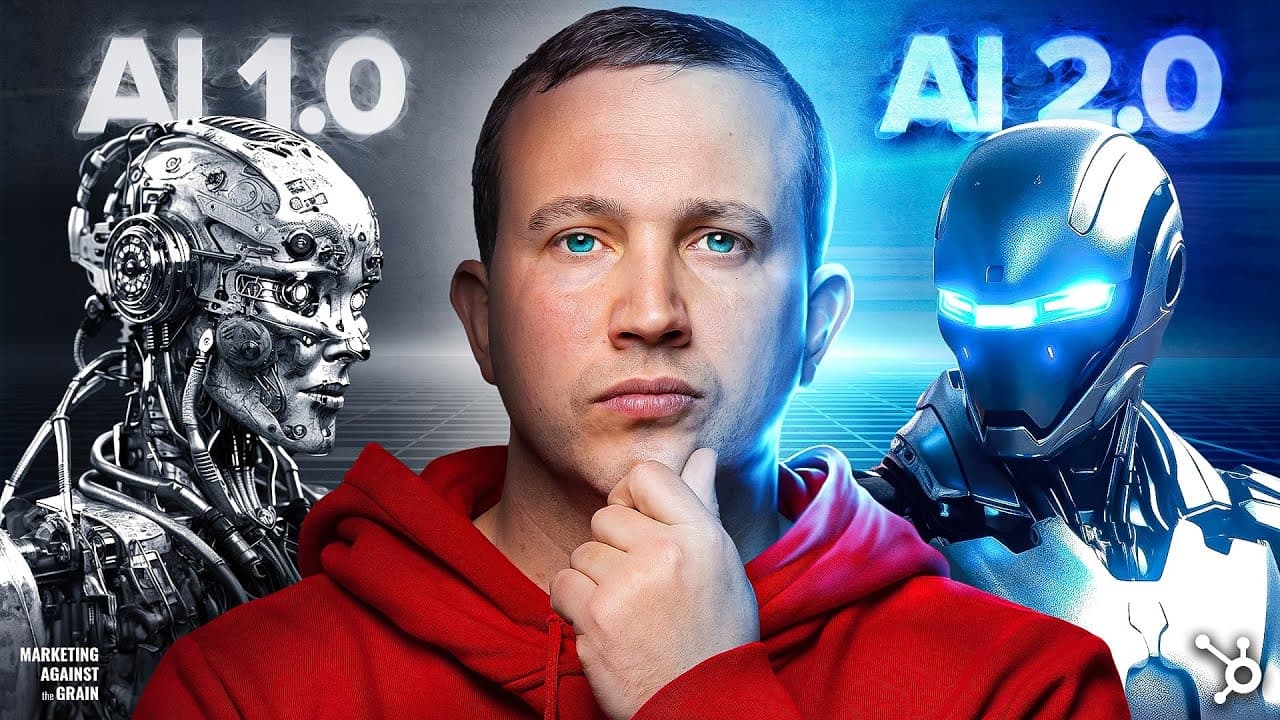
How Will AI's Second Wave Impact Jobs?
TL;DR
The second wave of AI is poised to transform job landscapes with significant implications for software creation and audience value. While the first wave saw mixed success, the upcoming phase promises more personalized, multimodal AI applications, potentially commoditizing software and elevating the importance of audience engagement. This shift will necessitate adaptability in both technology and workforce strategies.
Transcript
yeah it's it's literally just it's literally just math if you want to build a remarkable company you need to retain your customers right on today's show we are coming in with some hot data that actually proves generative ai's first hype cycle First Act was way over hyped yeah there were some winners but there were a lot of failures but that's all r... Read More
Key Insights
- Generative AI's first hype cycle had mixed results, with some successes like ChatGPT and MidJourney, but many failures due to lack of user engagement.
- Retention and engagement are critical for AI companies; current AI apps struggle with these metrics compared to non-AI platforms.
- The second wave of AI will focus on multimodal capabilities and model customization, offering more personalized user experiences.
- Copy and paste software era is emerging, allowing quick replication of software through AI, which could commoditize software products.
- Audience value will increase as software becomes commoditized, with creators potentially leading in B2B markets.
- AI advancements, like GPT-4's multimodal features, will reduce barriers to AI adoption and foster broader use cases.
- OpenAI's rapid innovation, including internet browsing in ChatGPT, marks a competitive edge in the AI race.
- The future of AI will see smaller, highly profitable companies leveraging AI for product creation and audience engagement.
Install to Summarize YouTube Videos and Get Transcripts
Explore YouTube Video Summarizer or Get YouTube Transcript Extractor
Questions & Answers
Q: How will AI's second wave affect software creation?
AI's second wave will revolutionize software creation by enabling 'copy and paste' software development. This means that AI can replicate software from simple inputs like screenshots or sketches, drastically reducing the time and expertise needed to create software. This could commoditize software products and shift the focus to audience engagement and customization.
Q: What challenges did the first wave of AI face?
The first wave of AI faced significant challenges in user retention and engagement. While there were notable successes like ChatGPT and MidJourney, many AI applications struggled to find sticky use cases that encouraged regular use. This was largely due to a lack of personalized experiences and meaningful value propositions for users.
Q: Why is audience value increasing in AI's second wave?
As AI technology progresses, software creation becomes more commoditized, making it easier and cheaper to produce. This shifts the competitive advantage from having a unique product to having a strong, engaged audience. Creators and companies that can effectively engage and retain users will have a significant edge in the market.
Q: What is the 'copy and paste' software era?
The 'copy and paste' software era refers to the ability of AI to quickly replicate existing software applications from simple inputs like images or sketches. This capability lowers the barriers to software creation, allowing more people and smaller companies to produce software without extensive technical expertise, potentially commoditizing the software market.
Q: How does multimodal AI enhance user experience?
Multimodal AI enhances user experience by allowing interactions through multiple input types, such as text, images, and eventually video. This flexibility makes AI tools more accessible and user-friendly, enabling personalized and contextually relevant responses that can better meet individual or business needs, thereby increasing adoption and engagement.
Q: What role does customization play in AI's second wave?
Customization is crucial in AI's second wave, as it allows AI models to be tailored to specific user or business needs. This leads to more relevant and valuable applications, improving user engagement and retention. Customized AI solutions can address unique challenges and opportunities, making them more attractive and effective compared to generic solutions.
Q: How is OpenAI leading in the AI race?
OpenAI is leading in the AI race through rapid innovation and feature development, such as introducing multimodal capabilities and internet browsing in ChatGPT. These advancements enhance the functionality and appeal of AI tools, providing users with more comprehensive and up-to-date information, thereby increasing OpenAI's competitive edge in the market.
Q: What implications does AI's second wave have for job landscapes?
AI's second wave will significantly impact job landscapes by automating and streamlining many software creation processes. This could lead to a shift in required skills, with a greater emphasis on creativity, audience engagement, and strategic thinking. Jobs that involve repetitive tasks may decline, while roles focusing on AI integration and customization may rise.
Summary & Key Takeaways
-
The first act of AI was overhyped, with successes like ChatGPT and MidJourney but many failures due to poor user retention. The second act promises more personalized AI applications through multimodal capabilities and model customization, potentially commoditizing software and elevating audience value.
-
AI's second wave will focus on enhancing user engagement and retention by leveraging multimodal capabilities and model customization. This shift will enable more personalized applications, reduce barriers to adoption, and potentially commoditize software, increasing the importance of audience engagement.
-
The second wave of AI is set to transform job landscapes with significant implications for software creation and audience value. The upcoming phase promises more personalized, multimodal AI applications, potentially commoditizing software and elevating the importance of audience engagement.
Read in Other Languages (beta)
Share This Summary 📚
Summarize YouTube Videos and Get Video Transcripts with 1-Click
Try YouTube Summary with ChatGPT & Claude or YouTube Transcript Generator
Explore More Summaries from Marketing Against the Grain 📚




Summarize YouTube Videos and Get Video Transcripts with 1-Click
Try YouTube Summary with ChatGPT & Claude or YouTube Transcript Generator