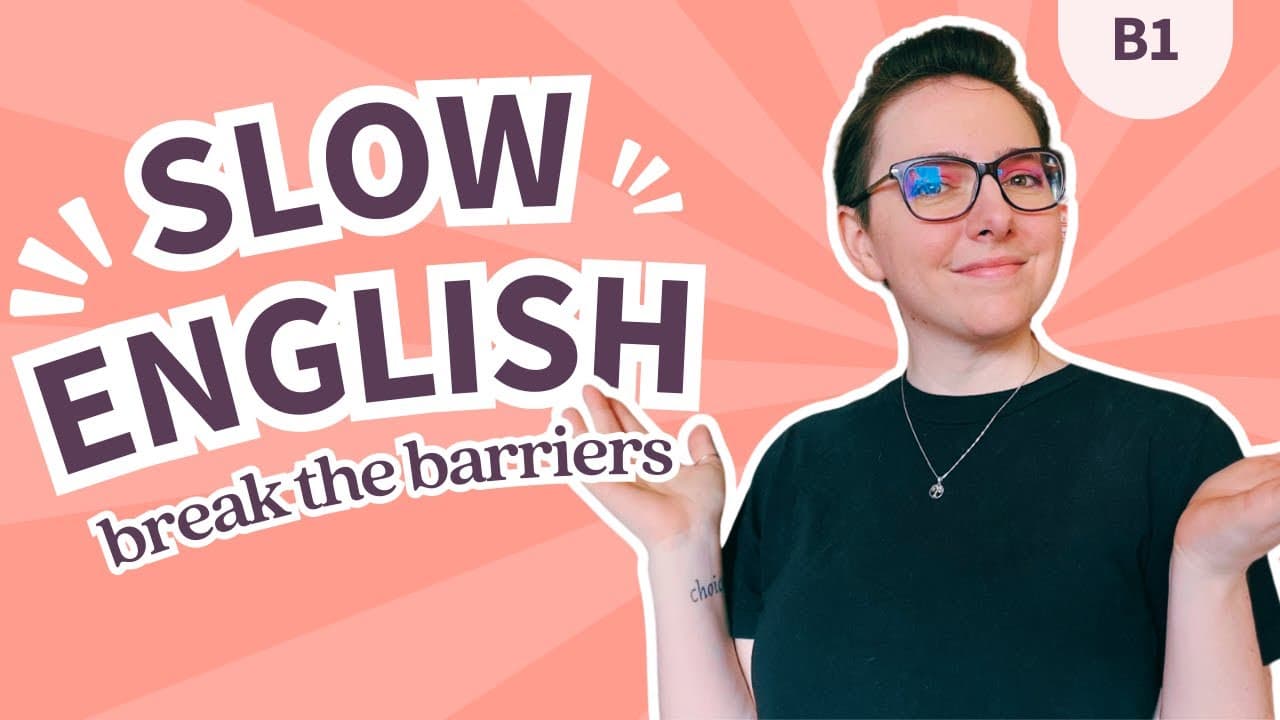
🛑 What is holding you back? | B1 SLOW ENGLISH listening practice
TL;DR
Identify and overcome three common language learning barriers.
Transcript
Hello, hello! Today we are going to talk about what is holding you back. You're working hard, but you feel stuck. Like there's some invisible wall between where you are and where you want to be. Well, you're not alone. As an English teacher, I've seen so many students face the same challenges. Today, I want to talk about three common barriers tha... Read More
Key Insights
- Perfectionism can hinder language practice; embrace mistakes as learning opportunities and focus on communication rather than flawless grammar.
- Isolation in language learning limits progress; integrate English into daily life through hobbies and interests for a more immersive experience.
- Comparing yourself to others can demotivate; focus on personal progress and celebrate small achievements in your language journey.
- Mistakes are valuable teachers; they provide feedback and insights into your understanding of the language, helping you improve over time.
- Language learning thrives on social interaction; finding a language partner or community can enhance your learning experience.
- Setting personal, achievable goals based on your interests and lifestyle can help maintain motivation and track progress effectively.
- Progress in language learning is non-linear; trust the process and recognize that improvement comes in waves.
- Language learning is about connection and self-expression, not perfection or isolation; integrate English into everyday life for better results.
Install to Summarize YouTube Videos and Get Transcripts
Explore YouTube Video Summarizer or Get YouTube Transcript Extractor
Questions & Answers
Q: What is the perfectionism trap?
The perfectionism trap refers to the mindset where learners feel they must be perfect in their language skills before they can speak. This often leads to inaction, as the fear of making mistakes prevents them from practicing. The video suggests that language learning is about communication, not perfection, and encourages learners to embrace mistakes as part of the learning process.
Q: How can learners overcome the isolation island?
To overcome the isolation island, learners should integrate English into their daily lives, even if they are not in an English-speaking environment. This can be done by engaging with hobbies in English, such as watching videos or reading about interests, and creating small daily habits like writing or speaking in English. Finding an online language partner can also provide valuable interaction.
Q: What is the comparison trap in language learning?
The comparison trap occurs when learners compare their progress to others, leading to feelings of inadequacy and demotivation. The video advises focusing on personal progress and setting achievable goals based on individual circumstances. Celebrating small victories and tracking personal development can help maintain motivation and provide a more accurate measure of progress.
Q: Why are mistakes important in language learning?
Mistakes are crucial in language learning as they offer feedback and insights into one's understanding of the language. They help identify areas that need improvement and provide opportunities to learn and grow. Embracing mistakes allows learners to practice more freely and develop their skills through trial and error, ultimately leading to better communication.
Q: How can learners integrate English into their daily lives?
Learners can integrate English into their daily lives by engaging with content related to their interests in English, such as watching videos, reading articles, or following social media accounts. They can also change their phone language to English, practice speaking while doing everyday tasks, and write in English regularly. These activities help create an immersive environment that facilitates learning.
Q: What role does social interaction play in language learning?
Social interaction plays a vital role in language learning as it provides real-life practice and exposure to the language. Engaging with others in English helps learners improve their communication skills, gain confidence, and learn from native speakers or fellow learners. It also makes the learning process more enjoyable and relevant by connecting language use to meaningful interactions.
Q: How should learners set goals for language learning?
Learners should set personal, achievable goals that align with their interests and lifestyle. These goals could include understanding a favorite TV show without subtitles, discussing specific topics in English, or reading a particular book. Setting realistic targets helps maintain motivation and allows learners to track their progress, making the learning process more rewarding and effective.
Q: What is the importance of celebrating small achievements in language learning?
Celebrating small achievements is important in language learning as it boosts motivation and reinforces progress. Recognizing accomplishments like understanding a joke, having a conversation, or deciphering song lyrics encourages learners to continue their efforts. It shifts the focus from perfection to personal growth, helping learners appreciate their unique journey and maintain a positive attitude towards learning.
Summary & Key Takeaways
-
The video discusses three barriers to language learning: perfectionism, isolation, and comparison. It emphasizes embracing mistakes, integrating English into daily life, and focusing on personal progress rather than comparing oneself to others.
-
Perfectionism prevents practice; learners are encouraged to communicate despite mistakes. Isolation limits exposure; integrating English into hobbies and daily activities is recommended. Comparison with others can demotivate; focusing on personal achievements is key.
-
The video encourages learners to break through barriers by viewing mistakes as feedback, connecting language learning to personal interests, and celebrating individual progress. It stresses the importance of self-expression and connection over perfection.
Read in Other Languages (beta)
Share This Summary 📚
Summarize YouTube Videos and Get Video Transcripts with 1-Click
Try YouTube Summary with ChatGPT & Claude or YouTube Transcript Generator
Explore More Summaries from Miss Jean Teaches 📚
Summarize YouTube Videos and Get Video Transcripts with 1-Click
Try YouTube Summary with ChatGPT & Claude or YouTube Transcript Generator