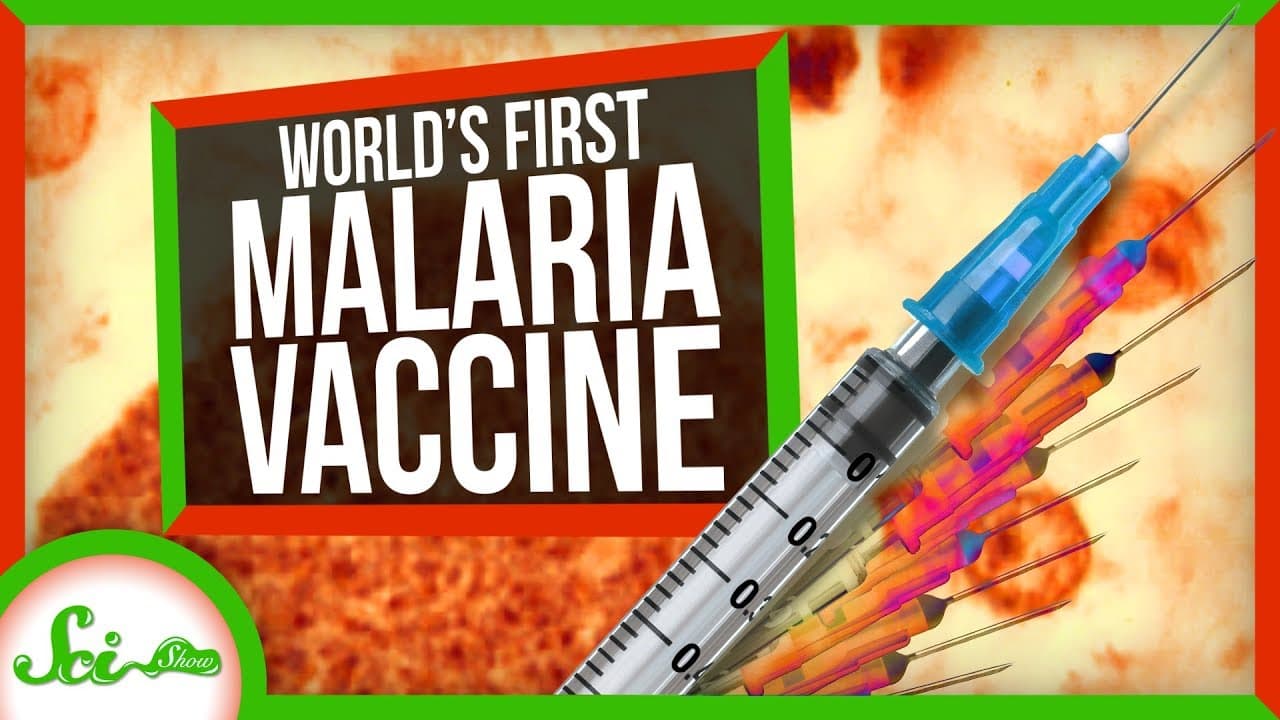
The World's First Malaria Vaccine Gets a Shot in Africa | SciShow News
TL;DR
After 30 years of development, a 40% effective malaria vaccine is being piloted in Africa, showing promise in saving thousands of children's lives.
Transcript
♪♪♪ Malaria is one of those diseases that’s been around for so long that you’d think we’d have figured out how to deal with it by now. And yet, it still kills almost half a million people every year — and most of those people are kids. One of the main reasons it’s still so deadly is that scientists have struggled to create an effective vaccine for ... Read More
Key Insights
- 😀 Malaria vaccine development has faced challenges due to the parasite's genetic complexity and lack of lifelong immunity post-infection.
- 👶 The new malaria vaccine, RTS,S, is being piloted in African countries and shows promise in reducing malaria-related deaths in children.
- ☠️ The vaccine targets a specific protein in the parasite to prevent infection progression, though it has a 40% effectiveness rate and requires multiple doses.
- 🧑⚕️ Despite its limitations, health experts believe the RTS,S vaccine could be a significant tool in the fight against malaria, especially in regions where the disease is prevalent.
- 💨 The vaccine's rollout in Malawi, Kenya, and Ghana could pave the way for its integration into national health programs and foster further vaccine development efforts.
Install to Summarize YouTube Videos and Get Transcripts
Explore YouTube Video Summarizer or Get YouTube Transcript Extractor
Questions & Answers
Q: Why has it taken so long to develop an effective malaria vaccine?
Developing a malaria vaccine has been challenging due to the parasite's genetic complexity, varied life stages, and lack of lifelong immunity post-infection, slowing down vaccine development efforts.
Q: What are the drawbacks of the current malaria vaccine, RTS,S?
The RTS,S vaccine only offers 40% protection, requires multiple doses, and is less effective in younger infants, presenting challenges in ensuring full vaccination coverage for children.
Q: How does the RTS,S vaccine work to protect against malaria?
The vaccine targets a specific protein, circumsporozoite, produced by the parasite during the liver infection stage, preventing the parasites from progressing to the bloodstream and causing symptoms.
Q: How could the RTS,S vaccine impact future malaria eradication strategies?
While not a perfect solution, the RTS,S vaccine could serve as a crucial interim measure in combating malaria, potentially leading to enhanced funding for further vaccine development and a reduction in malaria-related deaths.
Summary & Key Takeaways
-
A new malaria vaccine, RTS,S, is being rolled out in Malawi, Kenya, and Ghana for children under two years old, potentially reaching 360,000 kids annually.
-
Despite its 40% effectiveness and need for multiple doses, health experts are hopeful that the vaccine could significantly reduce malaria-related deaths in children.
-
The complex nature of the malaria parasite has posed challenges for vaccine development, making RTS,S a significant milestone in the fight against malaria.
Read in Other Languages (beta)
Share This Summary 📚
Summarize YouTube Videos and Get Video Transcripts with 1-Click
Try YouTube Summary with ChatGPT & Claude or YouTube Transcript Generator
Explore More Summaries from SciShow 📚
Summarize YouTube Videos and Get Video Transcripts with 1-Click
Try YouTube Summary with ChatGPT & Claude or YouTube Transcript Generator