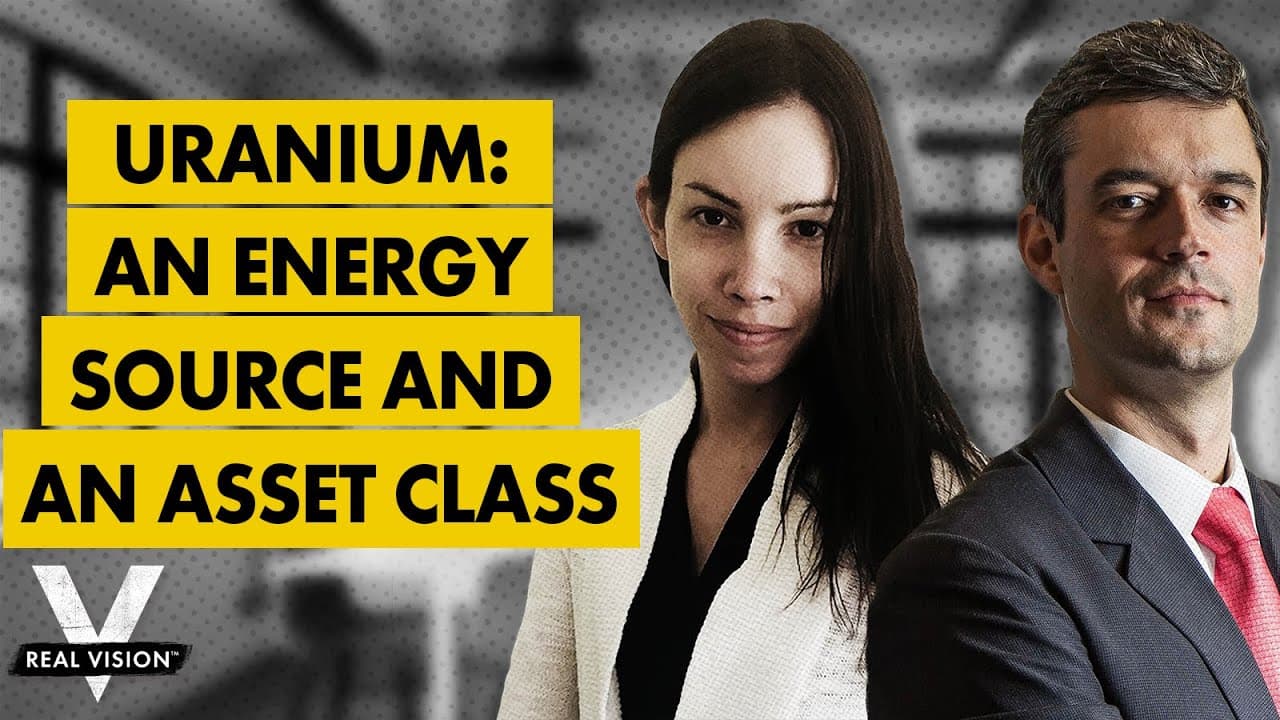
Why Is Uranium Considered the Most Asymmetric Trade?
TL;DR
Uranium is viewed as the most asymmetric trade due to rising global demand for clean energy and a supply shortage following events like Fukushima. Despite currently low prices, the market dynamics suggest substantial upside potential, driven by new reactor constructions and limitations on production from existing mines. Investors may find opportunities as utilities begin to secure contracts in response to these changes.
Transcript
LYN ALDEN: Hello, I'm Lyn Alden, and I'm here with Marcelo Lopez from L2 Capital. And we're going to talk about the uranium sector. So Marcelo, welcome to Real Vision. MARCELO LOPEZ: Hi, Lyn. It's a pleasure to talk to you again. I've been following your macro analysis for a while now, and I'm a real fan of your work. And thanks, Real Vision, for t... Read More
Key Insights
- 😘 Uranium prices are historically low due to events like Fukushima, oversupply, and lack of demand discipline by miners.
- 🙃 Growing global demand for nuclear energy and limited new supply growth create an unbalanced market with potential upside.
- 🧑🏭 Factors like conversion market dynamics and utility purchasing behavior can influence uranium pricing and market stability.
- 🤩 The reopening of key facilities like the Metropolis Works plant could impact the conversion market and utility contract negotiations.
- 💄 Uncorrelated nature of uranium investments makes it a valuable asset for portfolio diversification.
- ⛓️ Potential risks in the sector include nuclear accidents, geopolitical events, and disruptions in supply chains.
- 😒 Long-term market dynamics, technological advancements, and new use cases for nuclear energy can influence the future of the uranium sector.
- 🎙️ More videos with Lyn Alden:
Install to Summarize YouTube Videos and Get Transcripts
Explore YouTube Video Summarizer or Get YouTube Transcript Extractor
Questions & Answers
Q: What led Marcelo Lopez to invest in the uranium sector?
Marcelo's background in finance and spotting investment opportunities led him to focus on the uranium sector due to its asymmetric trade potential and market dynamics.
Q: How does Lyn Alden view uranium as an investment in the energy sector?
Lyn highlights uranium's unique market dynamics, uncorrelated nature, and potential as a clean energy source, making it an attractive investment opportunity.
Q: What factors have contributed to low uranium prices in the past?
Events like Fukushima, oversupply, lack of supply discipline, and market sentiment have all played a role in driving uranium prices lower in the past.
Q: How are utilities interacting with the uranium market currently, and what impact does it have on pricing?
Utilities play a key role in uranium demand and purchasing, with their long-term contracts influencing market dynamics and pricing.
Summary & Key Takeaways
-
Marcelo Lopez discusses his background, interest in uranium, and the asymmetric trade it presents.
-
Lyn Alden points out uranium's unique market dynamics, uncorrelated nature, and potential as a clean energy source.
-
Market analysis shows the uranium sector facing low prices due to historic events, but with a promising outlook for growth.
Read in Other Languages (beta)
Share This Summary 📚
Summarize YouTube Videos and Get Video Transcripts with 1-Click
Try YouTube Summary with ChatGPT & Claude or YouTube Transcript Generator
Explore More Summaries from Real Vision 📚


Summarize YouTube Videos and Get Video Transcripts with 1-Click
Try YouTube Summary with ChatGPT & Claude or YouTube Transcript Generator