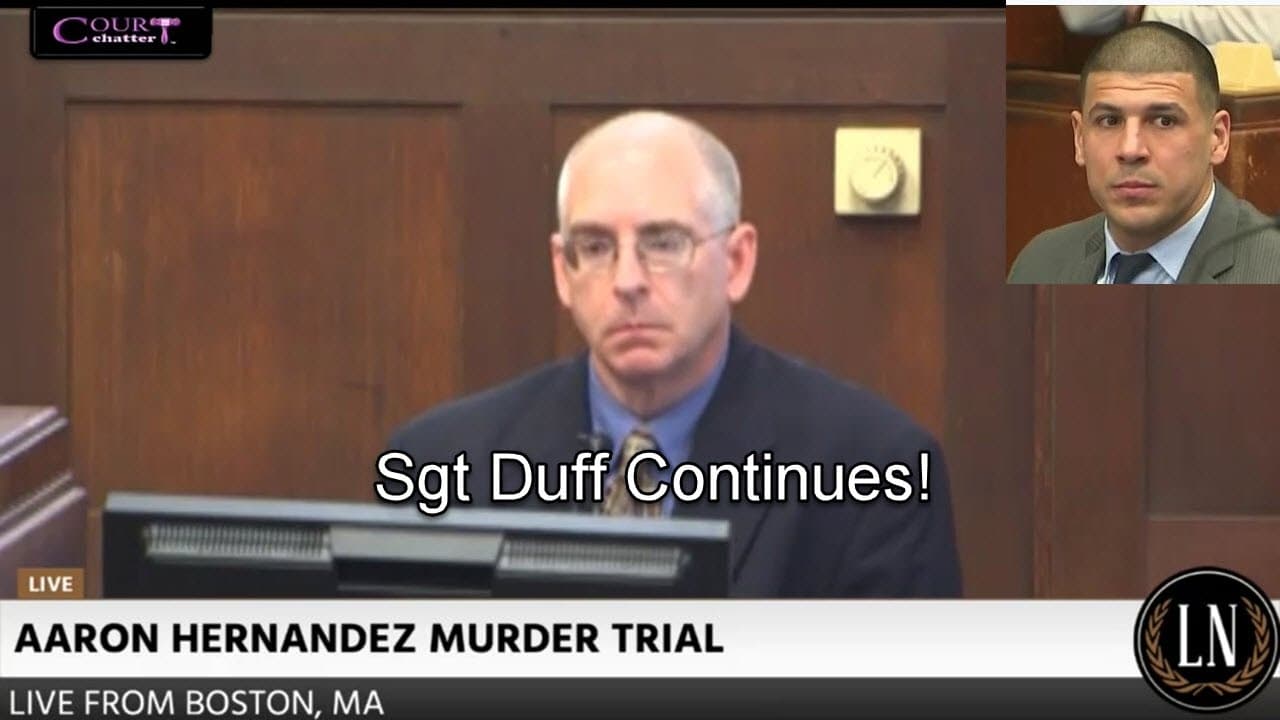
Aaron Hernandez Trial Day 5 Part 3
TL;DR
Detailed examination of crime scene protocols and evidence collection in a legal setting.
Transcript
all my processing out today and it is at this time sir that you can then instruct or extend the crime scene can you not yes okay you can push back the media a bit further can you not yes and any other passerby yes okay so that could eliminate that issue correct yes okay now in addition to that you have the ability to use what's called a crime scene... Read More
Key Insights
- 🎑 Crime scene privacy barriers are essential for maintaining the integrity of the crime scene and preventing interference.
- 💌 Proper evidence collection procedures, such as using paper envelopes for projectiles, are crucial to preserve forensic evidence.
- 🖐️ Search warrants play a pivotal role in authorizing evidence collection and processing at crime scenes.
- ⛓️ Maintaining the chain of custody and following forensic protocols are imperative for ensuring the admissibility of evidence in legal proceedings.
- 🎑 The meticulous documentation of crime scenes, including photographs and evidence collection, is vital for reconstructing events accurately.
- 😎 Challenges arise when evidence, such as glass fragments or projectiles, is not collected and preserved in accordance with forensic guidelines.
- 🎑 Training and expertise in crime scene investigation procedures, including blood pattern analysis and evidence preservation, are essential for reliable forensic analysis.
Install to Summarize YouTube Videos and Get Transcripts
Explore YouTube Video Summarizer or Get YouTube Transcript Extractor
Questions & Answers
Q: What are crime scene privacy barrier screens, and why are they used?
Crime scene privacy barrier screens are used to restrict access and prevent interference with evidence collection. They help maintain the integrity of the crime scene by shielding it from public view.
Q: Why is it essential to follow proper evidence collection procedures for projectiles and shell casings?
Proper evidence collection ensures that crucial forensic evidence is preserved intact, preventing contamination or degradation. This meticulous process is vital for maintaining the chain of custody and ensuring accurate analysis.
Q: How do search warrants influence evidence processing and collection at crime scenes?
Search warrants authorize law enforcement to search specific locations for evidence. Failure to obtain a warrant can jeopardize the admissibility of evidence and compromise the integrity of the investigation.
Q: Why is it crucial to secure and preserve ballistic evidence such as glass fragments for forensic analysis?
Ballistic evidence, including glass fragments, can provide critical insights into the circumstances of a crime, such as gunshot trajectories and the sequence of events. Proper preservation and analysis are essential for reconstructing the incident accurately.
Summary & Key Takeaways
-
Witness discusses crime scene privacy barriers and evidence processing protocols at a crime scene.
-
Questions raised about evidence preservation and collection procedures for projectiles and shell casings.
-
Contradictions over the need for search warrants to search vehicles and the handling of ballistic evidence.
Read in Other Languages (beta)
Share This Summary 📚
Summarize YouTube Videos and Get Video Transcripts with 1-Click
Try YouTube Summary with ChatGPT & Claude or YouTube Transcript Generator
Explore More Summaries from Law&Crime Network 📚




Summarize YouTube Videos and Get Video Transcripts with 1-Click
Try YouTube Summary with ChatGPT & Claude or YouTube Transcript Generator