How to Highlight Thick Hair - Blonde Highlight & Foilayage Hybrid Technique with Root Shadow (EASY!)
TL;DR
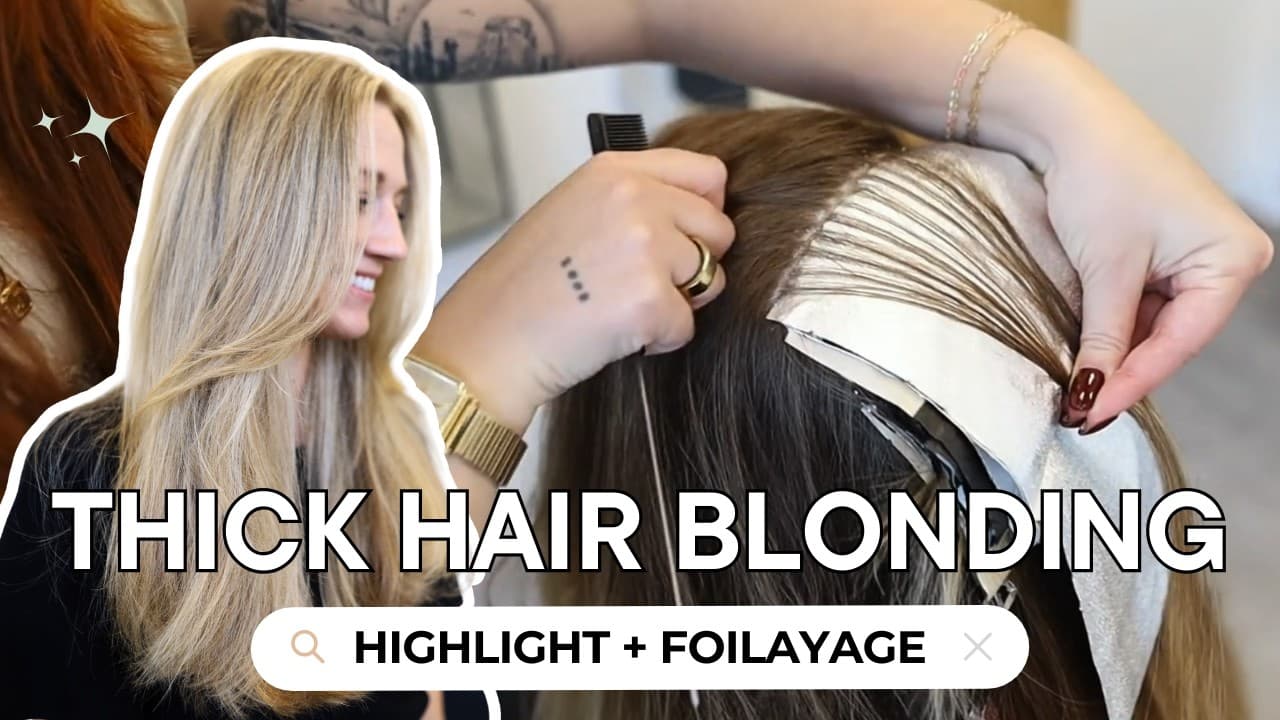
Transform thick hair with a low-maintenance blonde highlight technique.
Transcript
what's up guys welcome back to my Channel today we are in a new filming space and we are going to be doing a transformation on a client who has the world's thickest head of hair but she is looking for something that's low maintenance but still wants to feel lighter and brighter without it having too much high maintenance cost so we are going to be ... Read More
Key Insights
- The video demonstrates a hybrid technique combining traditional highlights and foilayage to achieve a natural blonde look on thick hair.
- Emphasizes the importance of sectioning and foiling techniques to manage thick hair and avoid harsh lines and demarcations.
- The use of low volume developer is recommended to avoid over-processing and maintain hair health, especially for clients with naturally light hair.
- The importance of a precise hairline foiling technique is highlighted to ensure a seamless and natural grow-out, which is crucial for low-maintenance clients.
- Root shadowing is used to blend highlights naturally, creating a soft transition that grows out without noticeable lines.
- The stylist shares tips on maintaining cleanliness and organization during the process, such as using a separate brush for mixing lightener.
- The video stresses the importance of customizing techniques based on individual hair characteristics, such as thickness and hairline variations.
- Practical advice is given on handling and detangling hair post-foiling to ensure a smooth finish and client comfort.
Install to Summarize YouTube Videos and Get Transcripts
Explore YouTube Video Summarizer or Get YouTube Transcript Extractor
Questions & Answers
Q: What is the main technique used in the video?
The main technique demonstrated in the video is a hybrid of traditional highlights and foilayage. This method is designed to create a natural, lived-in blonde look on thick hair. It involves strategic sectioning and foiling to add dimension and brightness while avoiding harsh lines and ensuring a seamless grow-out.
Q: Why is low-volume developer recommended?
Low-volume developer is recommended to prevent over-processing, especially for clients with naturally light hair. Starting with a lower volume allows for gradual lifting, which is gentler on the hair and helps maintain its health. This approach is particularly important when dealing with thick hair that requires multiple foils.
Q: How does the stylist ensure a natural grow-out?
The stylist ensures a natural grow-out by using precise hairline foiling techniques and incorporating a root shadow. The hairline foiling is done with baby lights to create a soft, natural look, while the root shadow blends the highlights seamlessly into the natural hair color, preventing noticeable lines as the hair grows.
Q: What tips are provided for maintaining cleanliness during the process?
To maintain cleanliness, the stylist suggests using a separate brush for mixing lightener and another for application. This helps avoid cross-contamination and keeps the workspace tidy. Additionally, using a foil to rest brushes and tools can prevent mess and ensure a more organized process.
Q: How does the stylist customize the technique for individual clients?
The stylist customizes the technique based on individual hair characteristics such as thickness, hairline variations, and the client's maintenance preferences. For example, different foiling patterns and sectioning methods are used to accommodate unique hairlines and ensure a natural, flattering result tailored to each client's needs.
Q: What advice is given for detangling hair post-foiling?
Post-foiling, the stylist advises detangling hair carefully to avoid damage and ensure client comfort. This involves gently working through the hair with a wide-tooth comb, especially in areas where teasing was used. Taking the time to properly detangle helps maintain the integrity of the hair and contributes to a smooth, polished finish.
Q: What is the purpose of using a root shadow in this technique?
The root shadow is used to blend the highlights naturally into the client's base color, creating a soft transition that reduces the appearance of regrowth lines. This technique allows for a more natural look as the hair grows out, making it an ideal choice for clients seeking low-maintenance color solutions.
Q: Why is the hairline considered an important area for foiling?
The hairline is considered crucial because it's the most visible area when clients style their hair, pull it back, or wear it up. Detailed foiling in this area ensures that the highlights look natural and seamless, enhancing the overall appearance and ensuring client satisfaction with the final result.
Summary & Key Takeaways
-
The video provides a detailed walkthrough of a hybrid highlighting technique for thick hair, combining traditional highlights with foilayage to achieve a natural blonde look. It emphasizes the importance of sectioning, foiling, and using low-volume developer to prevent over-processing.
-
Key techniques include precise hairline foiling to ensure a seamless grow-out and root shadowing to blend highlights naturally. The stylist offers practical tips for maintaining cleanliness and organization during the process, such as using separate brushes for mixing and application.
-
The stylist customizes the technique based on individual hair characteristics, such as thickness and hairline variations, and provides advice on detangling hair post-foiling for a smooth finish. The video is geared towards stylists seeking to create low-maintenance, natural blonde looks.
Read in Other Languages (beta)
Share This Summary 📚
Summarize YouTube Videos and Get Video Transcripts with 1-Click
Try YouTube Summary with ChatGPT & Claude or YouTube Transcript Generator
Explore More Summaries from Jamie Dana 📚
Summarize YouTube Videos and Get Video Transcripts with 1-Click
Try YouTube Summary with ChatGPT & Claude or YouTube Transcript Generator