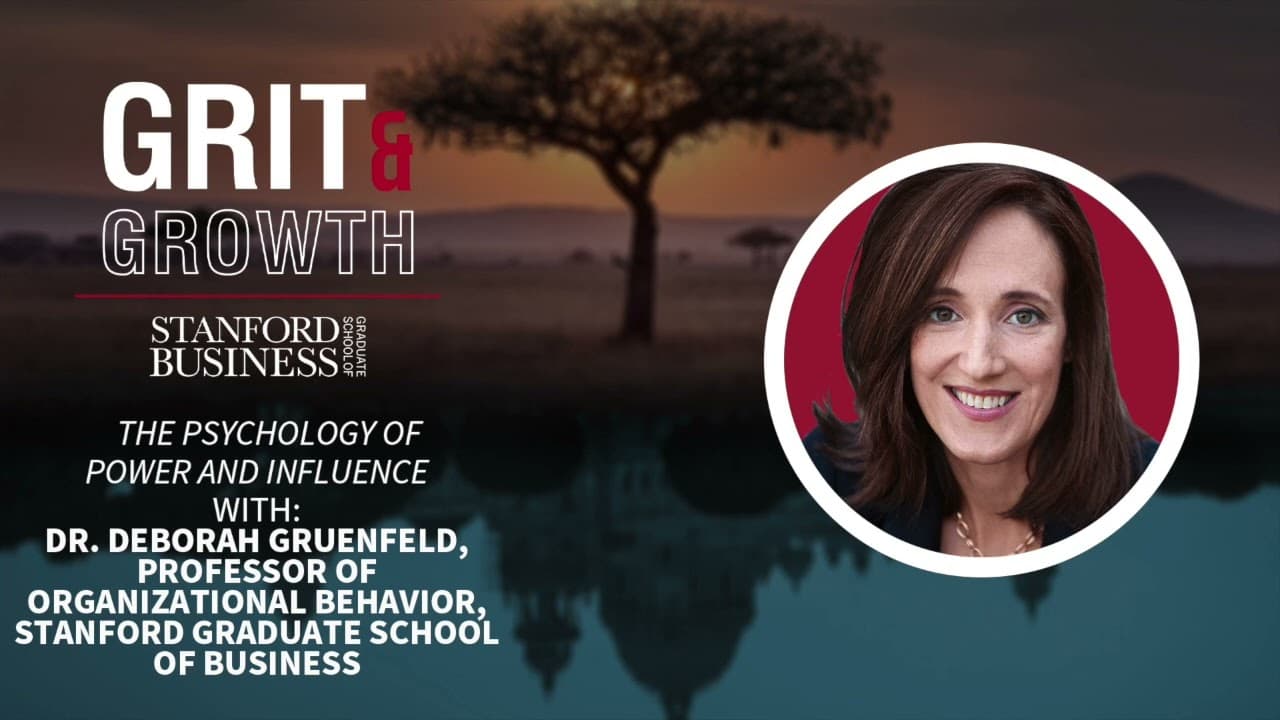
S02E02 Grit & Growth | The Psychology of Power & Influence
TL;DR
Power is a complex force that affects our everyday lives and can determine success as a leader and entrepreneur. It is important to recognize the different types of power, and how to use it for good.
Transcript
Whether we think about them or not, the people in institutions around us influence every aspect of our lives. In our workplaces, with our families, in churches, even simply walking down the street every day, there are hidden social forces that affect our every move and influence our outcomes. Brian Lowry is a professor at the Stanford graduate scho... Read More
Key Insights
- 💦 Power influences every aspect of our lives, from work settings to personal relationships.
- 👋 Dominance is not always the best approach to display power; being disarming and approachable can help build relationships and achieve goals.
- ✊ Leaders need to navigate power dynamics by understanding their level of power in different situations and using it effectively.
- ✊ Power can change a person's behavior, making them more focused on personal goals and less sensitive to social norms.
- 🪡 Authenticity is not always the most effective leadership approach; leaders should prioritize being who they need to be for the benefit of the organization and others.
- 🖐️ Body language plays a significant role in power dynamics, with physical expansiveness and stillness conveying dominance and authority.
- ✊ It is important to be mindful of power dynamics in different cultural contexts, understanding that hierarchies and deference may vary.
Install to Summarize YouTube Videos and Get Transcripts
Explore YouTube Video Summarizer or Get YouTube Transcript Extractor
Questions & Answers
Q: How does power influence our everyday lives and interactions?
Power, whether social or personal, shapes our decisions and actions in various settings, from work environments to personal relationships. It affects how we interact with others and the outcomes we achieve.
Q: Is dominance always better than deference when it comes to displaying power?
No, dominance is not always superior to deference. Building relationships and making things work often require a disarming approach, showing respect to others, and being approachable.
Q: How can entrepreneurs navigate power dynamics as they grow their businesses?
Entrepreneurs constantly face questions of power as they manage teams, pitch to investors, and negotiate deals. It is essential to understand the level of power one has in different situations and when to use it effectively.
Q: How does power impact a leader's behavior and decision-making?
Power can lead to changes in behavior, making leaders more focused on their goals, more impulsive, and less sensitive to social norms. It is crucial for leaders to recognize and manage these effects to make responsible decisions.
Q: Can being authentic always be the right approach in leadership?
While authenticity is valued, leaders need to recognize that being authentic does not always lead to desirable outcomes. Sometimes, leaders need to behave in ways that may not feel authentic but are necessary for the success of the team or organization.
Q: How can body language contribute to power dynamics?
Body language plays a significant role in power dynamics, with physical expansiveness and stillness often conveying dominance and power. Leaders should be mindful of their body language, especially in high-stakes situations, to project authority.
Q: How can one navigate power dynamics in a situation where the status hierarchy is unclear?
In situations where the status hierarchy is uncertain, it is safer to be slightly more deferential than necessary until cues from others provide guidance. Matching others' behavior while staying slightly under can help establish rapport and avoid unintentional challenges to higher-ranked individuals.
Q: How can power be used to empower others and build trust?
Power should be used to empower others and enhance trust. Leaders need to balance authoritative and approachable styles, respecting others' needs and making decisions that consider the best interests of the team or organization.
Summary & Key Takeaways
-
Power, both social and personal, influences our interactions and outcomes in various settings, from workplaces to personal relationships.
-
Power can be used in different ways, either through dominance or deference, depending on the context and the goal of building relationships or achieving success.
-
Psychologist Deborah Gruenfeld emphasizes the importance of recognizing and managing power, as well as understanding how it changes people and affects their behavior.
Read in Other Languages (beta)
Share This Summary 📚
Summarize YouTube Videos and Get Video Transcripts with 1-Click
Try YouTube Summary with ChatGPT & Claude or YouTube Transcript Generator
Explore More Summaries from Stanford Graduate School of Business 📚




Summarize YouTube Videos and Get Video Transcripts with 1-Click
Try YouTube Summary with ChatGPT & Claude or YouTube Transcript Generator