Why America Is #1 at Political Violence
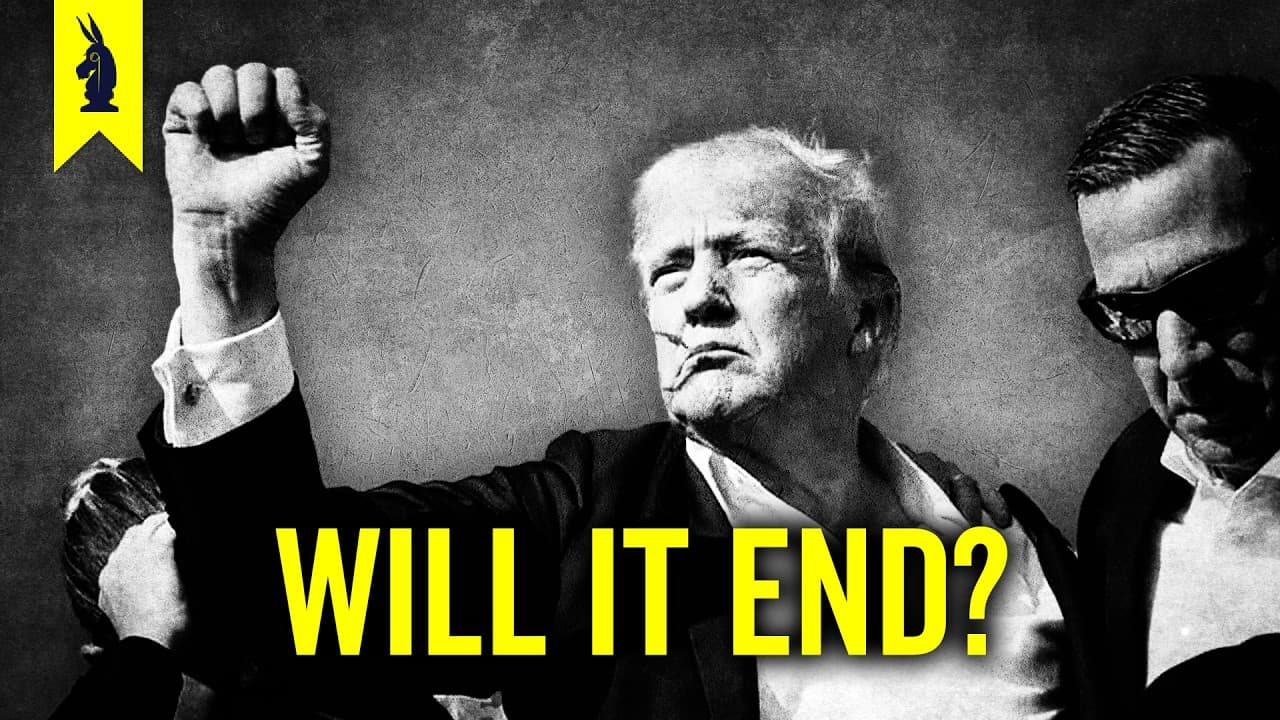
TL;DR
Political violence encompasses various actions aimed at achieving political goals, often overlooked in media discussions.
Transcript
hello my name is Michael Burns and I condemn all acts of political violence now we heard this phrase from politicians there's no place in America for this kind of violence for any violence ever period media figures across the board there has been strong condemnation of any form of political violence even comedy musicians in the wake of the attempte... Read More
Key Insights
- 🙈 Political violence is not limited to publicized violent acts; it also includes systemic violence that is often ignored.
- 🧑🏭 The media's fascination with individual violent acts distracts from examining larger socio-political issues including state-sponsored violence.
- 😘 Recent studies indicate a troubling rise in political violence predominantly associated with right-wing ideologies.
- 🧑🏭 The complexity of political violence is often misunderstood, with moral judgments biased towards state actions being deemed acceptable while condemning non-state actors.
- 🧑🤝🧑 Historical examples, like the U.S. involvement in foreign coups, highlight a cycle of violence that continues to shape geopolitical relationships today, often without adequate accountability.
- 🥹 Understanding political violence requires a critical analysis of how we construct narratives around violence—who it affects, who perpetrates it, and who is held accountable.
- 🖐️ The impact of military experiences on returning soldiers can contribute to domestic political violence, suggesting deeper psychological issues are at play post-service.
Install to Summarize YouTube Videos and Get Transcripts
Explore YouTube Video Summarizer or Get YouTube Transcript Extractor
Questions & Answers
Q: How is political violence defined in the video?
Political violence is described as acts of violence directed at achieving political goals, with implications that go far beyond overt actions like murder. It can include everything from wars, police brutality, riots, to assassinations and coups. The concept seeks to understand violent actions as part of broader political systems and motivations rather than isolated incidents.
Q: Why does the media focus more on individual acts of political violence?
The media tends to cover individual incidents of political violence because they create sensational stories that capture public attention. Conversely, the systemic forms of political violence, such as state-sponsored actions or institutional racism, are less visible and often more complex, making them challenging topics for immediate reporting.
Q: What historical evidence is presented about state-sponsored political violence?
The presenter references several U.S. interventions, such as the CIA-backed coup in Guatemala aimed at protecting corporate interests, suggesting that U.S. history is rife with examples of sanctioned political violence that remains largely unreviewed in mainstream narratives compared to isolated incidents carried out by individuals.
Q: How does the video differentiate between moral assessments of political violence?
The content argues that political violence executed by the state is often framed as justifiable or necessary, while violence carried out by non-state actors is condemned universally. This suggests an inherent bias in how society judges the morality of violence based on the actor rather than the act itself.
Q: What role does historical context play in understanding political violence today?
Historical context is pivotal as it shows how the roots of political violence have evolved. Insights from past events, such as the violent struggles for civil rights and anti-colonial resistance, allow viewers to understand current tensions and motivations for violence which are often distressingly familiar.
Q: What implications does the current political landscape have on acts of violence?
The increasing political polarization in the U.S. creates an environment where violent rhetoric proliferates, leading to more extreme acts. The video points to studies highlighting a surge in violence particularly linked to right-wing movements, suggesting that increasing tensions in political discourse correlate with a rise in violent actions.
Summary & Key Takeaways
-
The video discusses the various aspects of political violence, notably the difference between state-sponsored and non-state actions, conveying that media often focuses on individual acts without addressing systemic issues.
-
Political violence is defined broadly, encompassing actions such as police brutality, wars, and coups, with a focus on which political rhetoric fuels these violent tendencies and the right-wing predominance in recent attacks.
-
Historical context is provided, illustrating that while political violence has roots in both the left and right of the political spectrum, systemic violence often goes unexamined compared to more visible acts of individual aggression.
Read in Other Languages (beta)
Share This Summary 📚
Summarize YouTube Videos and Get Video Transcripts with 1-Click
Try YouTube Summary with ChatGPT & Claude or YouTube Transcript Generator