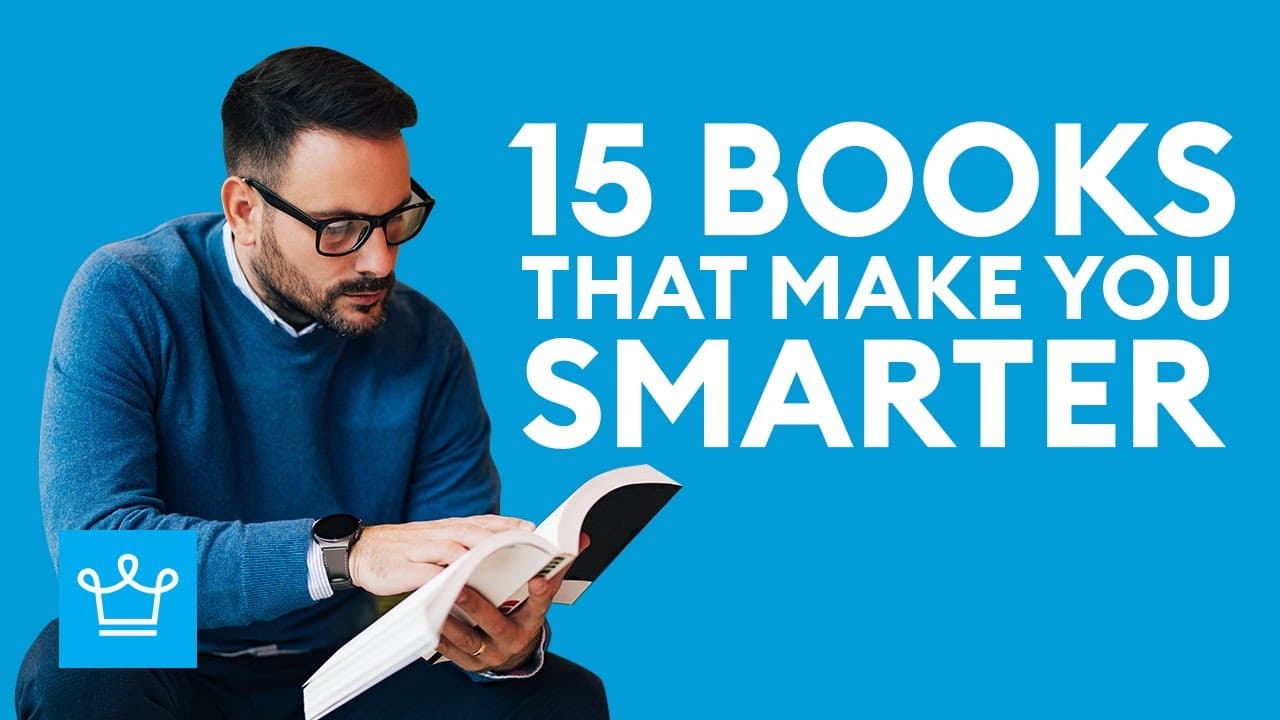
What Are 15 Books That Can Make You Smarter?
TL;DR
Reading these 15 powerful books can significantly enhance your knowledge and critical thinking skills. Titles like 'Thinking Fast and Slow,' 'Atomic Habits,' and 'Sapiens' provide insights into decision-making, habit formation, and human history, respectively. Engaging with these works will equip you with valuable lessons for personal and professional growth.
Transcript
picture this okay you come home from work you make yourself a delicious dinner and then you're left with an entire evening that you can spend as you like but how you spend that evening can either leave you with some hours wasted on small unimportant things or with new things learned that will make you smarter so what do you choose in the hope that ... Read More
Key Insights
- 🤔 "Thinking Fast and Slow" emphasizes the importance of self-awareness in decision-making processes.
- 🥺 "Atomic Habits" teaches that small, consistent actions can lead to significant improvements in various aspects of life.
- 🧡 "A Brief History of Time" simplifies complex astrophysical concepts, making them accessible to a wide range of readers.
- 💠 "Sapiens" provides insights into the forces that have shaped human civilization and challenges conventional wisdom.
- ❓ "The Power of Habit" explores the role of habits in personal and professional success and provides strategies to transform them.
- 🎁 "Made to Stick" presents a framework for crafting ideas that are memorable and impactful.
- ⁉️ "Brief Answers to Big Questions" tackles complex scientific questions and offers Stephen Hawking's unique perspective.
- 💍 "Astrophysics for People in a Hurry" offers a condensed yet engaging overview of astrophysical phenomena.
- ❓ "Effortless" advocates for simplicity and essentialism in increasing productivity and fulfillment.
- ❓ "Mindset" highlights the importance of a growth mindset in personal growth and success.
- 🧠 "This Is Your Brain on Music" explores the relationship between music and the human brain, revealing its emotional and cognitive impact.
- 🛝 "What If" provides entertaining and scientifically grounded answers to unusual hypothetical questions.
- 🧑🏭 "Where Good Ideas Come From" examines the factors that foster creativity and innovation in various contexts.
- 🍰 "A Short History of Nearly Everything" presents the history of science in an engaging and understandable manner.
Install to Summarize YouTube Videos and Get Transcripts
Explore YouTube Video Summarizer or Get YouTube Transcript Extractor
Questions & Answers
Q: What is the main focus of "Thinking Fast and Slow" by Daniel Kahneman?
"Thinking Fast and Slow" explores the two systems of thinking and how they affect decision-making. It encourages readers to assess their thinking patterns and gain control over their thoughts.
Q: What is the concept of "Atomic Habits" by James Clear?
"Atomic Habits" focuses on the power of small consistent actions to shape positive habits. Clear provides strategies to eliminate bad habits and build productive ones, leading to long-term improvements.
Q: What makes "A Brief History of Time" by Stephen Hawking accessible to readers?
Despite discussing complex astrophysical concepts, Hawking presents them in a clear and engaging way, making them understandable even for readers without scientific backgrounds.
Q: What is the main subject of "Sapiens" by Yuval Noah Harari?
"Sapiens" delves into the history of humankind, exploring the development of complex societies and the impact of technology on human civilization.
Key Insights:
- "Thinking Fast and Slow" emphasizes the importance of self-awareness in decision-making processes.
- "Atomic Habits" teaches that small, consistent actions can lead to significant improvements in various aspects of life.
- "A Brief History of Time" simplifies complex astrophysical concepts, making them accessible to a wide range of readers.
- "Sapiens" provides insights into the forces that have shaped human civilization and challenges conventional wisdom.
- "The Power of Habit" explores the role of habits in personal and professional success and provides strategies to transform them.
- "Made to Stick" presents a framework for crafting ideas that are memorable and impactful.
- "Brief Answers to Big Questions" tackles complex scientific questions and offers Stephen Hawking's unique perspective.
- "Astrophysics for People in a Hurry" offers a condensed yet engaging overview of astrophysical phenomena.
- "Effortless" advocates for simplicity and essentialism in increasing productivity and fulfillment.
- "Mindset" highlights the importance of a growth mindset in personal growth and success.
- "This Is Your Brain on Music" explores the relationship between music and the human brain, revealing its emotional and cognitive impact.
- "What If" provides entertaining and scientifically grounded answers to unusual hypothetical questions.
- "Where Good Ideas Come From" examines the factors that foster creativity and innovation in various contexts.
- "A Short History of Nearly Everything" presents the history of science in an engaging and understandable manner.
- "The Art of War" provides strategic insights and philosophies that extend beyond warfare, applicable to different situations.
Summary & Key Takeaways
-
"Thinking Fast and Slow" by Daniel Kahneman explores the two systems of thinking that drive our choices and encourages readers to assess their thinking patterns.
-
"Atomic Habits" by James Clear offers strategies to shape habits and improve performance in various aspects of life.
-
"A Brief History of Time" by Stephen Hawking explains complex astrophysical concepts in an accessible way, providing insights into the universe's origins.
-
"Sapiens" by Yuval Noah Harari explores the history of humankind and the forces that have shaped our civilization.
-
"The Power of Habit" by Charles Duhigg delves into the science of habits and how they influence personal and professional lives.
-
"Made to Stick" by Chip and Dan Heath provides strategies to make ideas memorable and impactful.
-
"Brief Answers to Big Questions" by Stephen Hawking tackles complex scientific questions and challenges conventional wisdom.
-
"Astrophysics for People in a Hurry" by Neil deGrasse Tyson offers an engaging overview of astrophysical concepts in an easily understandable manner.
-
"Effortless" by Greg McKeown redefines productivity and accomplishment by focusing on essential tasks and simplicity.
-
"Mindset" by Carol Dweck explores the impact of mindset on personal growth and success, emphasizing the growth mindset.
-
"This Is Your Brain on Music" by Daniel J. Levitin explores the connection between music and the human brain, discussing emotional responses and cognitive functions.
-
"What If" by Randall Monroe provides amusing answers to hypothetical questions using scientific and mathematical expertise.
-
"Where Good Ideas Come From" by Stephen Johnson examines the dynamics of creativity and innovation, exploring the conditions that foster groundbreaking ideas.
-
"A Short History of Nearly Everything" by Bill Bryson explores the history of science and the universe in an accessible way.
-
"The Art of War" by Sun Tzu offers strategic insights and philosophies for success in various situations, beyond warfare.
Read in Other Languages (beta)
Share This Summary 📚
Summarize YouTube Videos and Get Video Transcripts with 1-Click
Try YouTube Summary with ChatGPT & Claude or YouTube Transcript Generator
Explore More Summaries from Alux.com 📚


Summarize YouTube Videos and Get Video Transcripts with 1-Click
Try YouTube Summary with ChatGPT & Claude or YouTube Transcript Generator