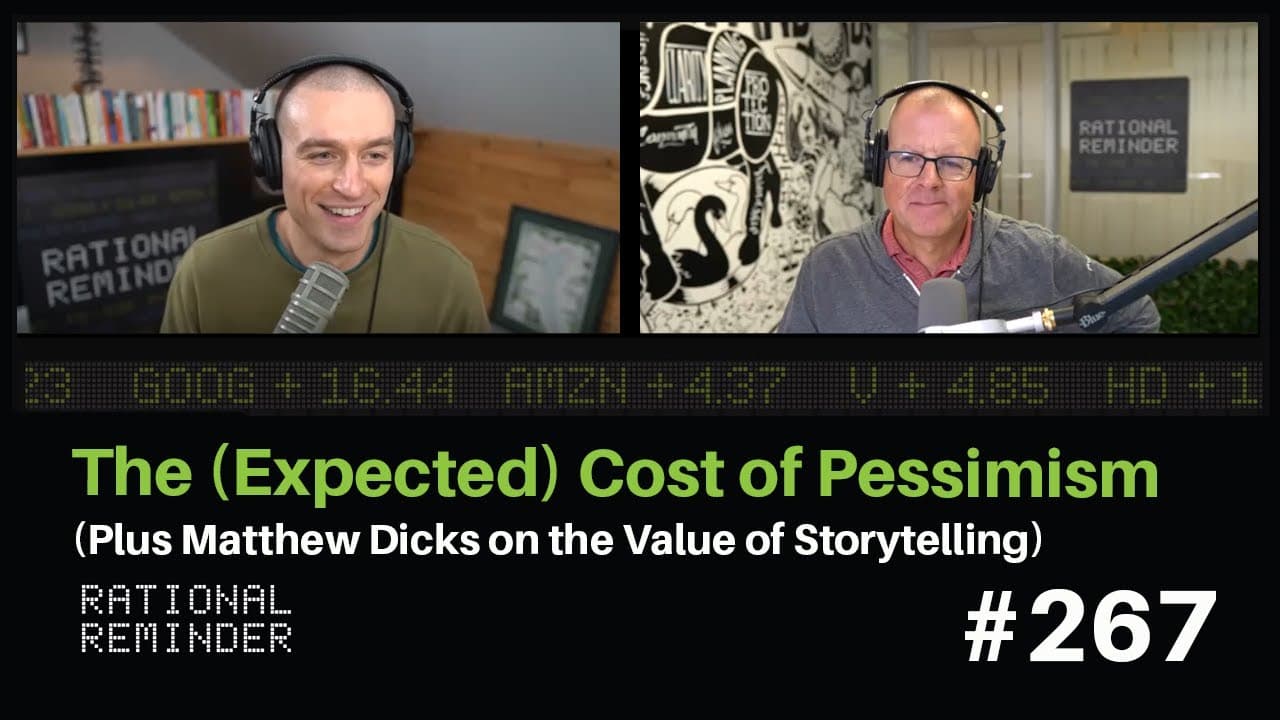
The (Expected) Cost of Pessimism (Plus Matthew Dicks on the Value of Storytelling) | RR 267
TL;DR
Developing storytelling skills is crucial in effectively communicating and persuading others, encouraging behavioral changes, and making better financial decisions.
Transcript
this is the rational reminder podcast our weekly reality check on sensible investing and financial decision making from two Canadians we're hosted by me Benjamin Felix and Cameron Passmore portfolio managers at pwl Capital welcome to episode 267. incredibly 267. today Ben you talk about the expected cost of pessimism super excited about that topic ... Read More
Key Insights
- 😘 Pessimism can lead to missed investment opportunities and lower long-term returns.
- 🛟 Storytelling is a powerful tool in finance and other areas of life, helping to convey messages effectively, influence emotions, and promote behavioral changes.
- 🕴️ Crafting and telling stories effectively requires understanding the elements of a great story and adapting them to suit different situations.
Install to Summarize YouTube Videos and Get Transcripts
Explore YouTube Video Summarizer or Get YouTube Transcript Extractor
Questions & Answers
Q: How does pessimism affect financial decision-making?
Pessimistic beliefs about market crashes can lead individuals to be more risk-averse, resulting in a lower investment in stocks and missed opportunities for wealth creation.
Q: How can storytelling be used to enhance communication in finance?
By using storytelling techniques, financial professionals can effectively convey important information, capture attention, and connect with their audience, ultimately influencing behavior and promoting better financial decisions.
Q: What are key elements of a great story?
A great story typically involves a change or realization over time, such as a shift in perspective, personal growth, or lessons learned. It should engage emotions and resonate with the audience.
Q: How can individuals develop their storytelling skills?
Practicing daily reflections, finding story-worthy moments in everyday life, and honing the ability to adapt stories to different contexts and audiences can help individuals improve their storytelling skills.
Key Insights:
- Pessimism can lead to missed investment opportunities and lower long-term returns.
- Storytelling is a powerful tool in finance and other areas of life, helping to convey messages effectively, influence emotions, and promote behavioral changes.
- Crafting and telling stories effectively requires understanding the elements of a great story and adapting them to suit different situations.
- Recognizing and sharing personal stories can make financial information more relatable, memorable, and impactful.
Summary & Key Takeaways
-
Pessimism can have a significant cost in financial decision-making, as individuals tend to worry about market crashes and miss out on potential returns.
-
Storytelling is a powerful tool that can help individuals convey important messages in a way that captures attention, influences emotions, and encourages behavioral change.
-
Learning to craft and tell stories effectively requires understanding the elements of a great story and adapting them to suit different contexts and audiences.
-
Recognizing the stories in our daily lives and incorporating them into our communications can make our messages more impactful and memorable.
Read in Other Languages (beta)
Share This Summary 📚
Summarize YouTube Videos and Get Video Transcripts with 1-Click
Try YouTube Summary with ChatGPT & Claude or YouTube Transcript Generator
Explore More Summaries from The Rational Reminder Podcast 📚


Summarize YouTube Videos and Get Video Transcripts with 1-Click
Try YouTube Summary with ChatGPT & Claude or YouTube Transcript Generator