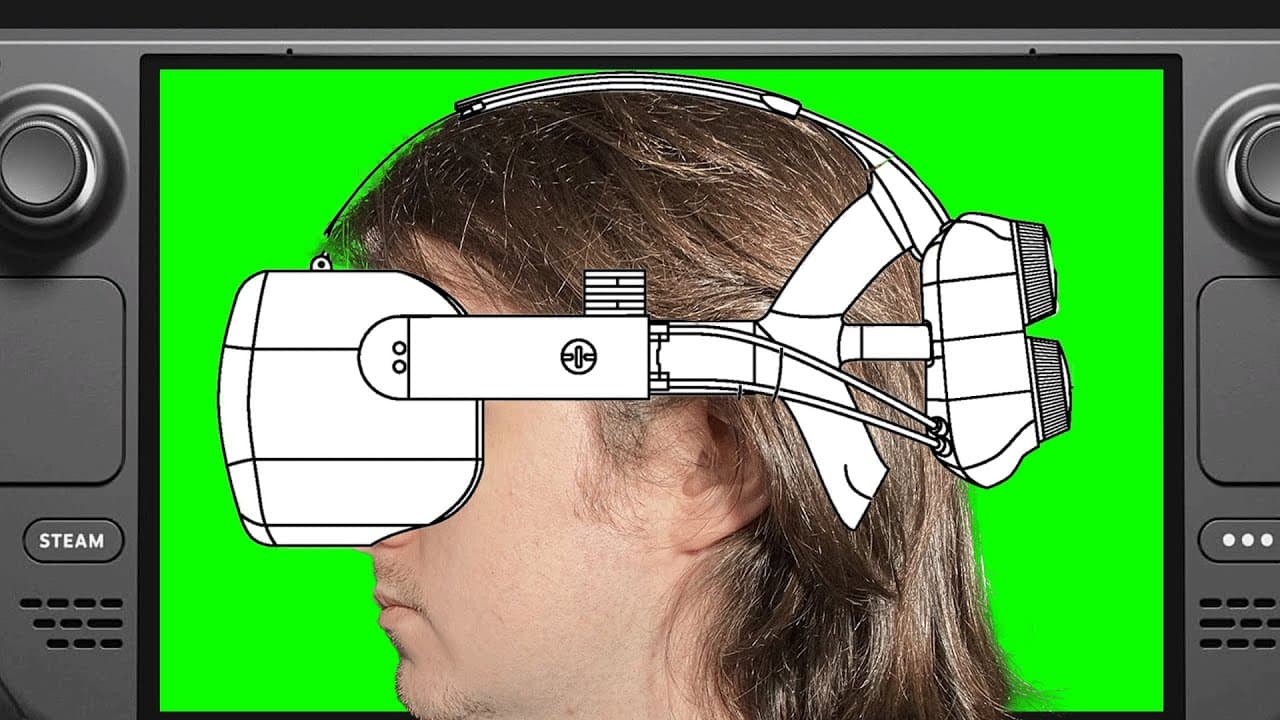
Deckard is Valve's "Spatial Computer"
TL;DR
Valve is positioning itself to compete with Apple's spatial computing platform by focusing on openness and creating a fully immersive VR experience with their upcoming Deckard headset.
Transcript
hi I'm Brad and yes it's another video about valve if you have been in the pcvr space for a long time or even a midterm amount of time this video might be a little jarring to you because things are changing in a really weird way in this industry and some people might be excited about it but others might feel uncomfortable in fact for me kind of res... Read More
Key Insights
- 🚾 Valve's history in VR began with the HTC Vive, where they prioritized room-scale VR and focused on VR gaming, setting them apart from competitors.
- ❤️🩹 The Valve Index improved upon the Vive with features like finger tracking, better audio, and reduced screen door effect, solidifying its position as a high-end VR headset.
- 🉐 Despite flaws such as easily breakable components, the Valve Index gained a loyal following and showcased potential for mixed reality experiences.
- 🤗 Valve's future hardware plans involve a standalone headset with an x86 Apu, an XR desktop environment for 2D games, and a focus on open-source development.
- ❤️🩹 The Deckard headset aims to be both a VR device and a high-end Steam Deck, providing immersive gaming and productivity experiences.
- 🤗 Valve's emphasis on open-source development, exemplified by initiatives like Monado, allows enthusiasts to experiment and pushes VR technology further.
Install to Summarize YouTube Videos and Get Transcripts
Explore YouTube Video Summarizer or Get YouTube Transcript Extractor
Questions & Answers
Q: How did Valve's focus on room-scale VR with the HTC Vive set them apart from competitors like Oculus?
Valve differentiated themselves by prioritizing room-scale VR, allowing users to physically move around their environment and providing better immersion for VR gaming. This focus gave them an edge over competitors like Oculus, who initially focused on seated VR experiences with gamepad controls.
Q: What were some notable features of the Valve Index that set it apart from other high-end VR headsets?
The Valve Index introduced finger tracking, providing more natural hand presence in virtual environments. It also had superior audio quality, with spatial awareness capabilities. Additionally, it addressed the screen door effect by using an RGB stripe LCD with a diffuser, resulting in a higher-quality visual experience.
Q: How has Valve's open-source approach impacted the development of VR?
Valve has encouraged open-source development through initiatives like Monado, which allows enthusiasts to experiment with features like hand tracking and open-source SLAM tracking. This approach fosters innovation and community collaboration, ultimately pushing the boundaries of VR technology.
Q: What is Valve's vision for the future of VR and spatial computing?
Valve aims to position its upcoming Deckard headset as both a VR device and a high-end Steam Deck, offering a fully immersive gaming and productivity experience. They also plan to integrate XR desktop functionality, allowing users to run 2D games in a VR environment. Valve's long-term goal involves building an open spatial computing platform with a focus on open-source development.
Key Insights:
- Valve's history in VR began with the HTC Vive, where they prioritized room-scale VR and focused on VR gaming, setting them apart from competitors.
- The Valve Index improved upon the Vive with features like finger tracking, better audio, and reduced screen door effect, solidifying its position as a high-end VR headset.
- Despite flaws such as easily breakable components, the Valve Index gained a loyal following and showcased potential for mixed reality experiences.
- Valve's future hardware plans involve a standalone headset with an x86 Apu, an XR desktop environment for 2D games, and a focus on open-source development.
- The Deckard headset aims to be both a VR device and a high-end Steam Deck, providing immersive gaming and productivity experiences.
- Valve's emphasis on open-source development, exemplified by initiatives like Monado, allows enthusiasts to experiment and pushes VR technology further.
- Valve's vision for the future includes building an open spatial computing platform and integrating XR desktop functionality to bridge the gap between 2D and VR experiences.
Summary & Key Takeaways
-
Valve's history in VR began with the HTC Vive, where they prioritized room-scale VR and focused on VR gaming.
-
The Valve Index improved upon the HTC Vive with features like finger tracking, better audio, and reduced screen door effect.
-
While the Valve Index had its flaws, it gained a dedicated following and showcased potential for a mixed reality experience.
-
Valve's future hardware plans include a standalone headset with an x86 Apu, an XR desktop environment for 2D games, and a focus on open-source development.
Read in Other Languages (beta)
Share This Summary 📚
Summarize YouTube Videos and Get Video Transcripts with 1-Click
Try YouTube Summary with ChatGPT & Claude or YouTube Transcript Generator