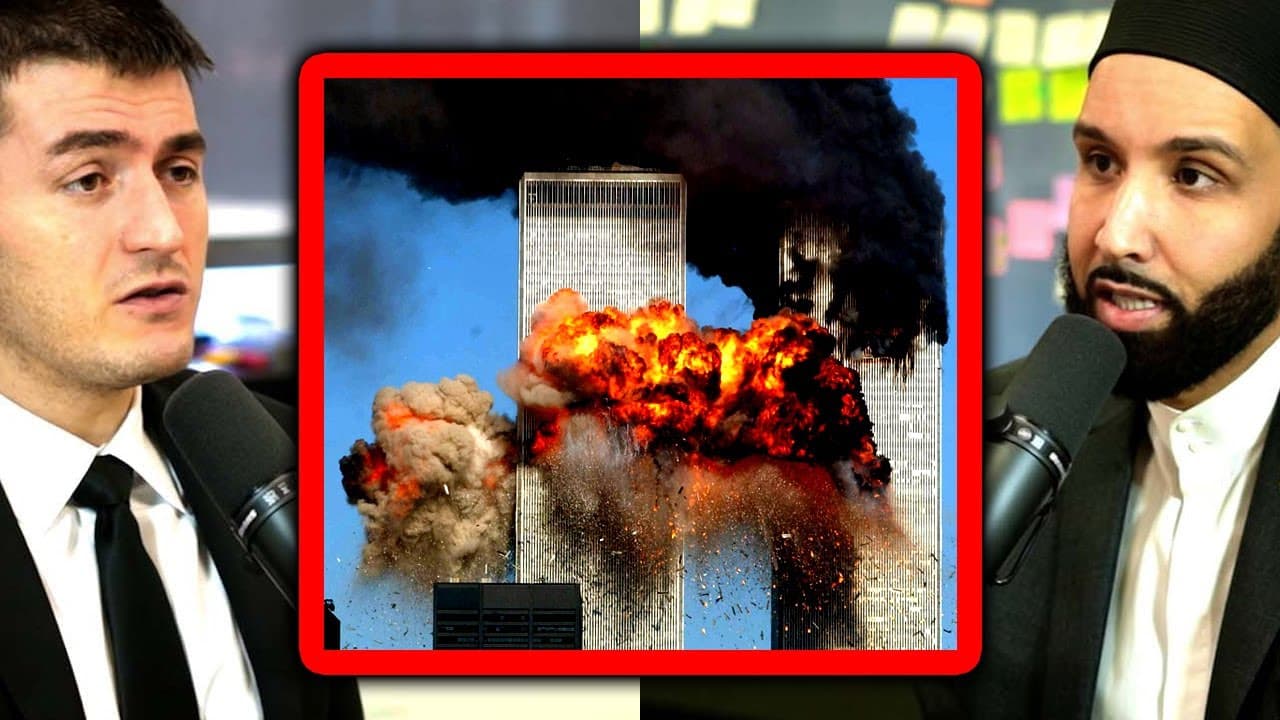
Hate toward Muslims after 9/11 | Omar Suleiman and Lex Fridman
TL;DR
Despite the lazy association of violence with Islam, Muslims must navigate ongoing Islamophobia and work towards building understanding and acceptance in the face of bigotry.
Transcript
as you mentioned uh in the minds of some Americans after 9 11 the religion of Islam was associated with maybe you could say evil in the world yeah maybe you can say uh terrorism uh how can you respond to this Association how does it make you feel first of all as a devout Muslim yourself and um how can you overcome it personally how can you overcome... Read More
Key Insights
- 😀 Islamophobia is a significant issue faced by Muslims, both domestically and globally.
- 🙈 The lazy association of violence with Islam ignores the reality of violence committed by individuals of other religions.
- 🧑🏭 Hate and discrimination towards Muslims have real-life consequences, often resulting in loss of civil liberties and acts of violence.
- 🤬 Islamophobia is perpetuated through media biases and the politicization of religious symbols and ideologies.
- 💁 Bigotry and hate towards Muslims share similarities with other forms of prejudice, such as anti-Semitism.
- ↔️ Muslims find themselves in an awkward political space, not fully embraced by either the left or the right.
Install to Summarize YouTube Videos and Get Transcripts
Explore YouTube Video Summarizer or Get YouTube Transcript Extractor
Questions & Answers
Q: How does the association of Islam with terrorism affect Muslims personally and as a community?
Muslims have had to combat the negative stereotypes and discrimination that come with this association. It has led to the loss of civil liberties, unfair policies, and in some cases, acts of violence against the Muslim community worldwide.
Q: How does the lazy association of violence with Islam perpetuate further hatred and bigotry?
The lazy association allows for the justification of bad policies towards Muslims and perpetuates a cycle of discrimination. Media attention is disproportionately focused on acts of violence committed by Muslims, reinforcing negative stereotypes.
Q: Is there a similarity between anti-Semitism and anti-Muslim hate?
Yes, both forms of hatred stem from scapegoating and attributing disproportionate power and nefarious intentions to minority populations. The targeting of both Jewish and Muslim communities reflects a larger crisis of hate and dehumanization in society.
Q: What do Muslims need to do to overcome hatred and prejudice?
Muslims must continue to live their faith proudly, not compromising their values, while also responding to hate with character and demonstrating the beauty and peacefulness of Islam. Education, dialogue, and community engagement are necessary steps towards building understanding.
Summary & Key Takeaways
-
The 9/11 attacks significantly changed the perception of Islam in America, with younger generations experiencing the aftermath of this association rather than the historical context.
-
Muslims have faced bigotry and discrimination in the form of media constructions, policies, and restrictions on civil liberties, perpetuated by multiple administrations.
-
The association of Islam with terrorism is a lazy and factually incorrect narrative, as acts of violence and terrorism are committed by individuals of various backgrounds and religions.
Read in Other Languages (beta)
Share This Summary 📚
Summarize YouTube Videos and Get Video Transcripts with 1-Click
Try YouTube Summary with ChatGPT & Claude or YouTube Transcript Generator
Explore More Summaries from Lex Clips 📚




Summarize YouTube Videos and Get Video Transcripts with 1-Click
Try YouTube Summary with ChatGPT & Claude or YouTube Transcript Generator