Space Trash: The Next Big Pickle
TL;DR
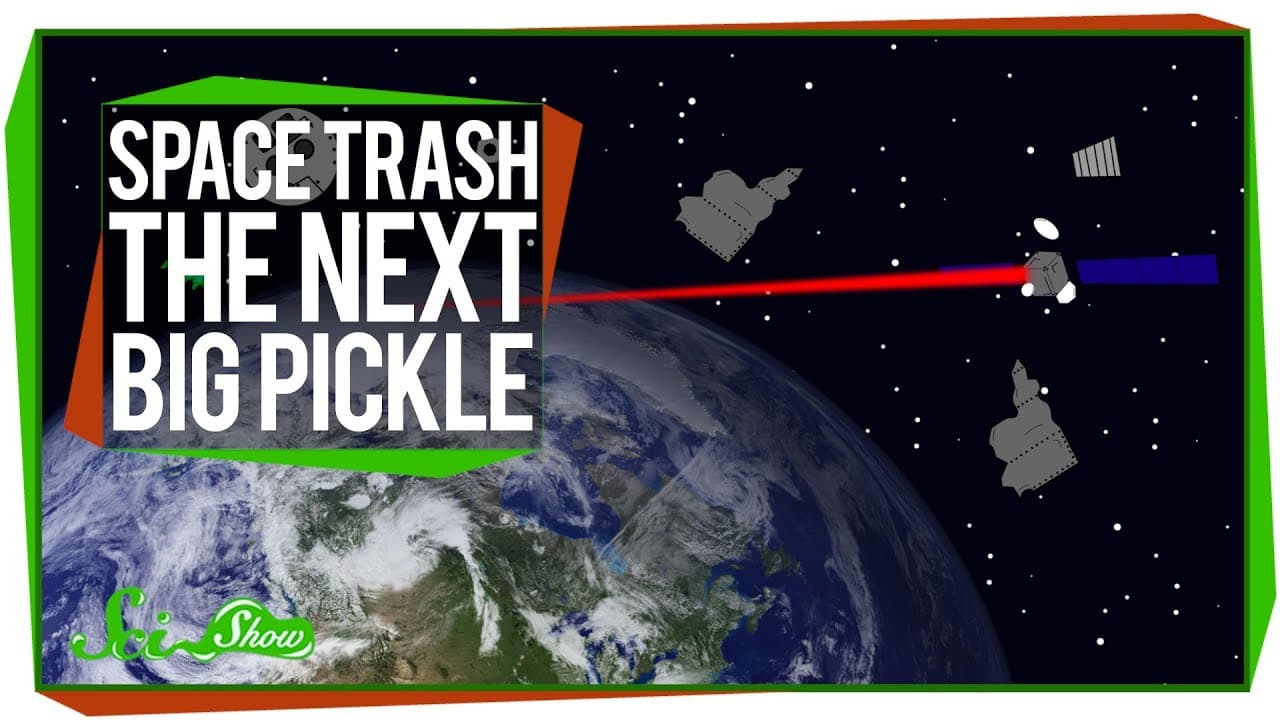
Earth's orbit is filled with space debris, posing a threat of overcrowding and collision, with potential solutions in development.
Transcript
space is a big place so you'd think that it would be pretty easy to just launch bunch of garbage out into space and never see it again like sayonara trash unfortunately turns out not the case because while space is infinite the area around the earth that things can be in orbit in is not ever since the Russians sent up Sputnik back in 1957 Earth's o... Read More
Key Insights
- 🛰️ Space trash in Earth's orbit poses a significant threat to current and future space missions.
- 👾 The Kessler syndrome, where space debris collisions create more debris, is a growing concern.
- 🥳 Proposed solutions include sending robots to scavenge parts, launching trash collection satellites, and using lasers for debris management.
- 👾 Space debris can damage spacecraft like the International Space Station, highlighting the importance of tracking and managing debris.
- 👾 Scientists and researchers are actively developing solutions to mitigate the impact of space trash on space exploration.
- 🛰️ The increasing accumulation of space debris in Earth's orbit requires urgent attention and action to avoid potential catastrophic scenarios.
- 👾 Collaboration between government agencies and organizations is crucial in addressing the space trash crisis effectively.
Install to Summarize YouTube Videos and Get Transcripts
Explore YouTube Video Summarizer or Get YouTube Transcript Extractor
Questions & Answers
Q: What is space trash, and why is it a concern?
Space trash consists of defunct satellites and leftover rocket parts that pose a threat in Earth's orbit. The accumulation of this debris can lead to collisions, creating more hazardous space trash.
Q: What is the Kessler syndrome, and why is it significant?
The Kessler syndrome is a scenario where space trash collisions escalate, creating more debris in Earth's orbit. This poses a significant threat as it could lead to an overcrowded orbit making space travel difficult or impossible.
Q: What are some proposed solutions for managing space trash?
Proposed solutions include sending robots to scavenge parts from defunct satellites, launching trash collection satellites, and using lasers to nudge debris out of the way. These methods aim to reduce the risk of collisions and overcrowding in Earth's orbit.
Q: How is space debris affecting current space missions like the International Space Station?
Space debris poses a risk to spacecraft like the International Space Station as even small particles moving at high speeds can damage structures. Tracking larger pieces of debris is crucial to avoiding potential collisions.
Summary & Key Takeaways
-
Space debris from defunct satellites and rocket parts pose a threat in Earth's orbit.
-
The Kessler syndrome, where space trash collides to create more debris, is a growing concern.
-
Potential solutions include robots scavenging parts, trash collection satellites, and using lasers for debris management.
Read in Other Languages (beta)
Share This Summary 📚
Summarize YouTube Videos and Get Video Transcripts with 1-Click
Try YouTube Summary with ChatGPT & Claude or YouTube Transcript Generator
Explore More Summaries from SciShow 📚


Summarize YouTube Videos and Get Video Transcripts with 1-Click
Try YouTube Summary with ChatGPT & Claude or YouTube Transcript Generator