Why OpenAI changed from non-profit to for-profit | Sam Altman and Lex Fridman
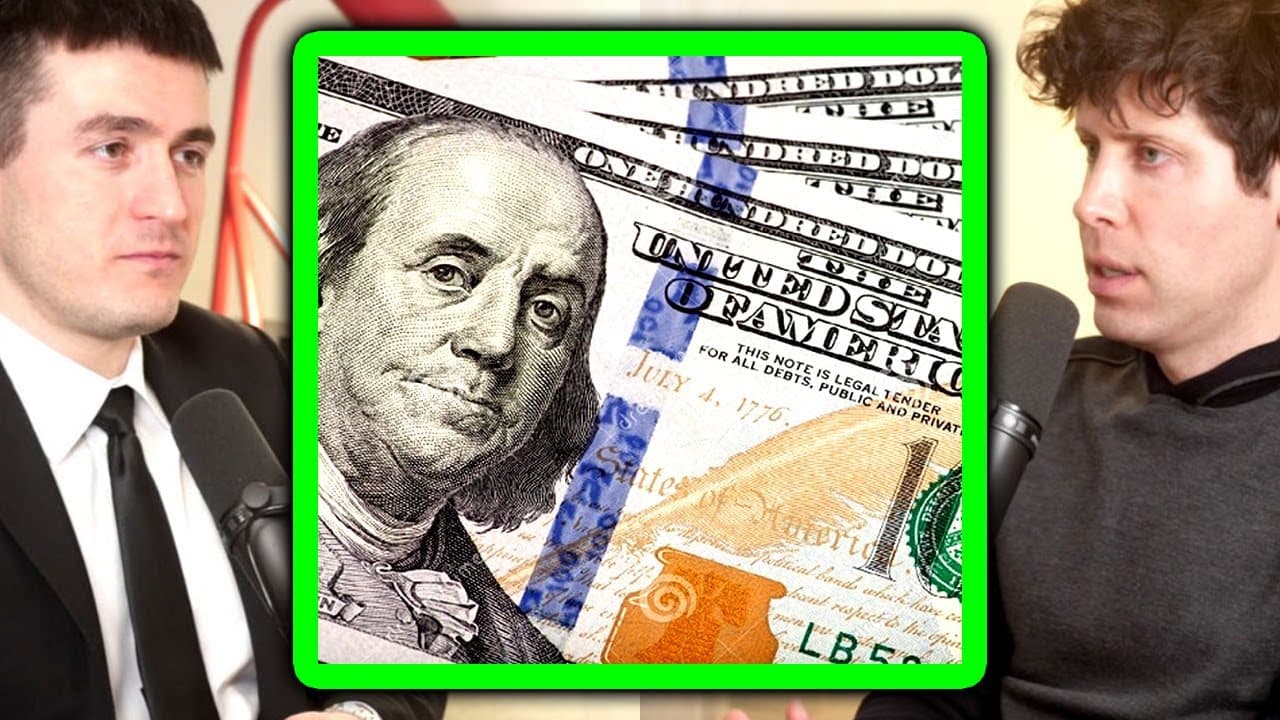
TL;DR
OpenAI started as a non-profit but transitioned to a capped for-profit structure to raise necessary capital, while still maintaining control through a subsidiary non-profit.
Transcript
open AI went um stop being non-profit or split up in Detroit can you describe that whole process yes we started as a non-profit um we learned early on that we were going to need far more Capital than we were able to raise as a non-profit um our non-profit is still fully in charge there is a subsidiary capped profit so that our investors and employe... Read More
Key Insights
- 🔠 OpenAI transitioned to a capped for-profit structure due to the need for more capital, while still maintaining control through a non-profit subsidiary.
- 👻 The structure allows OpenAI to make non-standard decisions and prioritize its mission over shareholders' interests.
- ✳️ OpenAI recognizes the potential of AGI to significantly surpass its current capabilities and the importance of healthy collaboration to mitigate risks.
- 😇 The organization believes that the better angels, both individuals and companies, will act responsibly and not willingly contribute to the destruction of the world.
- 😑 OpenAI expresses concerns about uncapped companies playing with AGI and the unlimited value creation and capture incentives in capitalism.
Install to Summarize YouTube Videos and Get Transcripts
Explore YouTube Video Summarizer or Get YouTube Transcript Extractor
Questions & Answers
Q: Why did OpenAI transition from being a non-profit to a capped for-profit structure?
OpenAI made this transition because they struggled to raise enough funding as a non-profit. By becoming a capped for-profit, they could access more capital while still upholding their mission and maintaining control through the non-profit subsidiary.
Q: How does the capped for-profit structure work for OpenAI?
OpenAI's capped for-profit subsidiary enables investors and employees to earn a fixed return, with any excess flowing back to the non-profit. This structure allows OpenAI to merge with other organizations, cancel equity, and make decisions that prioritize their mission over shareholder interests.
Q: What are the pros and cons of transitioning to a capped for-profit structure?
The pros include the ability to access more capital necessary for OpenAI's goals and the flexibility to make non-standard decisions. However, the risk is that too much focus on profits can potentially detract from the organization's core mission.
Q: How does OpenAI view competition from other tech giants in the field of AGI?
OpenAI acknowledges that they cannot control what other companies, such as Google, Apple, or Meta, will do in the AGI space. OpenAI aims to influence others, provide value, and collaborate to minimize negative consequences while recognizing the incentives of capitalism.
Summary & Key Takeaways
-
OpenAI initially operated as a non-profit organization but realized the need for more capital to achieve its goals.
-
To address this, OpenAI introduced a capped for-profit subsidiary while ensuring that the non-profit remains in control of decision-making.
-
This structure allows OpenAI to make unconventional choices and protect shareholder interests while fulfilling its mission.
Read in Other Languages (beta)
Share This Summary 📚
Summarize YouTube Videos and Get Video Transcripts with 1-Click
Try YouTube Summary with ChatGPT & Claude or YouTube Transcript Generator
Explore More Summaries from Lex Clips 📚




Summarize YouTube Videos and Get Video Transcripts with 1-Click
Try YouTube Summary with ChatGPT & Claude or YouTube Transcript Generator