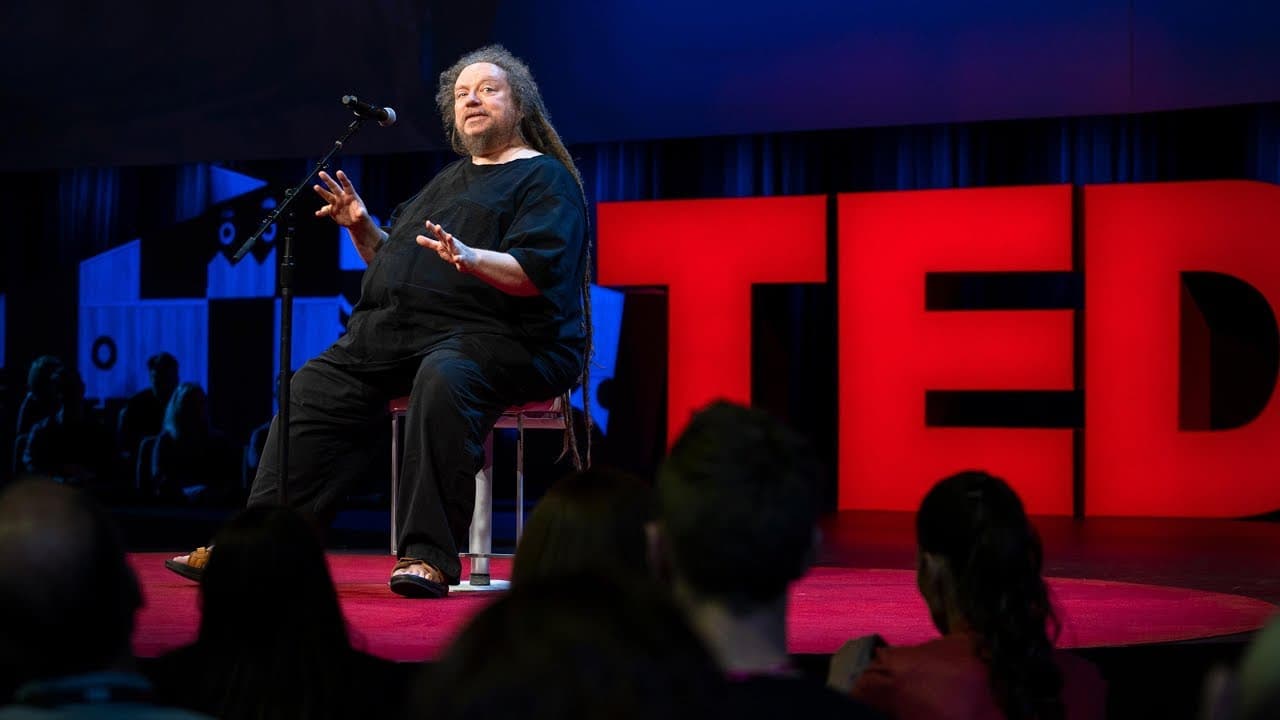
How we need to remake the internet | Jaron Lanier
TL;DR
In this TED Talk, the speaker discusses the unintended consequences of the advertising model used by tech companies like Google and Facebook, and proposes a solution to create a healthier digital culture.
Transcript
Back in the 1980s, actually, I gave my first talk at TED, and I brought some of the very, very first public demonstrations of virtual reality ever to the TED stage. And at that time, we knew that we were facing a knife-edge future where the technology we needed, the technology we loved, could also be our undoing. We knew that if we thought of our t... Read More
Key Insights
- 🌍 The idealism of digital culture in the 1980s was all about recognizing the potential darkness of technology and finding ways to transcend it with beauty and creativity.
- 💡 Virtual reality was imagined as a new form of communication, similar to language, that would bring new adventures, depth, meaning, and creativity to our lives.
- 📚 Early digital culture had a mission for everything on the internet to be purely public and available for free, but also celebrated the power of tech entrepreneurs.
- 🖥️ This led to the birth of advertising models in tech companies like Google and Facebook, but over time, these models evolved into behavior modification empires, impacting our behaviors and emotions.
- 📉 Negative stimuli are cheaper and more effective at modifying behavior on social networks, which results in the amplification of negative emotions and the advancement of cynical and paranoid voices.
- 💰 A possible solution is for users to pay for these services, shifting towards a subscription-based or micro-payment model, to promote more trustworthy and authoritative content on social media.
- 🌟 Remaking the decision to prioritize quality over free access could lead to a future of "peak social media" where users have access to reliable information and authentic connections.
- 💡 Ultimately, the current business models of tech giants like Google and Facebook are unsustainable and need to change in order for society to thrive. Deleting accounts is a temporary solution if the companies refuse to change.
Install to Summarize YouTube Videos and Get Transcripts
Explore YouTube Video Summarizer or Get YouTube Transcript Extractor
Questions & Answers
Q: What is the speaker's view on the potential dangers of technology?
The speaker believes that technology has the potential to be both beneficial and harmful. They emphasize that if technology is used solely for power and not balanced with creativity, it could lead to self-destruction.
Q: How did the speaker describe their vision of virtual reality?
The speaker compared virtual reality to the discovery of language, stating that it would bring new adventures, depth, meaning, connections, and ways of imagining. They referred to it as post-symbolic communication, where experiences are created directly rather than through symbols.
Q: What mistake does the speaker believe was made by digital culture in the '90s?
The speaker believes that digital culture had conflicting values: the belief in everything being free and public, and the admiration for tech entrepreneurs. The mistake was adopting the advertising model to reconcile these conflicting passions, leading to a negative impact on society.
Q: How does the speaker describe the impact of behavior modification empires?
The speaker argues that behavior modification empires, such as social networks, manipulate users through the use of negative stimuli like punishment and reward. This creates a loop where users respond more to negative emotions, amplifying negative voices and emotions within society.
Q: What solution does the speaker propose to address the negative impact of behavior modification empires?
The speaker suggests remaking the decision by having people pay for services like search and social networking, similar to how subscription models improved TV and movies. They believe this would result in better-quality content and prevent the amplification of negative emotions and misinformation. Deleting accounts is also suggested as an interim solution.
Summary & Key Takeaways
-
In the 1980s, virtual reality was introduced to TED as a technology that could be both beneficial and destructive. The idealism of digital culture at the time focused on using creativity to transcend the darkness and create a better future.
-
However, the mistake of making everything on the internet free and relying on advertising for revenue was made in the 90s. This led to the creation of behavior modification empires, where social networks function as punishment and reward systems, amplifying negative emotions and voices.
-
To undo this mistake, it is necessary to transition to a model where people pay for services like search and social networking, just like with TV subscriptions. This would create a more positive and authoritative online environment. Deleting accounts is also an option if companies don't change.
Read in Other Languages (beta)
Share This Summary 📚
Summarize YouTube Videos and Get Video Transcripts with 1-Click
Try YouTube Summary with ChatGPT & Claude or YouTube Transcript Generator
Explore More Summaries from TED 📚
Summarize YouTube Videos and Get Video Transcripts with 1-Click
Try YouTube Summary with ChatGPT & Claude or YouTube Transcript Generator