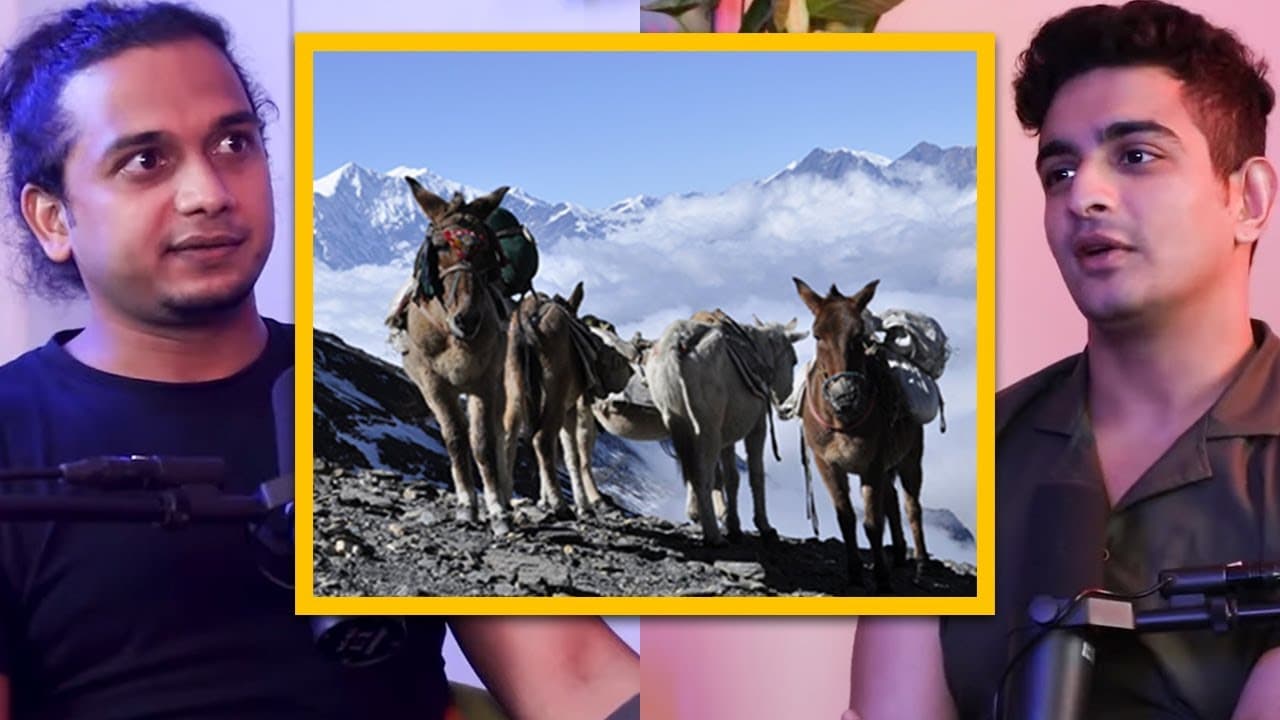
The Cruel Truth Behind Trekking Mules: How They Die And Why It Matters
TL;DR
The speaker shares experiences of trekking, animal sightings, and the harsh realities faced during mountain expeditions.
Transcript
so you don't have time to consume an entire podcast that's okay enjoy the highlights on trs clips make sure you subscribe make sure you hit that bell icon have you seen any like wild animals on your treks i mean mountain goats that's about it there is no life there is no life right like if you don't see trees you won't see animals that eat grass an... Read More
Key Insights
- 🫏 Trekking to base camps can result in limited animal sightings, primarily consisting of yaks and the commonly used mules.
- 🥺 Mules carry critical supplies, but also face dangerous conditions on narrow mountain paths, leading to unfortunate accidents.
- ❓ The emotional experience of trekking includes grappling with ethical considerations surrounding animal welfare.
- ♻️ The environment's harshness influences both animals and humans, creating a unique dynamic during expeditions.
- 😀 The adrenaline-fueled quest to reach summits often overshadows the suffering faced by working animals on the trail.
- 🪜 Understanding the struggle of animals adds depth to the adventure experience, prompting deeper ethical reflections.
- 👾 The need to maintain pace is paramount, making it a high-stakes activity driven by limited opportunities each climbing season.
Install to Summarize YouTube Videos and Get Transcripts
Explore YouTube Video Summarizer or Get YouTube Transcript Extractor
Questions & Answers
Q: What types of animals were encountered during the trek?
During the trek, the speaker mainly observed mountain goats and yaks. They mentioned that while yaks can be considered wild to some extent, they are generally chill and non-aggressive. Most of the intense animal encounters were with mules, which are essential for carrying loads to the base camp, despite the harsh conditions they face.
Q: What challenges do mules face while trekking?
Mules face significant challenges on mountain trails, such as narrow paths and heavy loads. The speaker noted that these animals carry substantial weight—up to 20 kg—while navigating difficult terrain, which can lead to falls and injuries. Such incidents highlight the dangers these animals endure in service of human trekkers.
Q: How does the speaker react to witnessing the suffering of mules?
The speaker expresses a mix of privilege and guilt when observing the suffering of mules. They reflect on their own motivations for trekking, recognizing that their enjoyment comes at a cost to the animals. The emotional impact of seeing an injured mule prompts deep contemplation about the ethics of their adventure and the suffering involved.
Q: What is the significance of the speaker’s reference to treat the trek with urgency?
The speaker emphasizes the importance of maintaining a pace during the trek, which is critical due to the limited climbing window available each season. Missing this window means wasted effort and potentially being unable to complete their objective, reinforcing the competitive rush found among climbers and trekkers.
Summary & Key Takeaways
-
The conversation revolves around the difficulty of trekking to base camps, highlighting encounters with limited wildlife such as yaks and mules.
-
The emotional turmoil of witnessing animals struggle under harsh conditions is discussed, emphasizing the privilege of adventurers compared to the suffering of the animals.
-
The challenges of narrow paths and the harsh environment are reiterated, creating a sense of urgency and the need to adhere to schedules during treks.
Read in Other Languages (beta)
Share This Summary 📚
Summarize YouTube Videos and Get Video Transcripts with 1-Click
Try YouTube Summary with ChatGPT & Claude or YouTube Transcript Generator
Explore More Summaries from TRS Clips 📚





Summarize YouTube Videos and Get Video Transcripts with 1-Click
Try YouTube Summary with ChatGPT & Claude or YouTube Transcript Generator