Time Series Anomaly Detection Tutorial with PyTorch in Python | LSTM Autoencoder for ECG Data
TL;DR
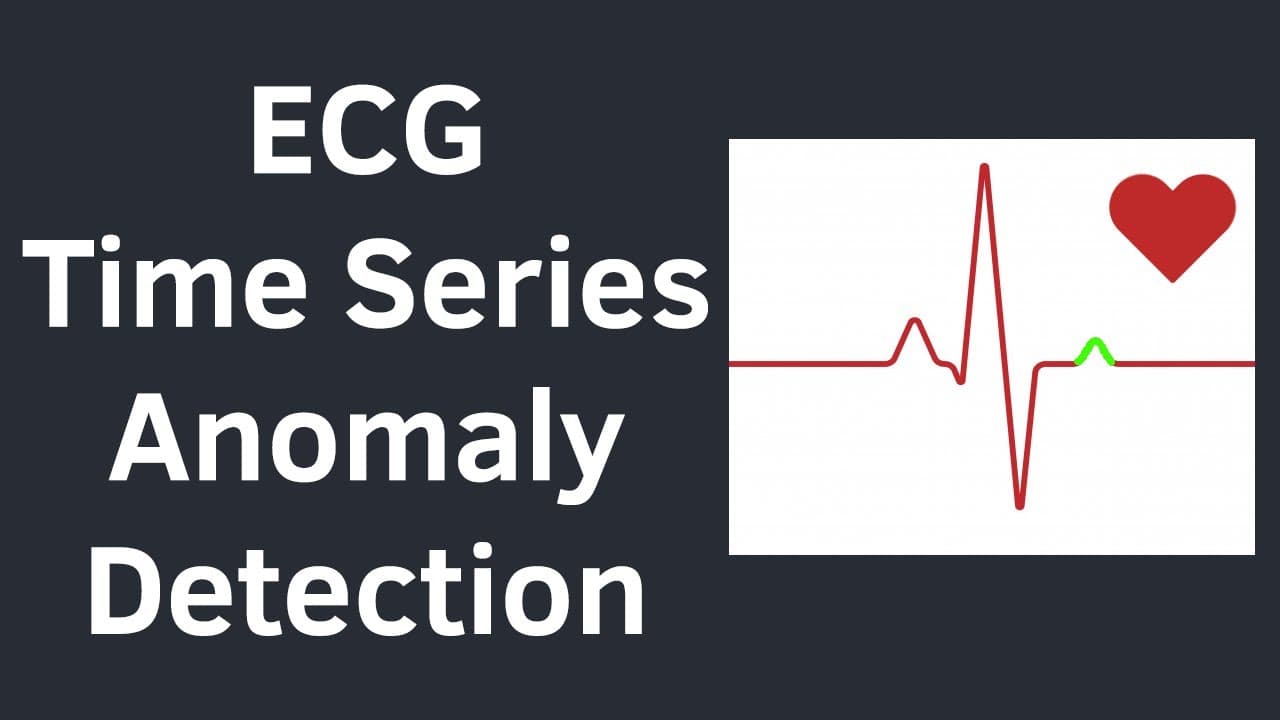
Build a deep learning autoencoder to detect anomalies in heartbeat data obtained from electrogram measurements using the ECG 5000 dataset.
Transcript
hi everyone today we're going to build an ASTM out when color and this encoder we're going to use to detect anomalies in heartbeat data and the heartbeat data will be recorded using electro grams or is ECGs and the data is coming from this website time series classification calm and in here we have a date set called ECG 5000 and this dead set has b... Read More
Key Insights
- ❓ ECG data is commonly used for diagnostic purposes and can be analyzed using deep learning techniques.
- 💓 An autoencoder can be trained to learn the patterns of normal heartbeat data and detect anomalies.
- 💓 The ECG 5000 dataset provides a suitable dataset for training and testing an autoencoder for heartbeat anomaly detection.
- ™️ The choice of threshold for anomaly detection is crucial and depends on the desired trade-off between detection accuracy and false positives.
- 🥰 The trained autoencoder can be used as a diagnostic tool for detecting heart anomalies in real-world scenarios.
- ⚾ The performance of the autoencoder can be evaluated based on the accuracy of anomaly detection and the reconstruction errors.
Install to Summarize YouTube Videos and Get Transcripts
Explore YouTube Video Summarizer or Get YouTube Transcript Extractor
Questions & Answers
Q: What is an autoencoder?
An autoencoder is an unsupervised learning algorithm that learns to produce a compressed representation of input data, which can be used for tasks such as anomaly detection.
Q: What is the purpose of using the ECG 5000 dataset in this tutorial?
The ECG 5000 dataset is used to train and test the autoencoder model. It contains annotated heartbeats from a patient with severe congestive heart failure, making it suitable for detecting anomalies in heartbeat data.
Q: How does the autoencoder detect anomalies?
The autoencoder is trained only on normal heartbeats and learns the patterns of normal data. When presented with an anomaly, such as an irregular heartbeat, the model will have difficulty reconstructing the input data, resulting in a higher reconstruction error.
Q: How is the threshold for anomaly detection determined?
The threshold for anomaly detection is chosen based on the reconstruction errors of the model. By analyzing the distribution of errors, a suitable threshold can be selected, above which heartbeats are classified as anomalies.
Key Insights:
- ECG data is commonly used for diagnostic purposes and can be analyzed using deep learning techniques.
- An autoencoder can be trained to learn the patterns of normal heartbeat data and detect anomalies.
- The ECG 5000 dataset provides a suitable dataset for training and testing an autoencoder for heartbeat anomaly detection.
- The choice of threshold for anomaly detection is crucial and depends on the desired trade-off between detection accuracy and false positives.
- The trained autoencoder can be used as a diagnostic tool for detecting heart anomalies in real-world scenarios.
- The performance of the autoencoder can be evaluated based on the accuracy of anomaly detection and the reconstruction errors.
- Further adjustments to the model and hyperparameters may be required for optimal performance in different scenarios.
Summary & Key Takeaways
-
The tutorial focuses on building an autoencoder using deep learning techniques to detect anomalies in heartbeat data.
-
The ECG 5000 dataset, obtained from a patient with severe congestive heart failure, is used for training and testing the autoencoder.
-
The dataset contains 5,000 randomly selected and annotated heartbeats, with 5 different classes, and each heartbeat is recorded as 140 numbers.
Read in Other Languages (beta)
Share This Summary 📚
Summarize YouTube Videos and Get Video Transcripts with 1-Click
Try YouTube Summary with ChatGPT & Claude or YouTube Transcript Generator
Explore More Summaries from Venelin Valkov 📚

Summarize YouTube Videos and Get Video Transcripts with 1-Click
Try YouTube Summary with ChatGPT & Claude or YouTube Transcript Generator