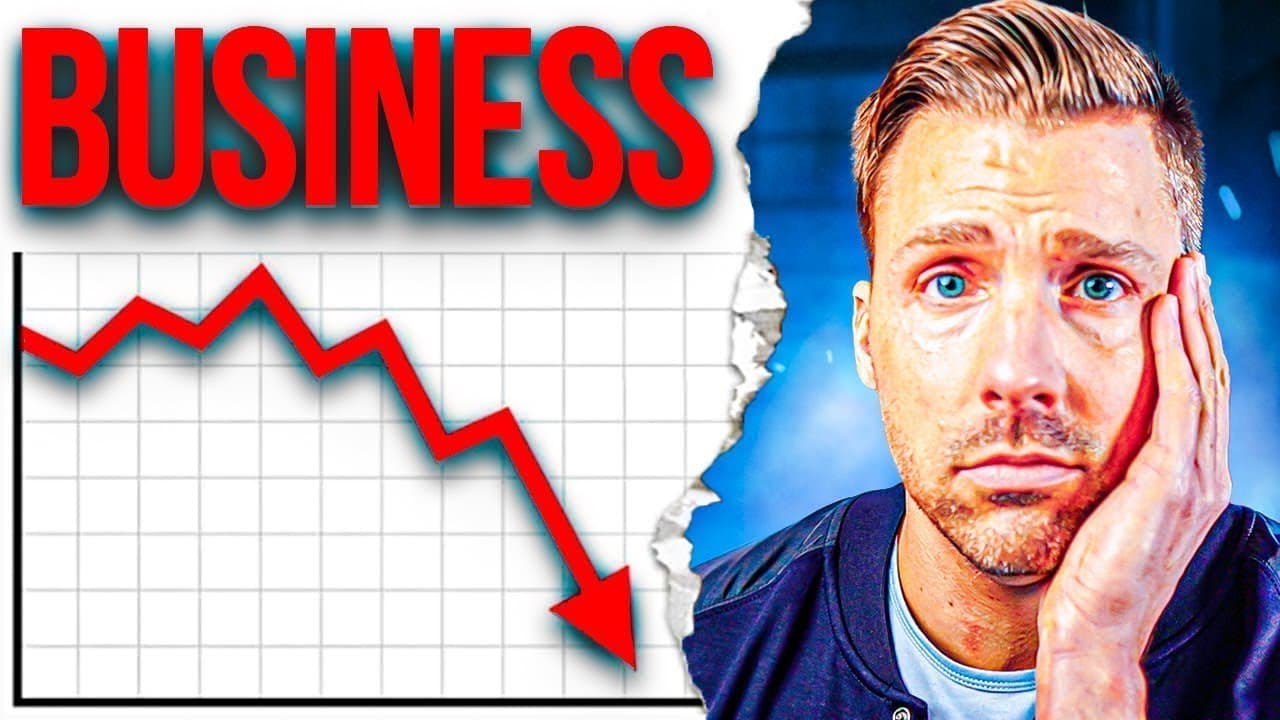
Marketing During a Recession | How To NOT Lose Money
TL;DR
Learn strategies to grow your business during economic downturns.
Transcript
- If you are a business owner, entrepreneur, or marketer, then you're gonna want to pay very close attention. Because in this video, I'm gonna show you how to position your business and marketing for success during a recession, and the steps that I'm taking that turn times of economic uncertainty into opportunities for massive growth. You've seen t... Read More
Key Insights
- Economic downturns present unique opportunities for businesses to grow wealth and market share if navigated correctly.
- Businesses that sell essential goods, like groceries and healthcare, often thrive during recessions due to inelastic demand.
- Luxury goods targeting the top 5% of the market may remain stable as this segment continues spending despite economic conditions.
- Customer retention is crucial; acquiring new customers is significantly more expensive than retaining existing ones.
- Maintaining a healthy cash flow is vital; aim to have three to six months of operating expenses saved.
- Contrarian thinking, like buying when others are selling, can be beneficial during economic downturns.
- Marketing skills are essential for generating new leads and sales, especially during challenging economic times.
- Investing in marketing strategies can help businesses capitalize on economic recovery when it occurs.
Install to Summarize YouTube Videos and Get Transcripts
Explore YouTube Video Summarizer or Get YouTube Transcript Extractor
Questions & Answers
Q: What are some businesses that thrive during a recession?
Businesses that sell essential goods such as groceries, healthcare, and products for children and pets tend to thrive during a recession. These industries have inelastic demand, meaning consumers need these products regardless of economic conditions. Additionally, businesses offering mental health services and financial advice also see increased demand.
Q: How can businesses prepare for economic uncertainty?
Businesses can prepare for economic uncertainty by focusing on customer retention, maintaining a healthy cash flow, and adopting strategic marketing efforts. Retaining existing customers is more cost-effective than acquiring new ones, and having cash reserves allows businesses to take advantage of opportunities and stay operational during downturns.
Q: What is contrarian thinking, and how does it apply to business?
Contrarian thinking involves doing the opposite of what most people are doing, particularly during economic downturns. In business, this means buying when others are selling or investing in marketing when competitors cut back. This approach can help businesses position themselves for success during recovery and capitalize on opportunities that others miss.
Q: Why is customer retention important during a recession?
Customer retention is crucial during a recession because acquiring new customers is significantly more expensive than retaining existing ones. By focusing on serving current customers better, businesses can increase profits and maintain stability. Retention strategies can lead to a 25% to 95% increase in profits, making them a key focus during economic downturns.
Q: How much cash reserve should a business have during uncertain times?
During uncertain times, businesses should aim to have a cash reserve covering three to six months of operating expenses. This reserve provides a buffer to keep the business operational without resorting to drastic measures. It also positions the business to seize rare opportunities that may arise during economic downturns.
Q: What marketing strategies are recommended during a recession?
During a recession, businesses should focus on strategic marketing efforts that emphasize customer retention and lead generation. Investing in marketing helps maintain visibility, attract new customers, and prepare for economic recovery. Businesses should also consider adjusting their offers to align with inelastic demand products or services.
Q: What is the significance of inelastic demand for businesses?
Inelastic demand refers to products or services that consumers continue to purchase regardless of price changes or economic conditions. For businesses, this means that selling inelastic goods, such as groceries and healthcare, can provide stability and even growth during a recession. Understanding demand elasticity helps businesses adjust their offerings accordingly.
Q: How can businesses capitalize on economic recovery?
Businesses can capitalize on economic recovery by maintaining strong marketing efforts, focusing on customer retention, and being prepared with cash reserves. These strategies ensure that businesses are visible, financially stable, and ready to take advantage of increased demand and opportunities as the economy rebounds.
Summary & Key Takeaways
-
The video discusses how businesses can position themselves for success during a recession by focusing on inelastic goods, customer retention, and maintaining cash flow. It emphasizes the importance of contrarian thinking and strategic marketing to capitalize on economic recovery.
-
Businesses that sell essential products, such as groceries and healthcare, tend to perform well during economic downturns. Luxury goods targeting affluent consumers may also remain stable, while businesses with deferrable products should focus on lead generation.
-
Customer retention is more cost-effective than acquiring new customers, making it a critical strategy during recessions. Additionally, maintaining cash reserves and adopting contrarian investment strategies can help businesses navigate economic uncertainty and prepare for recovery.
Read in Other Languages (beta)
Share This Summary 📚
Summarize YouTube Videos and Get Video Transcripts with 1-Click
Try YouTube Summary with ChatGPT & Claude or YouTube Transcript Generator
Explore More Summaries from Adam Erhart 📚




Summarize YouTube Videos and Get Video Transcripts with 1-Click
Try YouTube Summary with ChatGPT & Claude or YouTube Transcript Generator