Why Is China's Tax Revenue So Low?
TL;DR
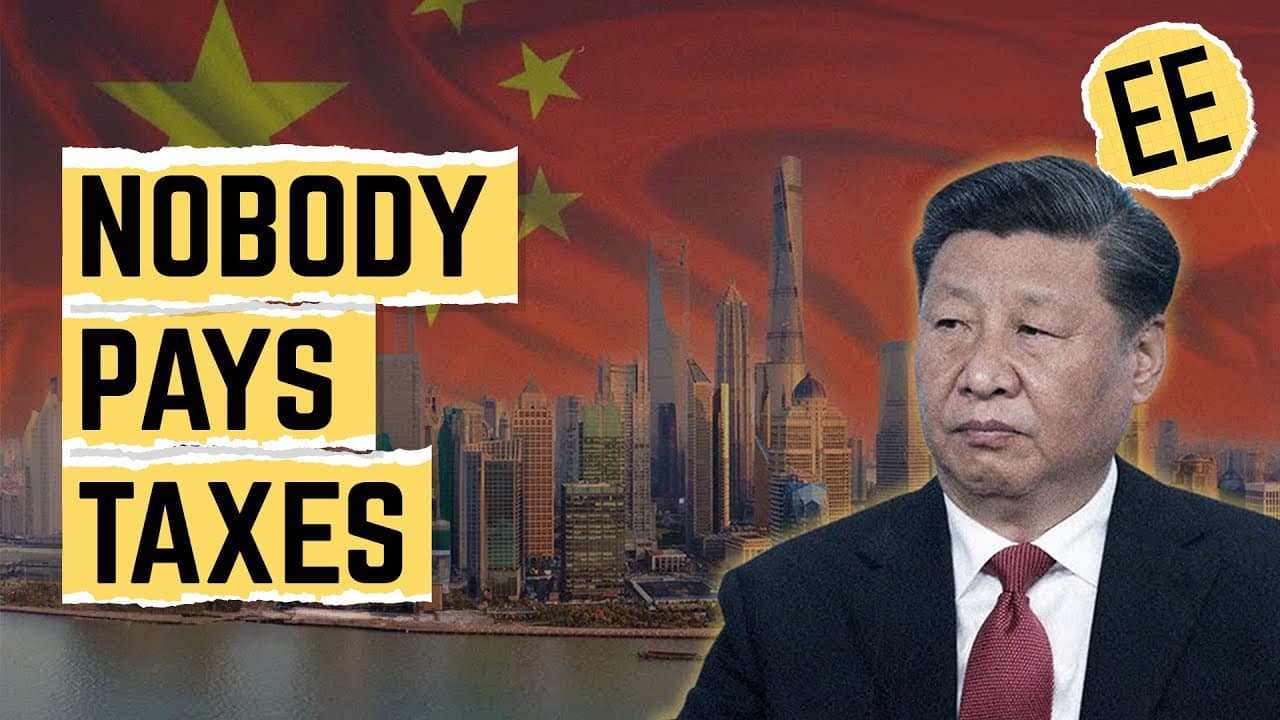
China faces a major tax problem due to its dual economy structure, with advanced financial systems and a large informal sector. The country's tax revenue is significantly lower compared to its economic size, leading to challenges in funding government activities. The local governments rely heavily on land lease revenues, creating a precarious financial situation.
Transcript
china has a major tax problem or actually china has a few major tax problems and most of them stem from the fact that china is both the second largest economy in the world with advanced financial systems and international trade networks while also still being a largely informal economy china's large economy demands a level of government spendin... Read More
Key Insights
- China's tax revenue is only 9% of GDP, much lower than comparable economies.
- Local governments in China rely heavily on land lease revenues for funding.
- China's informal economy contributes to low tax collection from individuals.
- Local government financing platforms create risky financial practices.
- Strict COVID-19 lockdowns have further strained local government revenues.
- Chinese bond market heavily depends on real estate-backed securities.
- Expiring land leases pose a significant challenge to government revenue.
- China's economic growth has been driven by loose business tax regulations.
Install to Summarize YouTube Videos and Get Transcripts
Explore YouTube Video Summarizer or Get YouTube Transcript Extractor
Questions & Answers
Q: Why is China's tax revenue so low?
China's tax revenue is low because of its large informal economy and tax avoidance by wealthier citizens. The informal sector, where many people work, is difficult to tax effectively. Additionally, wealthier individuals often use business assets to reduce their tax burden, leaving a narrow tax base for the government to collect from.
Q: How do local governments in China generate revenue?
Local governments in China primarily generate revenue through land lease sales and taxing businesses. They sell long-term leases on land holdings, as private ownership of urban land is not allowed. This system heavily relies on a strong real estate market, which is currently facing challenges, impacting local government revenues.
Q: What are local government financing platforms in China?
Local government financing platforms in China are entities set up by local governments to raise funds for infrastructure projects. These platforms use state assets as collateral to secure bank loans, which are then bundled and sold as bonds. This practice shifts government debt to the private sector but poses significant financial risks.
Q: What challenges does China's real estate market face?
China's real estate market faces challenges from slowing growth and reduced investment confidence. High-profile bankruptcies in the property development sector have weakened investor confidence, leading to fewer property developments. This affects local government revenue from land leases and undermines the financial stability of local government financing platforms.
Q: How does China's tax system affect its fiscal policy?
China's tax system limits its fiscal policy effectiveness due to a narrow tax base. With a large informal sector and widespread tax avoidance, the government has limited control over raising or lowering taxes to manage the economy. This can hinder economic adjustments during downturns or periods of inflation.
Q: What risks does China's bond market face?
China's bond market faces risks from its heavy reliance on real estate-backed securities and the need for perpetual growth. The market is significantly larger than China's GDP, and any downturn in the real estate sector could destabilize it. Additionally, the high ratings of these bonds may not accurately reflect their underlying risks.
Q: What happens when land leases expire in China?
When land leases expire in China, it poses a significant challenge for both the government and leaseholders. Traditionally, the land reverts to the government, but this is politically unpopular. Uncertainty over lease renewals affects property values and threatens a key revenue source for local governments, complicating their financial planning.
Q: How does China's economic growth relate to its tax policies?
China's economic growth has been partly driven by loose business tax regulations, which encourage business activity. While this has spurred rapid development, it also means that many businesses pay less tax, limiting government revenue. This trade-off has supported growth but also contributed to the current tax collection challenges.
Summary & Key Takeaways
-
China's economy faces a significant tax collection problem, with tax revenues at only 9% of GDP. Local governments rely heavily on land lease revenues, which are at risk due to a slowing real estate market. This creates financial instability, as local government financing platforms engage in risky practices to fund infrastructure projects.
-
The Chinese government's control over the economy is limited by its inability to effectively tax a large portion of its population. Most individuals work in the informal sector, while wealthier citizens often avoid taxes through business assets. This limits the government's fiscal policy options, especially during economic downturns.
-
China's bond market, heavily reliant on real estate-backed securities, faces potential instability. The market's size and reliance on perpetual growth create significant risks, especially as local governments struggle to generate revenue. Expiring land leases further complicate the situation, threatening a key revenue source for local authorities.
Read in Other Languages (beta)
Share This Summary 📚
Summarize YouTube Videos and Get Video Transcripts with 1-Click
Try YouTube Summary with ChatGPT & Claude or YouTube Transcript Generator
Explore More Summaries from Economics Explained 📚





Summarize YouTube Videos and Get Video Transcripts with 1-Click
Try YouTube Summary with ChatGPT & Claude or YouTube Transcript Generator