6 Reasons We Have to Say a Study Was "In Mice"
TL;DR
Lab mice are not perfect human models, shown through examples like Alzheimer's drug failures and saccharin bladder cancer scares.
Transcript
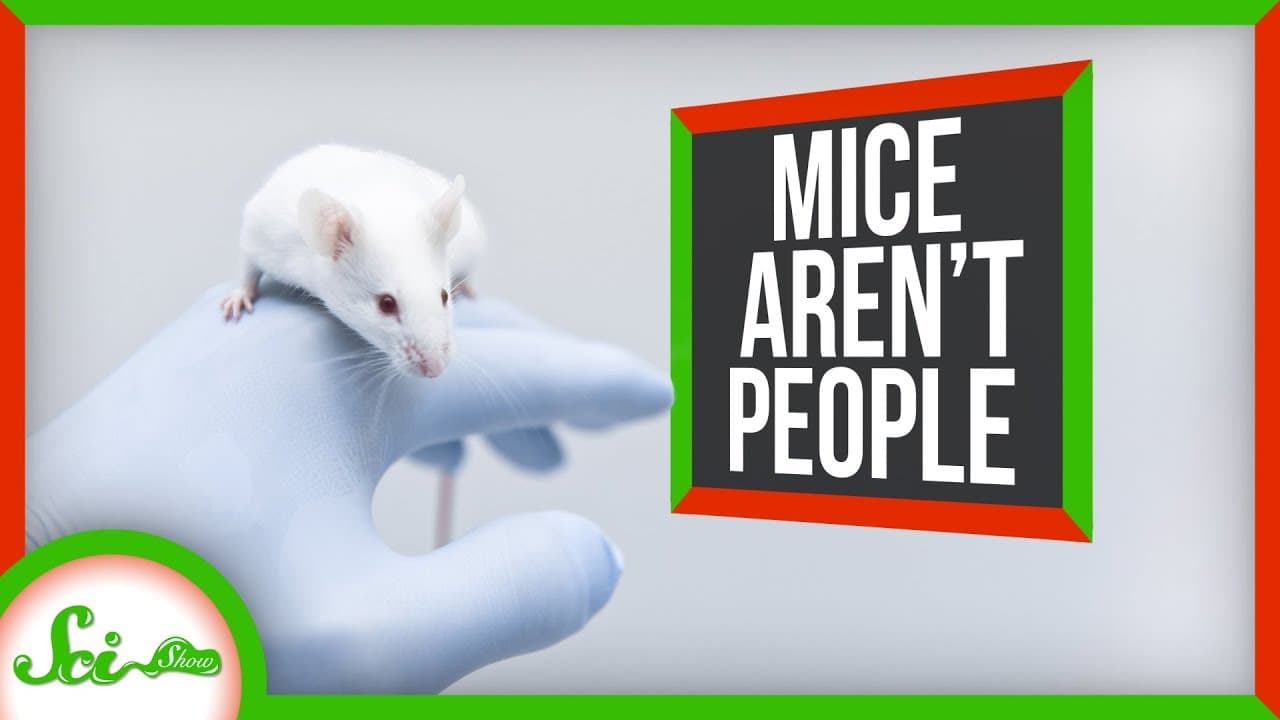
[ intro ] We do a lot of health research in mice. They’re small and easy to take care of, and more suitable for experiments than actual human people. But mice aren’t people. We’re sorry you had to find out this way. And neither are rats, guinea pigs, rabbits, or other animals used to study stuff that happens with humans. Although mice are pretty mu... Read More
Key Insights
- 😄 Lab mice are commonly used in medical research due to their ease of care and genetic manipulability, but they are not perfect models for human diseases or drug responses.
- 🐭 Drug trials for diseases like Alzheimer's and multiple sclerosis have shown discrepancies in efficacy between mouse models and humans, highlighting the limitations of using mice in research.
- 😃 Studies on infectious diseases like hepatitis B and tuberculosis in animal models demonstrate the challenges in translating results from mice to human treatments.
- 🥳 Saccharin studies in rats causing bladder cancer led to misconceptions about human risks, emphasizing the importance of understanding species-specific responses to substances.
- 💉 Research on the microbiome in mice has shown promise in restoring microbial composition post-treatment but highlights the need for caution in applying results to human health.
Install to Summarize YouTube Videos and Get Transcripts
Explore YouTube Video Summarizer or Get YouTube Transcript Extractor
Questions & Answers
Q: Why are lab mice commonly used in medical research?
Lab mice are favored for medical research due to their small size, ease of care, and ability to genetically manipulate for experiments, making them efficient study subjects.
Q: What are some limitations of using mouse models in medical research?
Despite their usefulness, mouse models can inaccurately represent human diseases and drug responses due to differences in biology, leading to failures in drug trials and misleading results.
Q: How did the Aducanumab drug show promise in mice but fail in human trials for Alzheimer's disease?
Aducanumab effectively targeted beta-amyloid protein plaques in mouse models, but failed to show the same efficacy in humans, highlighting the differences in brain biology between mice and humans.
Q: Why did saccharin cause bladder cancer in rats but not in humans?
Rats metabolize saccharin differently than humans, leading to bladder cancer in studies, but subsequent research in humans did not find a similar link, showing the limitations of extrapolating results from animal models.
Summary & Key Takeaways
-
Lab mice, while common in medical research due to ease of care, don't always accurately represent human diseases or drug responses.
-
Examples include Alzheimer's drug Aducanumab showing promise in mice but failing in human trials and saccharin causing bladder cancer in rats but not humans.
-
Studies on microbiome, infectious diseases, and autoimmune conditions also highlight the limitations of using mouse models.
Read in Other Languages (beta)
Share This Summary 📚
Summarize YouTube Videos and Get Video Transcripts with 1-Click
Try YouTube Summary with ChatGPT & Claude or YouTube Transcript Generator
Explore More Summaries from SciShow 📚


Summarize YouTube Videos and Get Video Transcripts with 1-Click
Try YouTube Summary with ChatGPT & Claude or YouTube Transcript Generator