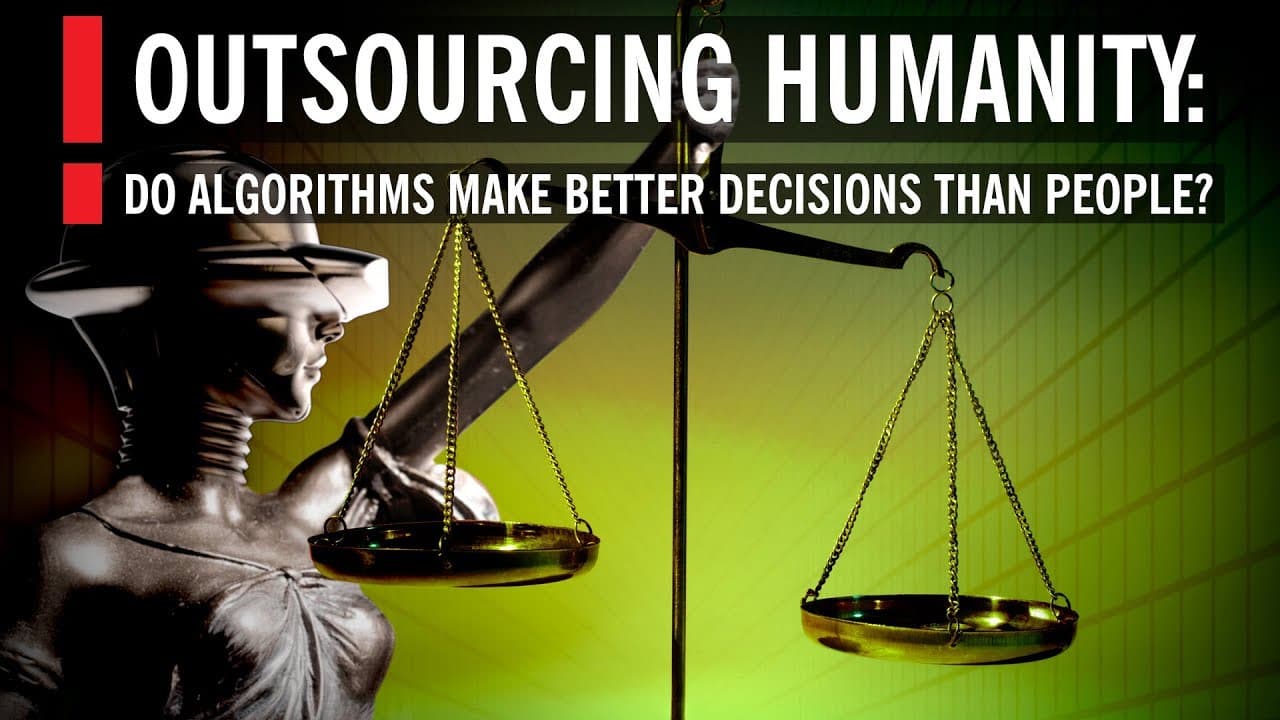
Outsourcing Humanity: Do Algorithms Make Better Decisions Than People?
TL;DR
Understanding AI, Algorithms, and Ethical Decisions in Various Fields to Ensure Responsible Technology Use.
Transcript
hi everybody it is great to be here today and I'm very excited for our discussion on how algorithms make decisions how people make decisions and the relative benefits of each so I want to talk a little bit about artificial intelligence to start because there's a lot of confusion about what AI is and isn't and so artificial intelligence is increasin... Read More
Key Insights
- 🤨 AI systems are increasingly used in decision-making processes across various industries, raising concerns about bias, transparency, and ethical implications.
- 👨⚖️ Experts in economics, radiology, philosophy, and robotics collaborate to address the ethical challenges posed by AI technology in critical sectors like healthcare, criminal justice, and military applications.
- ❓ The dilemma between human judgment and AI algorithms highlights the importance of maintaining ethical standards, transparency, and accountability in technological advancements.
Install to Summarize YouTube Videos and Get Transcripts
Explore YouTube Video Summarizer or Get YouTube Transcript Extractor
Questions & Answers
Q: What are the key differences between AI decision-making and human decision-making?
AI relies on computational statistics, machine learning, and neural networks to process data and make decisions, while humans use personal judgment, experience, and context to make decisions based on a variety of factors.
Q: How can AI be used to reduce bias and improve the functioning of systems like criminal justice and healthcare?
By implementing AI systems that analyze data objectively, identify patterns, and enhance decision-making processes, biases can be minimized, leading to fairer outcomes in various sectors.
Q: What are the ethical concerns associated with autonomous weapons and their potential deployment in military contexts?
The lack of human control, moral reasoning, and accountability in autonomous weapons raises ethical dilemmas about targeting, collateral damage, and the risk of escalating conflicts. Safeguards and regulations are crucial to prevent misuse.
Q: How can the integration of ethics and AI principles help guide responsible technology development?
Educating technologists, creating ethical frameworks, and fostering dialogue between experts in AI and ethics can ensure that technology is developed and applied in a responsible manner, aligning with societal values and moral considerations.
Summary & Key Takeaways
-
AI, algorithms, machine learning, and human decision-making are analyzed in fields like healthcare, criminal justice, and military applications.
-
Concerns arise about biased algorithms, transparency, data quality, and potential ethical implications of AI systems in real-world scenarios.
-
Efforts by experts in economics, radiology, philosophy, and robotics aim to balance technological advancements with ethics and morality.
Read in Other Languages (beta)
Share This Summary 📚
Summarize YouTube Videos and Get Video Transcripts with 1-Click
Try YouTube Summary with ChatGPT & Claude or YouTube Transcript Generator
Explore More Summaries from World Science Festival 📚




Summarize YouTube Videos and Get Video Transcripts with 1-Click
Try YouTube Summary with ChatGPT & Claude or YouTube Transcript Generator