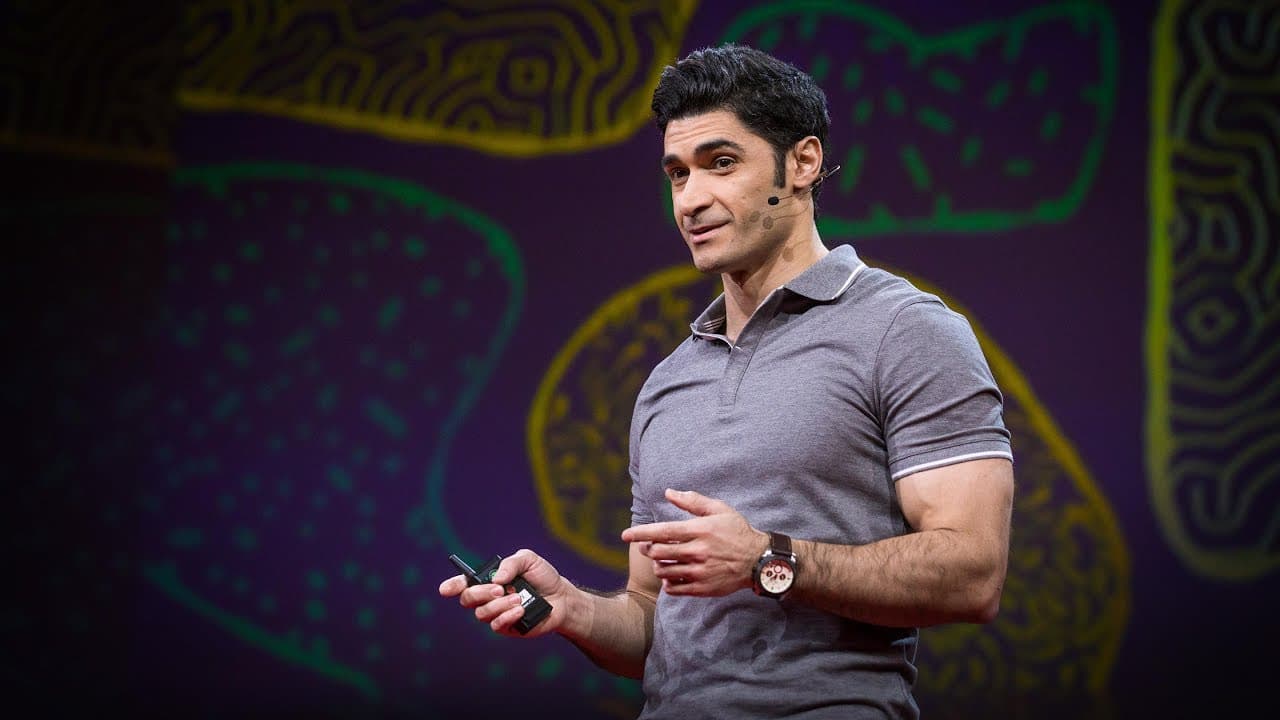
What happens in your brain when you pay attention? | Mehdi Ordikhani-Seyedlar
TL;DR
In this content, the author discusses the complexities of attention and the potential for brain-machine interfaces to assist those with cognitive impairments.
Transcript
Paying close attention to something: Not that easy, is it? It's because our attention is pulled in so many different directions at a time, and it's in fact pretty impressive if you can stay focused. Many people think that attention is all about what we are focusing on, but it's also about what information our brain is trying to filter out. There ar... Read More
Key Insights
- 👁️ Our attention is pulled in many directions, making it difficult to stay focused. It involves both overt attention (moving our eyes) and covert attention (paying attention without moving our eyes).
- 🧠 Brain patterns are important for building models in brain-computer interfaces. Choosing the wrong patterns can lead to incorrect therapies.
- 🤔 Covert attention is an interesting model for computers, as it can shift attention by thinking rather than eye movement.
- 💡 In an experiment, brain signals showed that paying overt attention resulted in flickering signals in the visual processing area at the back of the head.
- 💭 Paying covert attention resulted in both flickering rates appearing in brain signals, with stronger signals in the attended flickering rate. The frontal area of the brain filters information.
- 🧩 The filtering ability of the brain is crucial for attention, but it is impaired in individuals with ADHD. Cognitive brain-machine interfaces can potentially help train the brain to inhibit distractions.
- 🗣️ Brainwave patterns could potentially be used for communication, such as a computer speaking for someone who can't speak or understanding thoughts of a person in a coma. ⏳ While we are not there yet, advancements in brain-computer interfaces and understanding brainwave patterns bring us closer to these possibilities.
Install to Summarize YouTube Videos and Get Transcripts
Explore YouTube Video Summarizer or Get YouTube Transcript Extractor
Questions & Answers
Q: What are the two ways in which you can direct your attention?
The two ways in which you can direct your attention are overt attention, which involves moving your eyes towards something in order to pay attention to it, and covert attention, where you pay attention to something without moving your eyes.
Q: Why are brain patterns important for computational neuroscientists?
Brain patterns are important for computational neuroscientists because they can be used to build models for computers. These models help computers recognize how well our brain functions and can be used as assistive devices for therapies when our brain doesn't function properly.
Q: How did the experiment track participants' attention using brain signals?
In the experiment, participants were asked to pay attention to either of two flickering squares. By analyzing their brain signals, the experimenters were able to track where exactly the participants were watching or paying attention to.
Q: What part of the brain is responsible for filtering out information when paying covert attention?
The frontal area of the brain is responsible for filtering out information when paying covert attention. It works as a filter, letting information come in only from the flicker that is being paid attention to and inhibiting information from the ignored flicker. This filtering ability is key for attention and is missing in some people with ADHD.
Summary & Key Takeaways
-
Attention is complex and involves both what we focus on and what our brain filters out.
-
There are two ways to direct attention: overt attention (moving our eyes towards something) and covert attention (paying attention without moving our eyes).
-
Brainwave patterns can be used to track attention and could be used in brain-computer interfaces for therapies and communication.
Read in Other Languages (beta)
Share This Summary 📚
Summarize YouTube Videos and Get Video Transcripts with 1-Click
Try YouTube Summary with ChatGPT & Claude or YouTube Transcript Generator
Explore More Summaries from TED 📚


Summarize YouTube Videos and Get Video Transcripts with 1-Click
Try YouTube Summary with ChatGPT & Claude or YouTube Transcript Generator