Andy Chong On Their Business Plan & Policies
TL;DR
The content discusses the evolution of telecommunication in Nepal and Axiata's market entry strategy.
Transcript
going back back in time when i was young i was i was a super young boy and there was a day you know andy there was a day when i was hosting an event towards the later part of the 2000s you know later part of the 2000s and i look up in the sky and there's a helicopter there's a true story there's a helicopter up top and falling down are sims of a ne... Read More
Key Insights
- ⌛ The history of telecommunication in Nepal has evolved significantly, shifting from time-consuming processes to instant accessibility.
- 🇳🇵 Axiata strategically assessed Nepal as a promising frontier market due to its growth potential and favorable market conditions.
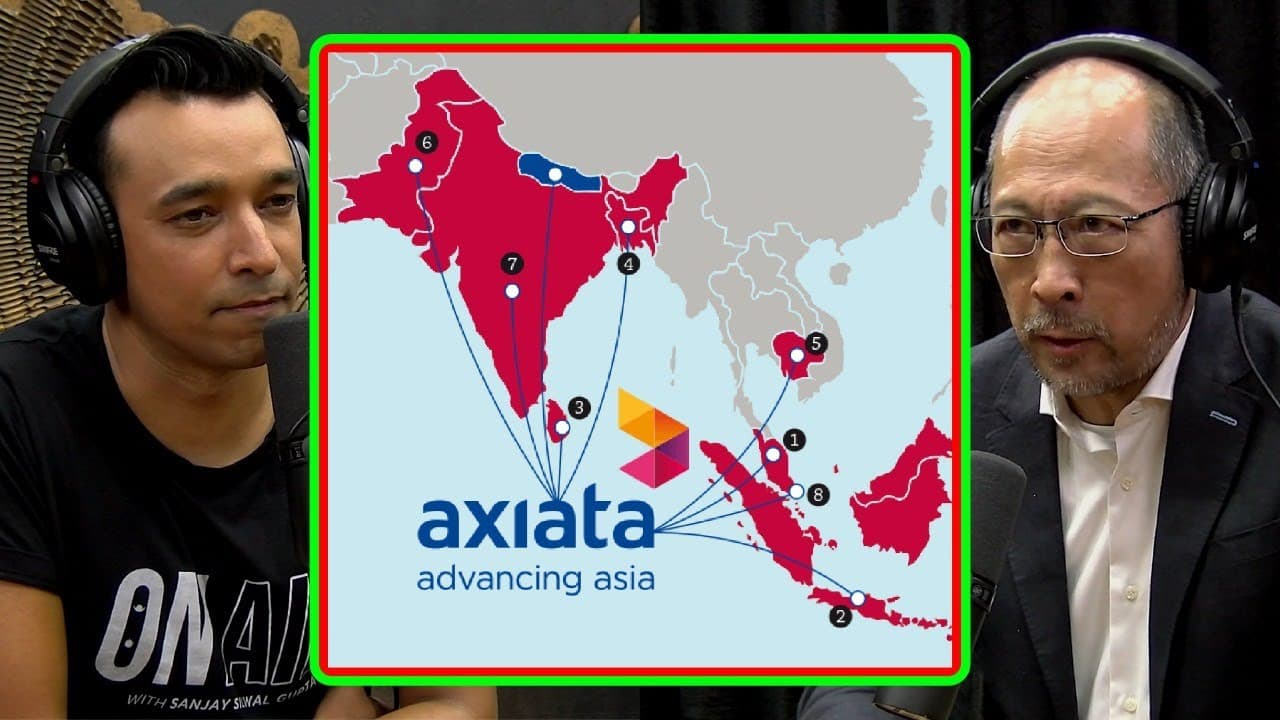
- 🇱🇰 The company enters markets with a strategy focusing on local context, aligning with existing operations in Bangladesh, Sri Lanka, and Cambodia.
- 💯 The growth of Axiata's Nepalese business demonstrates resilience in core telecommunications, despite external challenges such as the COVID-19 pandemic.
- 🐕🦺 The transformation in accessing telecommunications services in Nepal reflects broader global trends in technology and consumer behaviors.
- 👯 The importance of OTT services in shaping international calling patterns indicates a shift in how people communicate across borders.
- 👨💼 Axiata's focus on complementing its portfolio through market expansion suggests an adaptive business strategy amidst changing telecommunications landscapes.
Install to Summarize YouTube Videos and Get Transcripts
Explore YouTube Video Summarizer or Get YouTube Transcript Extractor
Questions & Answers
Q: What challenges did people face in getting a SIM card in Nepal during the early 2000s?
In the early 2000s, obtaining a SIM card in Nepal involved long waits, complicated processes, and significant financial deposits. Many people had to stand in long queues, and the entire procedure could take up a considerable amount of time and effort, contrasting sharply with today’s instant availability.
Q: Why did Axiata consider entering the Nepalese telecommunications market?
Axiata viewed Nepal as a strategic frontier market with significant growth potential in telecommunications. In 2014, the company identified opportunities despite existing challenges, believing it could effectively complement their portfolio and generate positive returns through its operations in the region.
Q: How has the dependency on international long-distance calls impacted the telecommunications market in Nepal?
The Nepalese telecommunications market has a substantial reliance on international long-distance incoming calls, which are largely influenced by external factors. With many users opting for Over-The-Top (OTT) services for calling, this dependency can affect revenue streams, making it a crucial consideration for companies operating in the market.
Q: What does the speaker indicate about the performance of Axiata’s business in Nepal?
The speaker indicates that Axiata's core business in Nepal has experienced growth since its entry, despite challenges posed by the pandemic. This positive outlook is based on an optimistic strategy and the assessment that Nepal fits well within Axiata’s broader regional portfolio, allowing it to benefit from interconnected market dynamics.
Summary & Key Takeaways
-
The speaker reminisces about the early days of obtaining a mobile SIM card in Kathmandu, highlighting the long queues and complicated processes of the past.
-
Axiata entered the Nepalese market in 2014, recognizing significant opportunities despite challenges such as dependency on international long-distance calls.
-
The core business in Nepal has shown growth, with an optimistic strategy in line with Axiata’s existing operations in other frontier markets across Southeast Asia.
Read in Other Languages (beta)
Share This Summary 📚
Summarize YouTube Videos and Get Video Transcripts with 1-Click
Try YouTube Summary with ChatGPT & Claude or YouTube Transcript Generator