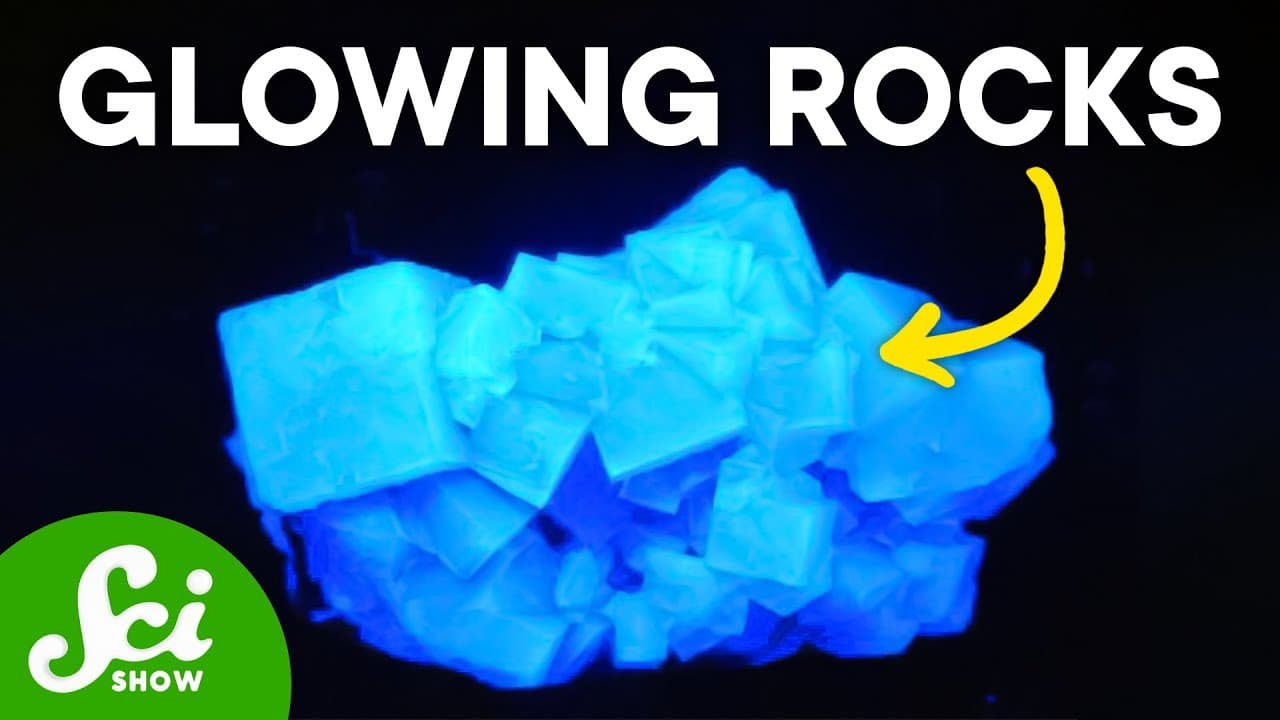
Why These 5 Rocks Actually Glow
TL;DR
Different rocks glow due to fluorescence, phosphorescence, triboluminescence, thermoluminescence, and electroluminescence.
Transcript
[ ♪ intro ] There are a lot of great rocks out there, and we’ve even talked about some of them here on SciShow before. But in our opinion, some of the coolest rocks are the ones that glow. Any rock will glow if you heat it up enough, but there are a few types that are especially good at giving off light, and they do it in all different ways. Here a... Read More
Key Insights
- 🙂 Fluorescent rocks like fluorite emit light when absorbing specific energy levels, displaying quantum mechanics at play.
- 🥹 Phosphorescent rocks can glow in the dark due to electrons holding onto energy through forbidden transitions for longer periods.
- 🔦 Triboluminescence in rocks occurs when stress generates electric charges that result in brief flashes of light, a common phenomenon in various materials.
- 👨🎤 Thermoluminescent rocks release stored energy as light when heated, showcasing how different rocks can glow through distinct processes.
- 🛂 Electroluminescent rocks emit light when an electric current passes through, showcasing potential applications in quantum computing due to precise control over individual particles.
- 👨🎤 Various glowing rock examples, like actinium reacting with air or colored diamonds exhibiting electroluminescence, highlight the diverse ways rocks can emit light.
- 💅 The study of glowing rocks involves understanding different mechanisms like fluorescence, phosphorescence, triboluminescence, thermoluminescence, and electroluminescence, showcasing the complexity and beauty of nature's phenomena.
Install to Summarize YouTube Videos and Get Transcripts
Explore YouTube Video Summarizer or Get YouTube Transcript Extractor
Questions & Answers
Q: What causes rocks to glow under UV light?
Rocks like fluorite glow under UV light due to fluorescence, where electrons absorb energy and emit light of a different frequency, visible as a glowing effect.
Q: How does phosphorescence differ from fluorescence in rocks?
Phosphorescent rocks like calcite can glow in the dark as they hold onto energy longer than fluorescent rocks, allowing electrons to emit light over time due to forbidden transitions.
Q: What is triboluminescence, and how does it make rocks glow?
Triboluminescence occurs when rocks emit light due to mechanical stress, with charged particles creating mini-lightning flashes as rocks are rubbed together, revealing the phenomenon's unique nature.
Q: How do rocks exhibit thermoluminescence when heated?
Thermoluminescent rocks release stored energy as light when heated, as electrons trapped in imperfections of the crystal lattice become easier to free and emit photons as they return to their original positions.
Summary & Key Takeaways
-
Rocks glow due to different mechanisms: fluorescence (absorbing and emitting light), phosphorescence (holding onto energy and emitting light over time), triboluminescence (light emitted when mechanical stress applied), thermoluminescence (releasing stored energy when heated), and electroluminescence (light emitted when electric current passed through).
-
Different rocks glow in various ways, from absorbing UV light to reacting to mechanical stress to releasing energy when heated, showcasing the diversity of glowing rocks in nature.
-
Understanding the physics behind why rocks glow helps scientists study and appreciate these natural phenomena, leading to potential applications in fields like quantum computing.
Read in Other Languages (beta)
Share This Summary 📚
Summarize YouTube Videos and Get Video Transcripts with 1-Click
Try YouTube Summary with ChatGPT & Claude or YouTube Transcript Generator
Explore More Summaries from SciShow 📚


Summarize YouTube Videos and Get Video Transcripts with 1-Click
Try YouTube Summary with ChatGPT & Claude or YouTube Transcript Generator