What Camera Settings Should You Use for Street Photography?
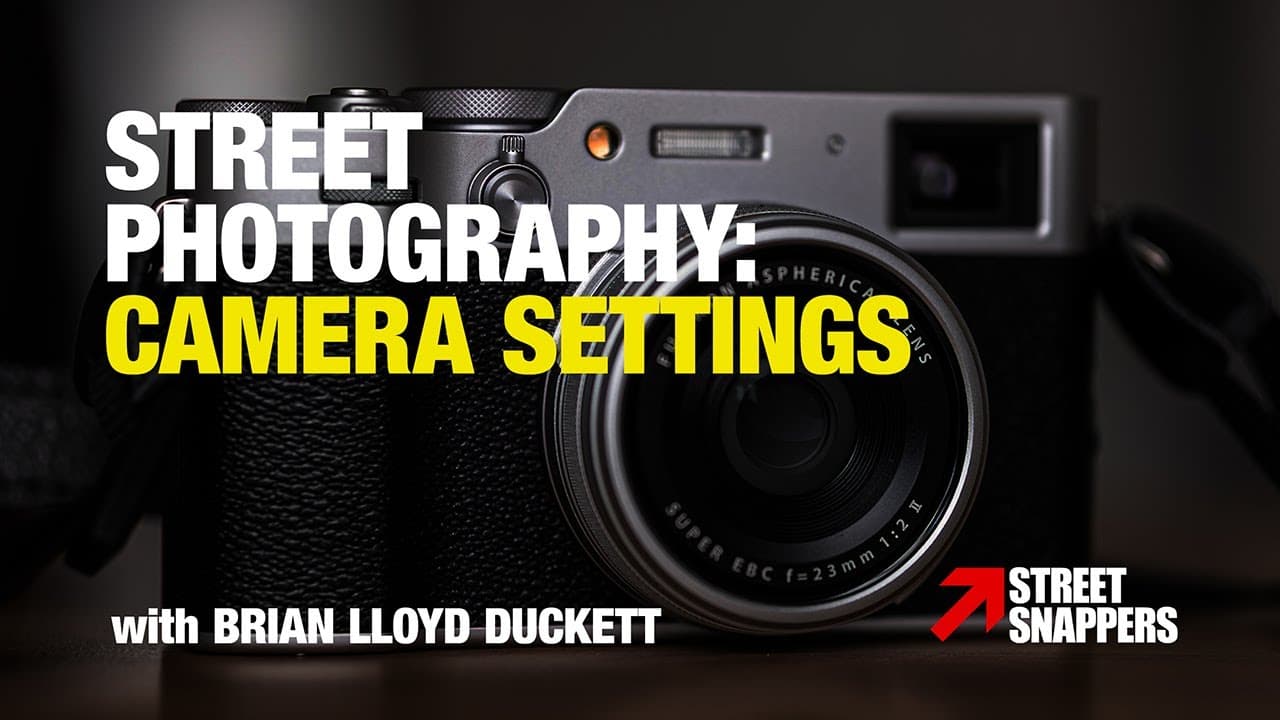
TL;DR
Use aperture priority mode and auto ISO to simplify photography in street settings. Set a minimum shutter speed of 1/200s and use f/8 for depth of field, enabling quick response to dynamic scenes. Adjust exposure compensation for optimal lighting, ensuring you capture every decisive moment effortlessly.
Transcript
hello street slappers well it's been a while since my last video but i i seem to have spent most of may traveling and i've been doing workshops in lisbon in venice in london uh and before we get into this one i just wanted to mention a series of short quick tips videos that i started to produce these are 60 second youtube shorts and each one is a q... Read More
Key Insights
- 🎥 Each photographer may have their own camera settings for street photography, and there is no one-size-fits-all approach.
- 🎥 Keeping camera settings simple and instinctive is crucial for capturing decisive moments in street photography.
- 😒 The use of aperture priority mode, auto ISO with specific settings, and exposure compensation can help achieve desired exposure and depth of field.
- 🌠 The choice of focusing method, whether it be autofocus or zone focusing, depends on personal preference and shooting style.
- 🥺 Street photography often requires quick adjustments to capture fleeting moments, and practicing with exposure compensation and zone focusing can lead to more successful shots.
- 🛩️ Context and depth are important elements in street photography, and using a small aperture can help capture these aspects.
- 💦 The speaker emphasizes the importance of practice and finding an approach that works best for individual photographers.
Install to Summarize YouTube Videos and Get Transcripts
Explore YouTube Video Summarizer or Get YouTube Transcript Extractor
Questions & Answers
Q: Why does the speaker recommend using aperture priority mode for street photography?
The speaker uses aperture priority mode because depth of field control is important in street photography. By setting the aperture, they can control how much of the scene is in focus and convey the context of the image.
Q: How does the speaker set up auto ISO for street photography?
The speaker sets the auto ISO range to 200 to 3200 for daytime shooting, which ensures a fast shutter speed. They also adjust the minimum shutter speed to 1/200th of a second to avoid motion blur. The speaker is willing to sacrifice a bit of image quality for a properly exposed, sharp photo.
Q: What is the purpose of using exposure compensation in street photography?
Exposure compensation allows the photographer to quickly adjust the exposure without changing the aperture, shutter speed, or ISO. It can be used to protect highlights, make colors pop, and define shadow areas. The speaker uses it frequently based on the lighting conditions and their desired aesthetic.
Q: Why does the speaker prefer zone focusing over autofocus for street photography?
Zone focusing allows the speaker to quickly capture moments without worrying about focusing on the subject. By pre-focusing the lens at a specific distance and using a small aperture, they can ensure that subjects within a certain range will be acceptably sharp. This technique is especially effective with wide-angle lenses.
Key Insights:
- Each photographer may have their own camera settings for street photography, and there is no one-size-fits-all approach.
- Keeping camera settings simple and instinctive is crucial for capturing decisive moments in street photography.
- The use of aperture priority mode, auto ISO with specific settings, and exposure compensation can help achieve desired exposure and depth of field.
- The choice of focusing method, whether it be autofocus or zone focusing, depends on personal preference and shooting style.
- Street photography often requires quick adjustments to capture fleeting moments, and practicing with exposure compensation and zone focusing can lead to more successful shots.
- Context and depth are important elements in street photography, and using a small aperture can help capture these aspects.
- The speaker emphasizes the importance of practice and finding an approach that works best for individual photographers.
- The video includes references to additional resources and tools for calculating depth of field and exploring alternative focusing techniques.
Summary & Key Takeaways
-
The video provides an update on street photography camera settings, focusing on simplicity and quick shooting.
-
The speaker recommends using aperture priority mode for control over depth of field and auto ISO with specific settings for different lighting conditions.
-
The importance of a fast shutter speed, small aperture for context and depth, and the use of exposure compensation are discussed.
Read in Other Languages (beta)
Share This Summary 📚
Summarize YouTube Videos and Get Video Transcripts with 1-Click
Try YouTube Summary with ChatGPT & Claude or YouTube Transcript Generator