What Are Cymatics and How Do They Turn Sound into Art?
TL;DR
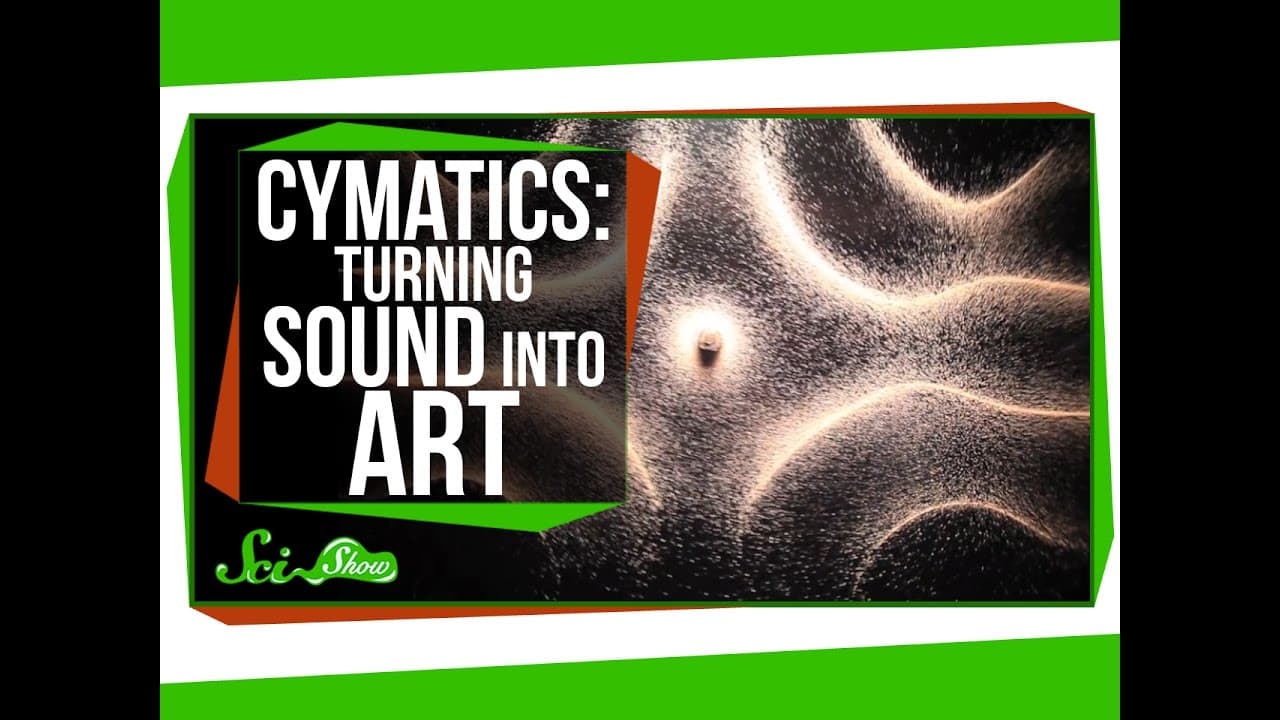
Cymatics are visual patterns created by sound waves interacting with materials like sand or salt. These patterns emerge from the interference of sound vibrations, which lead to constructive and destructive interference, forming intricate designs. Higher frequency sounds produce more complex patterns, and researchers have even developed methods to create levitating art using these principles.
Transcript
Cymatics are visual patterns that combine three ingredients: a thin plate, a pinch of loose material, like sand or salt, and a heavy dose of music. They let us actually /see/ sound … and it’s kind of beautiful. Sound is a vibration through a medium, like air, that eventually vibrates our eardrums, which triggers an electrical signal to our brain th... Read More
Key Insights
- 👂 Cymatics visually represent sound vibrations through patterns in sand or salt.
- 👋 Understanding wave interference is crucial in creating intricate cymatic patterns.
- 👋 Different frequencies of sound waves produce diverse standing wave patterns.
- 🥰 3D cymatics involve overcoming challenges like gravity to create floating art.
- 👋 Cymatics demonstrate the fundamental laws of physics through the visualization of sound waves.
- 🤩 Constructive and destructive interference play a key role in forming cymatic patterns.
- 💨 Researchers have explored innovative ways to utilize cymatics, such as creating levitating objects.
Install to Summarize YouTube Videos and Get Transcripts
Explore YouTube Video Summarizer or Get YouTube Transcript Extractor
Questions & Answers
Q: What are cymatics and how are they created?
Cymatics are visual patterns created by sound waves on a thin plate with loose material like sand. Sound waves cause the material to vibrate and form intricate patterns due to wave interference.
Q: How do sound waves create both constructive and destructive interference in cymatics?
Sound waves in cymatics can create constructive interference, where waves add up to amplify vibrations, or destructive interference, where waves cancel each other out to create still areas called nodes.
Q: How can cymatics be produced in 3D and what challenges are faced in this process?
In 3D cymatics, gravity poses a challenge as it tries to pull the material to the ground. Researchers at the University of Tokyo used ultrasound waves and interference patterns to create floating art by overcoming gravity.
Q: What is the significance of cymatics beyond creating visual patterns?
Cymatics not only showcase the beauty of sound vibrations but also demonstrate the principles of physics, wave behavior, and the potential for applications like levitation.
Summary & Key Takeaways
-
Cymatics utilize sound waves to create visual patterns in sand or salt.
-
Sound waves are vibrations that can be seen through cymatics.
-
The creation of cymatics involves understanding the principles of physics and wave interference.
Read in Other Languages (beta)
Share This Summary 📚
Summarize YouTube Videos and Get Video Transcripts with 1-Click
Try YouTube Summary with ChatGPT & Claude or YouTube Transcript Generator
Explore More Summaries from SciShow 📚


Summarize YouTube Videos and Get Video Transcripts with 1-Click
Try YouTube Summary with ChatGPT & Claude or YouTube Transcript Generator