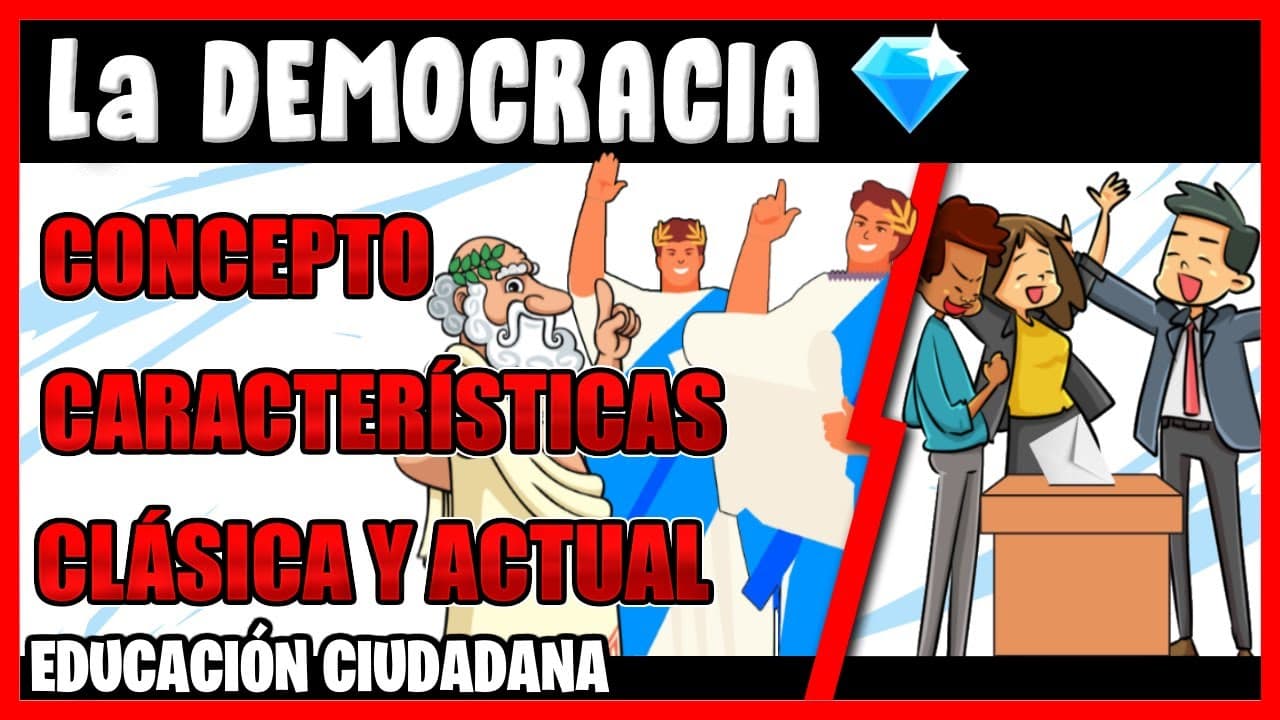
✔️ DEMOCRACY | Source | Concept and characteristics | Explanation
TL;DR
A concise overview of democracy's evolution from ancient Greece to today.
Transcript
Hi student! I'm Brian Perez from Teaching and Digital Tools. Today most of the States of Law are democratic, you have been educated and prepared, from a very young age, in knowledge, values and citizenship to exercise a democratic coexistence. But ... do you know what democracy is? Where or when did it originate? It is said that the first... Read More
Key Insights
- Democracy originates from ancient Greece, specifically Athens, where it was characterized by direct participation of a limited citizenry.
- Athenian democracy was restricted, allowing only free, adult male citizens born in the polis to participate in governance.
- Modern democracies have evolved to include universal suffrage, allowing all citizens, including women and foreigners, to participate.
- Today's democracies are representative, meaning citizens elect officials to make decisions on their behalf due to large population sizes.
- The division of powers in indirect democracies separates governmental functions into executive, legislative, and judicial branches.
- Elections in democracies must be free, open, competitive, and periodic to ensure fair representation and prevent power concentration.
- Democracy encompasses more than voting; it ensures equality, non-discrimination, and protection of rights for all citizens.
- Freedom of expression and a diverse, independent press are crucial for citizens to voice opinions and hold governments accountable.
Install to Summarize YouTube Videos and Get Transcripts
Explore YouTube Video Summarizer or Get YouTube Transcript Extractor
Questions & Answers
Q: What is the origin of democracy?
Democracy originated in ancient Greece, particularly in the city-state of Athens during the 5th century BC. It was characterized by direct participation of citizens in decision-making processes, although this participation was limited to free, adult male citizens born in the polis.
Q: How has democracy evolved from its original form?
Democracy has evolved from a direct form, where a select few participated in governance, to a representative system. Modern democracies feature universal suffrage, allowing all citizens, including women and foreigners, to participate in elections and governance, reflecting greater inclusivity and adaptation to larger populations.
Q: Why is modern democracy considered representative?
Modern democracy is considered representative because citizens elect officials to make decisions on their behalf. This system emerged due to the impracticality of direct participation in large populations, where it is impossible for everyone to gather and decide on public matters daily, as was done in ancient Athens.
Q: What is the division of powers in a democracy?
The division of powers in a democracy separates governmental functions into three branches: the executive, which administers and executes policies; the legislative, which creates and enacts laws; and the judicial, which dispenses justice. This structure ensures checks and balances within the government.
Q: What are the characteristics of democratic elections?
Democratic elections are characterized by being free, open, competitive, and periodic. They must be organized independently of the government, allowing all registered citizens to participate. Elections ensure that officials are accountable to the people, prevent power concentration, and reflect the popular will.
Q: Why is freedom of expression important in a democracy?
Freedom of expression is crucial in a democracy as it allows citizens to voice their opinions on government actions, policies, and the socio-economic system. It supports the diversity of information sources and ensures that the press remains free and independent, enabling citizens to hold the government accountable.
Q: How does democracy ensure equality and rights for citizens?
Democracy ensures equality and rights by promoting non-discrimination and protecting the rights of all individuals. It involves more than periodic voting; it requires creating equal opportunities for all citizens to participate fully in society, respecting and safeguarding their freedoms and rights.
Q: What role do political parties and interest groups play in a democracy?
Political parties and interest groups play vital roles in democracy by acting as channels for expressing the popular will and voice. They enable citizens to associate freely, advocate for their rights and opinions, and influence government policies, thereby enhancing democratic participation and representation.
Summary & Key Takeaways
-
Democracy, originating in ancient Greece, was initially a direct form of governance limited to a small segment of the population. Over time, it has evolved into a representative system where citizens elect officials to make decisions on their behalf, reflecting broader participation and inclusivity.
-
Modern democracies feature a division of powers into executive, legislative, and judicial branches, ensuring checks and balances. Elections are characterized by universal suffrage, allowing all citizens to vote and be elected, while maintaining the principles of freedom and competitiveness.
-
Beyond voting, democracy involves safeguarding equal opportunities and rights for all citizens, promoting freedom of expression, and supporting a free press. Citizens are encouraged to associate freely in parties and interest groups to advocate for their rights and opinions.
Read in Other Languages (beta)
Share This Summary 📚
Summarize YouTube Videos and Get Video Transcripts with 1-Click
Try YouTube Summary with ChatGPT & Claude or YouTube Transcript Generator
Explore More Summaries from Enseñanza y Herramientas Digitales 📚

Summarize YouTube Videos and Get Video Transcripts with 1-Click
Try YouTube Summary with ChatGPT & Claude or YouTube Transcript Generator